Review · DA LAT
Coffee Farm Tour with Roasting & Tasting Workshop – Da Lat
Twin Beans Farm takes you through the full coffee path, from Arabica plants in the hills outside Da Lat to a fresh cup made on site. You’ll see the plantation, learn how beans are processed and roasted, then roast and brew coffee yourself instead of simply watching a demonstration.
I like the hands-on roasting session, and I like the small group limit of 10, which should leave room for questions. The chance to help harvest coffee from November through January adds a seasonal reason to return.
The main drawback is the short 1-hour-15-minute schedule. You’ll get a useful introduction, but this is not a long farm visit or a full-day rural outing. The farm is also about 20km from central Da Lat, so you’ll need to plan transport.
Key points to know before booking
- Roast and brew your own coffee: You take part in the process and drink the result at the farm.
- See the full farm-to-cup chain: The visit covers planting, processing, roasting, and brewing.
- Small group setting: The maximum group size is 10 people.
- Harvest season runs from November to January: This is the period when you can join the farm team to pick coffee.
- Twin Beans Farm is outside Da Lat: The plantation sits in Da Sar commune, about 20km from the city center.
- A low-cost introduction: At $9.89 per person, the tour offers more than a standard café tasting, though transport may require separate planning.
A farm visit that starts with the bean, not the café
Coffee in Da Lat is often treated as a drink to order, but this visit puts the plant and production process first. At Twin Beans Farm, you begin at an Arabica plantation in Da Sar commune, in Lac Duong District, Lam Dong Province.
That setting matters. You are not only sampling a finished cup in town. You are seeing the place where the crop is grown and then following the beans through the stages that shape the final flavor.
The tour is built around a farm-to-cup lesson. You learn about coffee farming, processing, roasting, and brewing in one compact visit. For me, that structure gives the tour its value. Each stage makes more sense because it connects directly to the next one.
The on-site roastery and coffee shop keep the lesson practical. The coffee does not stop at an explanation of what happens after harvesting. You continue to roasting and brewing, then enjoy the finished drink at the farm.
More Coffee Tastings in Vietnam
- Hanoi Coffee Experience: 6 Brews, 9 Recipes & 3 Liquor Tastings
★ 5.0 · 2,945 reviews - Da Nang Cooking Class with Coffee Tasting and Market Visit
★ 5.0 · 310 reviews - Hanoi: Hands-On 5 Vietnamese Coffees & 3 Local Wines Tasting
★ 5.0 · 14 reviews
What happens during the 75-minute visit
The scheduled start time is 1:30 pm, and the full activity lasts about one hour and 15 minutes. The short length makes it easy to fit into a Da Lat day, especially if you want a focused activity rather than a long excursion.
The visit includes the coffee plantation, where you learn about the crop and how it is grown. You then move into the processing side of coffee making. Processing is one of the useful parts of the lesson because the bean’s path from fruit to roast is not as simple as picking and grinding.
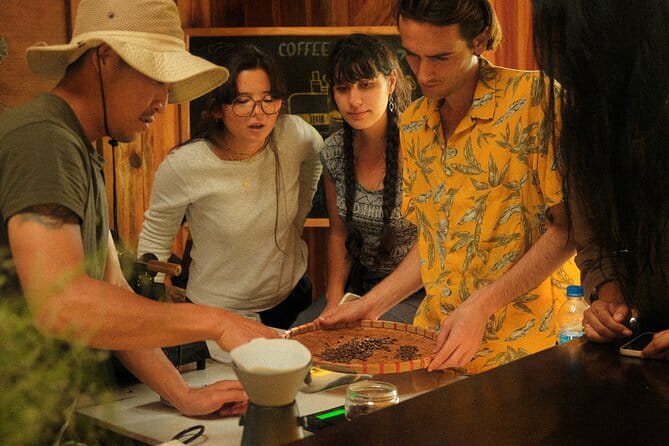
Next comes roasting. You participate in a roasting session rather than merely looking at equipment from a distance. The exact format may depend on the group and the day, but the central point is clear: you get to roast your own beans.
You then brew your coffee and taste it on site. That final cup gives the tour a satisfying finish. You can connect the work you have just done with what ends up in your cup, which is more memorable than tasting a coffee with no idea how it was made.
The schedule is tight, so you should expect a clear introduction rather than a slow, leisurely farm afternoon. If you want every part explained at length, the 75-minute format may feel brief. If you want a practical overview with a hands-on ending, the pace should suit you well.
Why the roasting and tasting session matters
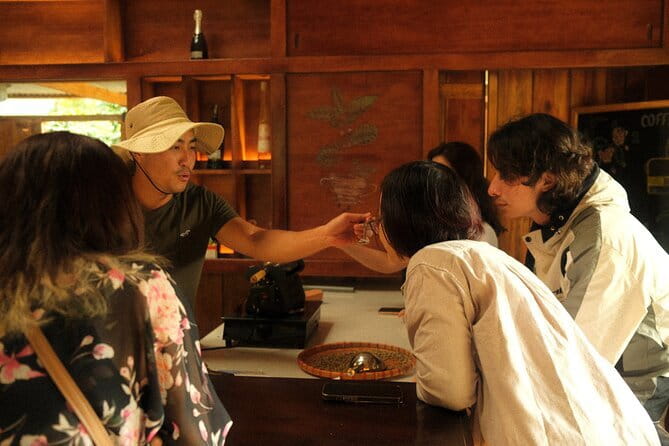
The strongest part of the tour is the move from explanation to participation. You do not just hear about roasting. You take part in it, then brew and taste your own coffee.
That gives you a simple way to notice how much work sits behind a familiar drink. You begin with a crop in the field and finish with something you can drink immediately. The experience works especially well for coffee enthusiasts who want to understand the basics without committing to a long technical course.
You also learn about different processing methods and what can affect flavor. That is a useful detail because coffee taste is not shaped by roasting alone. The way the coffee is processed before roasting also matters, and the tour connects those steps in a straightforward way.
Jessie has been praised for explaining the process in detail and making the session both educational and enjoyable. If Jessie is leading your visit, you can expect a guide who pays attention to the how and why, not just the names of each stage.
I would treat the tasting as a chance to ask questions. The small maximum group size of 10 should help, particularly if you want to understand why two coffees can taste different even when they come from the same broad region.
The plantation and the setting near Da Lat
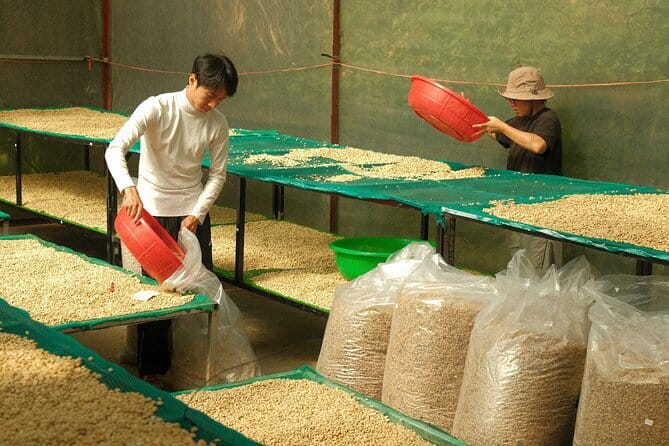
Twin Beans Farm is about 20km from central Da Lat, in Da Sar commune. That distance is important when planning your afternoon. The tour is not a quick walk from the center, so allow time for the journey and confirm the pickup details if you intend to use the pickup option.
The plantation gives the visit a stronger sense of place than a city coffee class. You see the crop in its growing environment before reaching the roastery and café. The farm setting also makes this a good choice if you want to include agriculture and nature in your Da Lat plans.
Still, keep the scope realistic. The information provided does not promise a long walk through the plantation, extensive outdoor activities, or a full agricultural workday. You are visiting a working coffee farm as part of a compact lesson.
The farm-to-cup route is the main attraction. If you are looking for a broad countryside tour with several stops, this is too narrow. If you want one clear subject explained from beginning to end, the setting works very well.
More Specialty Coffee Tours in Vietnam
- Experience specialty coffee with sustainable coffee farmers
★ 4.9 · 91 reviews - Experience Making specialty coffee in Da Lat City
★ 5.0 · 3 reviews - Vietnamese Bread & Brew: Banh Mi Baking Class & Specialty Coffee
★ 5.0 · 76 reviews - Buon Ma Thuot: Coffee Farm Tour (Bean to Brew) with Pickup
★ 4.6 · 24 reviews
Visiting during the November to January harvest
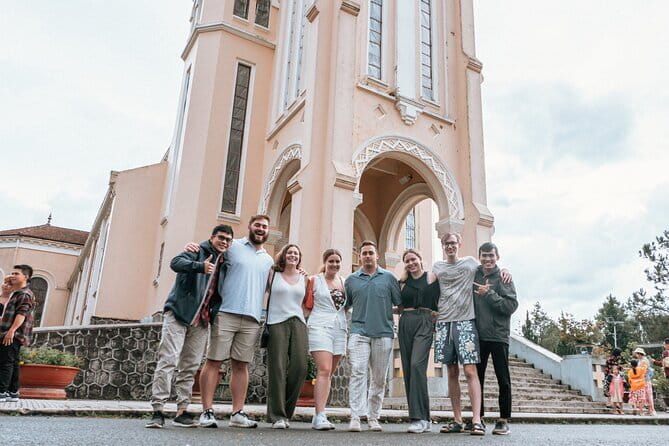
The best time to add a hands-on farming element is November through January. During these months, you can join the farm team for coffee harvesting.
This seasonal detail may influence when you book. Outside that period, the tour still includes the plantation, processing, roasting, brewing, and tasting, but the harvesting opportunity is not listed as available year-round.
Harvesting gives the farm visit a more direct connection to the crop. Instead of only seeing coffee plants and hearing how picking works, you may be able to take part in the work. If your main interest is agriculture, this period deserves special attention.
The available information does not state exactly how long the harvesting activity lasts or how much of the 75-minute visit it occupies. I would confirm the day’s schedule before booking if picking coffee is the main reason for your visit.
Small groups make the lesson easier to follow
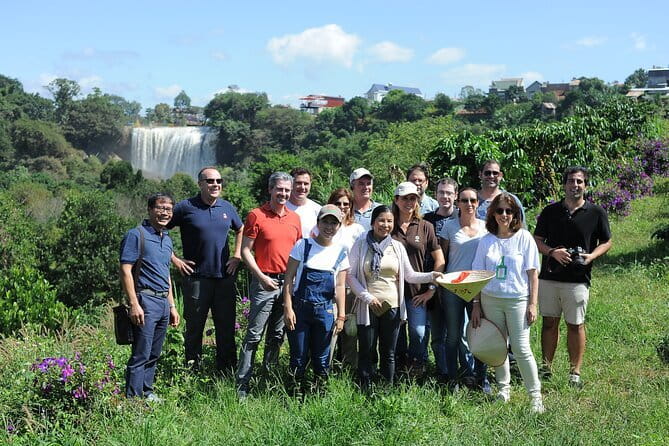
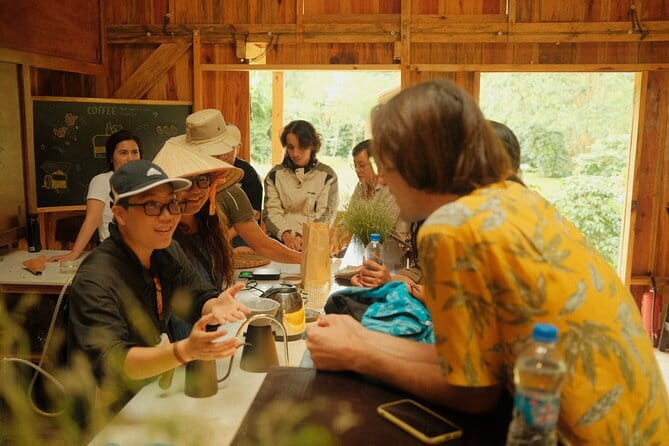
The maximum group size is 10 people. That is a useful limit for a lesson involving questions, roasting, brewing, and tasting.
A small group should make it easier to see what is happening and take part in the practical stages. It also gives the guide more room to explain processing methods and flavor differences instead of rushing through a standard speech.
The group limit does not guarantee a private tour. You may still share the session with other people, and the amount of individual attention can vary. Even so, 10 people is a sensible size for this kind of workshop.
The activity also suits people with different interests. Coffee fans will appreciate the production details. People interested in farming can focus on the plantation and harvest. Nature lovers get a short outing beyond Da Lat’s center, while casual visitors can simply enjoy making and drinking a cup.
Is $9.89 a good value?
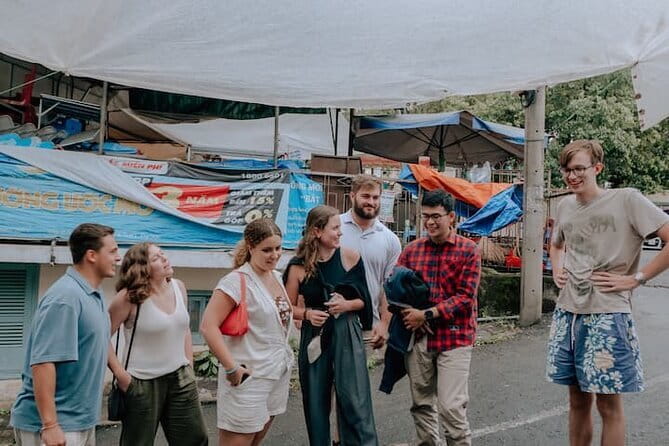
At $9.89 per person, the price is low for a visit that combines a plantation, processing lesson, roasting workshop, brewing activity, and tasting. You are paying for more than a café drink because the tour includes participation and instruction.
The value is strongest if you care about how coffee is made. A person who only wants a good cup may find a regular coffee shop simpler. The workshop earns its price by giving you context and a practical activity, not by offering a long list of sightseeing stops.
You should also factor in the farm’s location. Twin Beans Farm is around 20km from Da Lat center. Pickup is offered, but the provided details do not explain the pickup area or whether it costs extra. Check that point before you book, since transport can change the real price of a short activity.
Group discounts may also be available. If you are visiting with friends or family, check the current discount terms. The low basic price already makes this an easy addition to a Da Lat itinerary, but a group rate could improve the value further.
Who will enjoy this coffee workshop most?
I would choose this tour if you fit one or more of these descriptions:
- You want to understand coffee beyond ordering and drinking it.
- You enjoy small, practical workshops.
- You are interested in farming, food production, or local agriculture.
- You want a short activity outside central Da Lat.
- You are visiting between November and January and hope to join the harvest.
- You prefer a focused outing that takes about 75 minutes.
Families and mixed-interest groups may also find it useful because the visit has several stages. One person can focus on the plantation, another on roasting, and another on tasting. The activity is not limited to coffee experts.
I would hesitate if you need a full-day countryside trip, a long hike, or a highly flexible schedule. The tour has one main subject and a fixed start time of 1:30 pm. Its strength is focus, not variety.
Practical planning for your afternoon
Plan around the 1:30 pm start. Since the farm is 20km from Da Lat center, do not treat the departure time as the moment to begin arranging transport. Pickup is offered, but you should confirm the exact details before relying on it.
A mobile ticket is available, which makes it convenient to keep the booking on your phone. Confirmation is provided at the time of booking, so you should have the tour details ready before setting out.
The maximum group size is 10, and the activity is booked often, so reserving ahead is sensible if your Da Lat dates are fixed. The tour can be cancelled for a full refund if you cancel at least 24 hours before the start time. Changes or cancellations made less than 24 hours before the start time are not accepted for a refund.
The schedule is local to Da Lat, so use the local start time when counting the cancellation deadline. This is a small point, but it matters when you are coordinating several activities.
The final cup is the point of the whole visit
Many coffee activities stop at a tasting. Twin Beans Farm goes one step earlier by letting you roast and brew the coffee yourself.
That final cup is not necessarily about finding the single best coffee in Da Lat. It is about understanding how the drink got there. You have seen the plantation, learned about processing, taken part in roasting, and then made the coffee you taste.
I like that the tour keeps the chain intact. You are not separated from the source of the product or asked to accept vague claims about quality. The farm, roastery, and coffee shop are all part of the same visit.
The experience also gives you a better basis for choosing coffee later. Once you have heard how processing and roasting affect flavor, you can pay closer attention to what you drink. That is a useful souvenir, and it takes up no room in your luggage.
Should you book Twin Beans Farm?
Book it if you want a low-cost, hands-on introduction to Da Lat coffee. The plantation setting, small group size, detailed explanations, and chance to roast and brew your own cup give the tour real substance for $9.89.
The best timing is November through January if harvesting matters to you. Otherwise, the core farm-to-cup lesson remains the reason to go.
Skip it if you want a long rural excursion or dislike fixed short workshops. For everyone else, especially coffee fans and people curious about agriculture, this is a practical way to spend part of an afternoon outside Da Lat.
FAQ
Where is Twin Beans Farm located?
Twin Beans Farm is in Da Sar commune, Lac Duong District, Lam Dong Province, about 20km from Da Lat city center.
What time does the tour start?
The tour starts at 1:30 pm.
How long does the activity last?
The activity lasts approximately one hour and 15 minutes.
What will I learn during the visit?
You will learn about coffee farming, processing, roasting, and brewing, following the process from plantation to cup.
Can I roast my own coffee?
Yes. The activity includes a roasting session where you participate in roasting your own coffee.
Can I brew and taste the coffee?
Yes. You will brew your coffee and enjoy it on site at the farm.
Can I harvest coffee during the tour?
Coffee harvesting is available from November through January. The activity includes the option to join the farm team during that period.
How many people can join the tour?
The maximum group size is 10 people.
Is pickup available?
Pickup is offered, but the provided details do not specify the pickup area or any additional cost.
What is the cancellation policy?
You can cancel at least 24 hours before the start time for a full refund. Cancellations or changes made less than 24 hours before the start time are not accepted for a refund.
More Coffee Farm Tours in Da Lat
- Dalat’s countryside|Coffee Plantations Tour beyond Elephant falls
★ 5.0 · 59 reviews - Dalat Countryside Motorbike Day Tour–Coffee Farms & Pagodas
★ 5.0 · 53 reviews - Dalat: MOTORBIKE TOUR TO PONGOUR FALLS- SILK- COFFEE FARM
★ 4.9 · 52 reviews - Award Winning Farm Tour: Coffee, Chocolate and Unique Gifts
★ 5.0 · 484 reviews
More Specialty Coffee Tours in Da Lat
- Cartagena: Colombian Specialty Coffee Tasting
★ 4.4 · 130 reviews - Private Coffee Roasting Class
★ 5.0 · 101 reviews - Coffee Experience from bean to cup
★ 5.0 · 71 reviews - Private coffee tour near Medellín, from bean to cup.
★ 5.0 · 60 reviews
Freshly brewed listings in Da Lat
- VIP Dalat 3 waterfalls – Datanla, Elephant Pongour & Coffee Tour★ 5.0 · 8 reviews
- Coffee – Wine – Tea: Dalat Treasures tour★ 3.5 · 5 reviews
- Experience Making specialty coffee in Da Lat City★ 5.0 · 3 reviews
- Coffee Class and DaLat Outskirt Tour★ 4.5 · 5 reviews
- Tea & Coffee Tour★ 4.8 · 5 reviews
- DALAT EASY RIDER GROUP TOUR – PONGOUR FALL – SILK- COFFEE..★ 5.0 · 6 reviews
- Dalat Group Easy Rider – Elephant Fall-Pagoda-Weasel Coffee…★ 5.0 · 7 reviews
- Dalat: MOTORBIKE TOUR TO PONGOUR FALLS- SILK- COFFEE FARM★ 4.9 · 52 reviews
Da Lat Coffee Tours, compared.
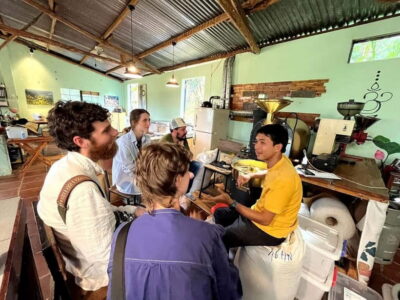
Experience specialty coffee with sustainable coffee farmers
Read our review →
Coffee – Wine – Tea Da Lat’s Agricultural Treasures Tour
Read our review →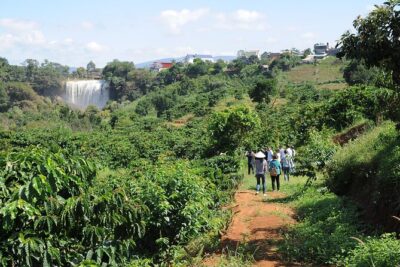
Dalat’s countryside|Coffee Plantations Tour beyond Elephant falls
Read our review →
Dalat Countryside Motorbike Day Tour–Coffee Farms & Pagodas
Read our review →
Dalat: MOTORBIKE TOUR TO PONGOUR FALLS- SILK- COFFEE FARM
Read our review →
VIP Dalat 3 waterfalls – Datanla, Elephant Pongour & Coffee Tour
Read our review →
Dalat Group Easy Rider – Elephant Fall-Pagoda-Weasel Coffee…
Read our review →