
Review · ADDIS ABABA
Ethiopian Culinary Tour – Market, Food, Coffee Ceremony & more
The best part of this Addis Ababa food tour is that it treats food as a doorway into daily life. You move from produce stalls and spice sellers in Merkato to a family setting where you make injera, then finish with coffee roasted by hand in the mountain town of Sululta.
I like the market access and the hands-on bread making. You get more than a restaurant meal: you see ingredients being sold, try making injera yourself, and taste what you prepare. I also like the stop at Taitu Hotel, Ethiopia’s oldest hotel, followed by a traditional coffee ceremony and honey wine tasting.
The main drawback is the pace. This is a packed 5 to 6 hours, with traffic, crowded markets, and several food stops. If you want a slow cooking class or a quiet city walk, this tour may feel hurried.
Key points at a glance
- Merkato and Atkilt Tera: Walk through Addis Ababa’s major food markets, including the largest open-air market in Africa.
- Injera from batter to plate: Learn the basic process of making Ethiopia’s famous sourdough flatbread, then eat your own work.
- Coffee with a long tradition: Visit Tomoca Coffee and later attend a full ceremony with washing, roasting, brewing, and serving.
- Historic lunch at Taitu Hotel: Enjoy assorted Ethiopian dishes in a hotel dating to the early days of Ethiopian hospitality.
- Sululta mountain setting: Leave the city for a coffee ceremony and a taste of tej, Ethiopia’s honey wine.
- Flexible guiding: Guides including Zerefa, Samuel, Seya, Emmanuel, Abiy, and Desale have been praised for adjusting the day to suit individual interests.
Why this food tour gives you a useful first look at Addis Ababa
Addis Ababa can be hard to read on a short visit. Its streets are busy, its food customs are unfamiliar at first, and the best places to see everyday life are not always marked for tourists. This tour helps you make sense of the city through its ingredients and eating habits.
You begin in the morning with pickup from your hotel, house, or the airport in Addis Ababa. The vehicle, driver, fuel, English-speaking guide, and local guides are included. The published meeting point is Edna Mall on Cameroon Street, so confirm the pickup arrangement when you book if you are not staying at a hotel.
The group can reach up to 30 people, although the experience may feel more personal when fewer people book. Guides such as Zerefa have been singled out for good English, flexibility, and a strong grasp of Addis Ababa’s past and present. Samuel, Seya, Emmanuel, Abiy, and Desale have also led versions of the tour.
A useful feature is the willingness to adjust the route. If you have already visited one stop, a guide may suggest another city sight or cultural visit instead. That flexibility matters in Addis, where traffic and opening hours can affect the day.
More Coffee Ceremony Experiences in the world:
- Ethiopian Culinary Tour – Market, Coffee Ceremony and More
★ 5.0 · 10 reviews - Lalibela: Churches Full-Day Private Tour w/Coffee Ceremony
★ 4.7 · 5 reviews - Sarajevo: City Tour with Bosnian coffee ritual ☕️
★ 5.0 · 2 reviews
Atkilt Tera, where Addis shops for fresh food
The first market stop is Atkilt Tera, described as Ethiopia’s largest open fruit and vegetable market. This is a good place to begin because it introduces you to the basic ingredients used in Ethiopian kitchens before you sit down to eat.
Expect a working market rather than a polished food hall. Produce, people, movement, and the practical business of buying food make up the experience. Your guide helps explain what you are seeing and how the market fits into daily life in Addis Ababa.
This stop is best for people who enjoy looking closely. You may see vegetables and fruit that are unfamiliar, learn which ingredients appear in local dishes, and get a feel for how food moves from market to kitchen. It is also a useful warm-up for Merkato, which is larger, louder, and more demanding.
Wear comfortable shoes. The tour runs in all weather, and market paths may not be smooth. Keep your belongings secure and follow your guide’s advice in crowded areas.
Merkato and the spice stalls
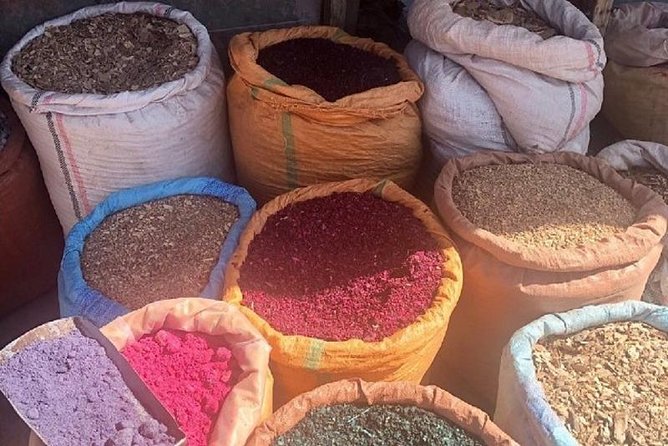
From Atkilt Tera, you continue toward Merkato, the city’s largest and busiest open-air market. The tour focuses especially on the spice market, where color and scent do much of the explaining.
This is one of the strongest parts of the day. Ethiopian cooking depends on blends and seasonings that can be difficult to identify from a menu alone. Seeing the spices in their selling environment gives you a better sense of how food is bought and prepared.
Merkato is also a place where a guide adds real value. The market can be confusing, and the crowds make it difficult to know where to go next. Guides and drivers have taken care to keep visitors together and safe in the busiest sections. You can concentrate on the stalls instead of worrying about losing your bearings.
If you want to buy souvenirs, ask for help. One guide helped a visitor find suitable purchases at a fair price. Still, you should treat shopping as optional. This is not mainly a shopping tour, and bargaining is part of the process.
Allow room in your bag for coffee or spices if you plan to buy them. Ask about packaging and customs rules before purchasing food products for the trip home.
Making injera with local cooks
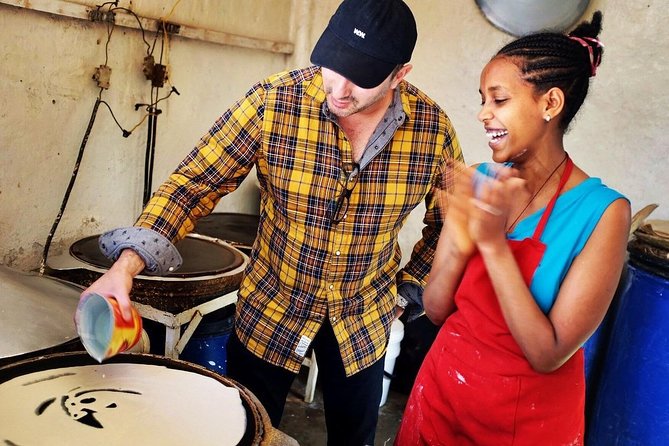
The hands-on injera session is the tour’s clearest cooking activity. You meet women who demonstrate how the traditional Ethiopian bread is made, then try the process yourself.
Injera is more than a side dish. It is the base of many Ethiopian meals, used to scoop up stews, vegetables, and other foods. It also gives the meal its texture and distinctive sour taste. Making it helps you understand why Ethiopian eating is so communal and tactile.
Your own result may not look perfect. That is part of the fun. One visitor described the attempt as hilariously bad, but still enjoyed the process and eating the bread afterward. The experience is about trying the technique, not producing a professional round.
The information provided does not describe a full chef-led lesson covering every stew or spice blend. If you are booking this mainly as a cooking class, keep your expectations in check. You will learn about injera and take part in its preparation, but the wider food education comes from the markets, lunch, and coffee stops.
More coffee with something to eat in the world:
- Vienna for Food Lovers: Cafés, Markets & Austrian Cuisine
★ 5.0 · 1,063 reviews - Buggy Ride Into the jungle with cave coffee & chocolate tasting
★ 5.0 · 465 reviews - Hanoi: Vietnamese Street Food Tour with Egg Coffee
★ 4.9 · 315 reviews - Da Nang Cooking Class with Coffee Tasting and Market Visit
★ 5.0 · 310 reviews
Lunch at Taitu Hotel in Piassa
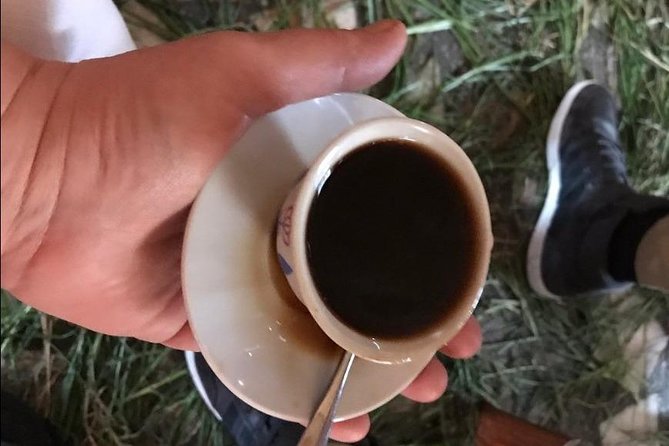
Lunch takes place at Taitu Hotel in Piassa, identified as the first and oldest hotel in Ethiopia. That setting gives the meal a sense of place that a modern restaurant would not provide.
The meal is served as an assortment of Ethiopian dishes, arranged buffet-style. Lunch includes a bottle of water and hot drinks. Expect a chance to sample more than one preparation rather than choosing a single plate.
This is a useful point in the day because you have already seen ingredients and tried making injera. You can now pay attention to how the bread works with the dishes placed on top. If you have never eaten Ethiopian food, your guide can help explain how to combine the items and how to eat with injera.
Portions have been described as good, and the food has drawn some of the strongest praise. Still, buffet offerings can vary, and the tour does not promise a specific menu. Tell the guide about dietary needs when booking, since the supplied information does not list special dietary arrangements.
Piassa also gives you a short sightseeing break before the day moves beyond central Addis Ababa. The tour is food-focused, but the city stops help connect the meal to the streets and neighborhoods around it.
Tomoca Coffee and the taste of Addis
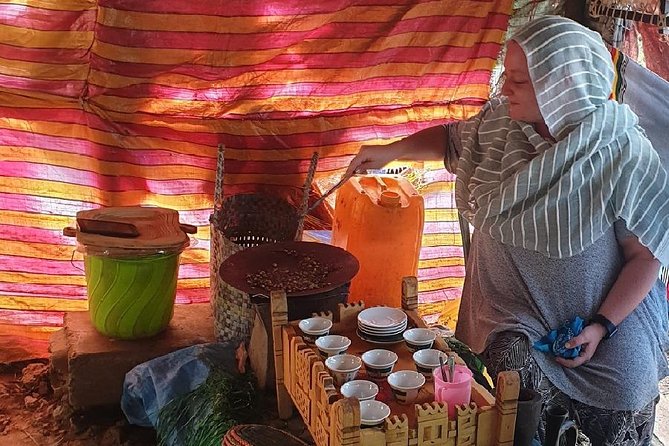
The Tomoca Coffee stop lasts about 30 minutes. Tomoca is presented as the city’s oldest coffee café, with more than half a century of coffee-making tradition. You can order coffee or a macchiato and buy roasted or ground beans as souvenirs.
This is a short stop, but it fills an important gap. Ethiopia is closely tied to coffee, and a café visit shows you the drink in a daily urban setting. It is different from the longer ceremonial experience later in the tour.
If you are buying coffee, ask whether you want whole beans or ground coffee before leaving. The stop is included, but extra purchases are not part of the $85 price.
The order of the day may vary. Some versions place Tomoca before lunch, while others may adjust the route around traffic or a visitor’s previous sightseeing. This is another reason to treat the schedule as a practical outline rather than a minute-by-minute guarantee.
The Sululta coffee ceremony
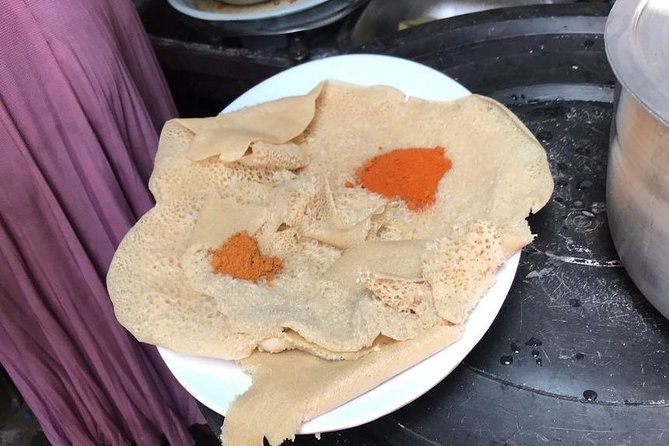
The final major stop takes you out of Addis Ababa to Sululta, a mountain town outside the capital. The drive gives you a change of setting and a chance to slow down after the markets.
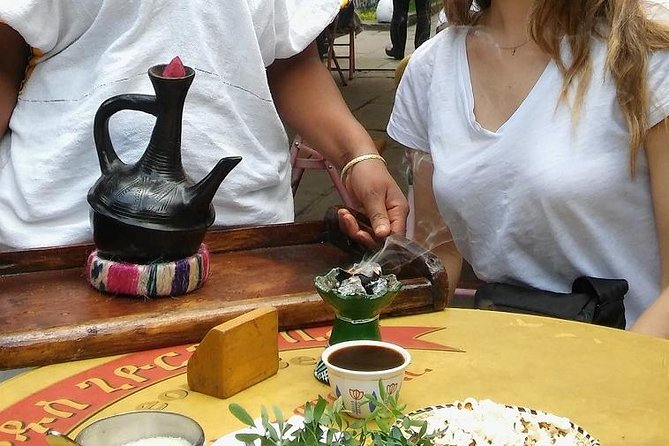
Here you take part in a full Ethiopian coffee ceremony. The demonstration covers washing the beans, roasting them live, and preparing the coffee before you drink it. This is not simply a cup served at the end. The preparation is the main event.
The ceremony makes the social side of coffee easier to understand. Coffee is prepared with care and shared over conversation, rather than treated only as a quick morning drink. The guide or local host explains the stages as they happen.
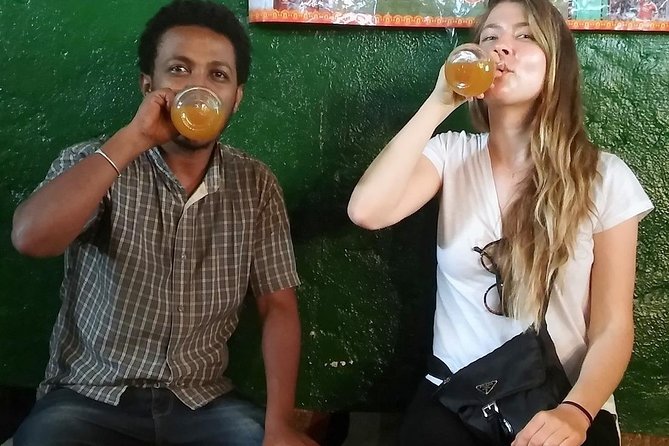
You also taste tej, Ethiopia’s honey wine. The tour includes the honey wine tasting, while other alcoholic drinks are not included. Some versions have included discussion of locally made beer or vodka, but do not assume those drinks are part of the standard package.
The Sululta stop is scheduled for about two hours, making it the longest single activity. That gives the ceremony enough time to feel like an experience instead of a photo stop. If you do not drink alcohol, you can still take part in the coffee ceremony, but the supplied details do not specify an alternative tasting.
Transport, timing, and the $85 price

At $85 per person, this tour offers good value if you want several Addis Ababa experiences in one day. The price covers transport, fuel, driver, English-speaking guide, local guides, lunch, water, hot drinks, the coffee experience, and the organized stops.
You would spend more time and effort arranging these pieces separately. Markets such as Merkato are easier to approach with someone who knows the area, and reaching Sululta requires transport beyond the central city. The price is strongest for first-time visitors with only one free day.
The tradeoff is that you are buying a broad introduction, not a private culinary apprenticeship. A group can contain up to 30 people, so the amount of personal attention depends on the actual group size. The tour may also involve long drives or delays caused by city traffic.
Round-trip transport is offered from any location in Addis Ababa, including hotels, homes, and the airport. Because the published meeting point is Edna Mall, confirm the exact pickup details rather than assuming the vehicle will arrive without prior coordination.
The tour operates in all weather and requires at least two people? The supplied information gives a minimum age of 8, but it does not state a minimum number of participants. Children aged 8 and older can take part, provided they are comfortable with markets, vehicle time, and unfamiliar foods.
Who will enjoy this Addis Ababa experience
I would choose this tour if you have a spare day in Addis Ababa and want food, city life, and cultural context in one outing. It works especially well for first-time visitors who do not want to spend the whole day inside museums or churches.
It also suits curious eaters who like participation. You will not only sit at a restaurant. You will smell spices, watch market activity, attempt injera, drink coffee in two different settings, and taste honey wine.
The tour is a good choice for solo visitors too. One person booked it the night before a free day after a conference and found it a useful way to see the city with a guide and driver. Booking close to the date may be possible, but the average booking time is 26 days ahead, so reserve early if your schedule is fixed.
I would be more cautious if you need a quiet, slow-paced day, dislike crowded places, or want detailed instruction in preparing Ethiopian stews. The tour gives you a broad food and culture lesson, but injera is the only clearly hands-on cooking activity.
The published score is 4.9 from 65 ratings, with 98 percent recommending it. That strong record fits the tour’s best qualities: personable guides, flexible routing, good food, and access to places that can be difficult to manage alone. One poor experience involved a missed pickup and unanswered phone calls during a period of conflict and communications failure. That appears to have been an exceptional operational problem, but you should still confirm pickup details before the morning begins.
What to bring and how to prepare
Wear shoes suited to walking on busy market streets. Dress for changing weather, since the activity operates in all conditions and includes a trip to the higher setting around Sululta.
Bring a small bag for coffee or spice purchases, but avoid carrying unnecessary valuables through crowded market areas. A phone or camera will be useful, though ask before photographing people or private activities.
Come hungry, but not rushed. The day includes lunch, bread tasting, coffee, and honey wine. If you have food restrictions, explain them before departure because the standard details do not promise special menus.
The cancellation policy allows a full refund when you cancel at least 24 hours before the start time. Changes or cancellations made within 24 hours are not accepted for a refund. If poor weather forces cancellation, you are offered another date or a full refund.
Should you book the Ethiopian Culinary Tour?
Book it if you want a practical first taste of Addis Ababa and have only one day. The combination of Atkilt Tera, Merkato, injera making, Taitu Hotel, Tomoca Coffee, and Sululta gives you a wide view of Ethiopian food culture for $85.
I especially recommend it for visitors who value a good guide. Zerefa, Samuel, Seya, Emmanuel, Abiy, and Desale have each been associated with flexible, personable guiding, though you should not assume a particular guide is available unless the operator confirms it.
Skip it if you want a serious cooking course, a small private group, or a relaxed schedule with long time at each stop. For everyone else, this is a well-rounded way to meet Addis Ababa through its markets, meals, coffee, and generous hospitality.
FAQ
How long does the Ethiopian Culinary Tour last?
The tour lasts approximately 5 to 6 hours, although traffic and the exact route may affect the timing.
What is included in the $85 price?
The price includes pickup and drop-off in Addis Ababa, ground transportation, a driver, fuel, an English-speaking guide, local guides, lunch, a bottle of water, hot drinks, and the listed tour activities.
Does the tour include hotel pickup?
Yes. Pickup is offered from hotels, houses, or the airport in Addis Ababa. The published meeting point is Edna Mall on Cameroon Street, so confirm the exact arrangement when booking.
What food activities are included?
You visit Atkilt Tera and Merkato, see spice sellers, learn to make injera, eat an assorted Ethiopian lunch at Taitu Hotel, visit Tomoca Coffee, and join a traditional coffee ceremony in Sululta.
Is honey wine included?
Yes. The Sululta visit includes a taste of Ethiopian honey wine, also called tej. Other alcoholic drinks are not included.
Can children join the tour?
The minimum age is 8 years. The provided information does not list a maximum age.
What happens if I need to cancel?
You can receive a full refund if you cancel at least 24 hours before the local start time. Cancellations or changes made less than 24 hours before departure are not refunded. If poor weather cancels the tour, you are offered another date or a full refund.
More market stops for beans in the world
- Coffee Crawl & VIP Morning in Pike Place Market
★ 5.0 · 75 reviews - Coffee & Food Tastings at Pike Place Market
★ 5.0 · 67 reviews - Vietnam Flavour: Market-to-Table & The Art of Egg Coffee
★ 5.0 · 53 reviews - From Bangkok: Don Wai Market, Wat Samphran & Lotus Café Tour
★ 4.5 · 48 reviews
More food stops with a coffee break in the world
- Hungry in Vienna? A Food Lover’s Coffee & Market Walk
★ 4.9 · 276 reviews - Private Walking Tour, Food Tasting and Bosnian Coffee in Sarajevo
★ 5.0 · 255 reviews - Rome Pantheon: Award Winning Gelato Tiramisu & Espresso Food Tour
★ 5.0 · 99 reviews - Vienna Eats: Private Foodie Walk with Coffee & Markets
★ 5.0 · 77 reviews
Freshly brewed listings in the world
- Vietnamese Coffee 101 Workshop★ 5.0 · 11 reviews
- Vietnamese Coffee Making Class in Hoi An★ 5.0 · 4 reviews
- Vancouver: Street Art & Craft Coffee Walking Tour w/ Tasting★ 4.8 · 11 reviews
- Yerevan: Private Coffee Tour with 2 Café Stops★ 5.0 · 2 reviews
- Ubud: Waterfall, Holy Water Temple,Swing&coffee plantation★ 5.0 · 9 reviews
- Coffee pleasure walking tour★ 5.0 · 12 reviews
- Vienna: Guided Viennese Coffee-House Tour★ 5.0 · 2 reviews
- Turkish Coffee and Traditional Turkish Dessert Cooking★ 4.6 · 8 reviews
Addis Ababa Coffee Tours, compared.

Ethiopia coffee cupping class/Ethiopian food injera making
Read our review →
Ethiopian Culinary Tour – Market, Coffee Ceremony and More
Read our review →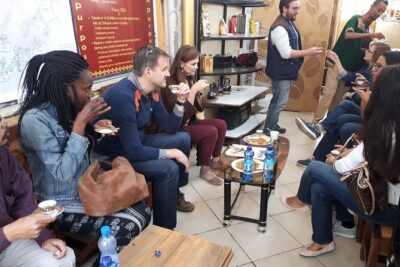
Browse the lists this tour appears in