
Review · BOSNIA AND HERZEGOVINA
Private Walking Tour, Food Tasting and Bosnian Coffee in Sarajevo
Sarajevo’s story comes alive over coffee, copperwork, and a plate of local food. This private walk links the Ottoman bazaar, Austro-Hungarian buildings, religious landmarks, and the Latin Bridge, giving you a useful first look at a city shaped by several cultures.
I like the private format, since Emina, Lamija, or another assigned guide can adjust the pace and answer your questions. I also like the way food is part of the route rather than an afterthought: you taste Bosnian dishes and sweets, then learn how coffee is prepared and served.
The main consideration is time. Two and a half hours is enough for an introduction, but stops are short, and the tour covers many landmarks. If you want long museum visits or a slow meal, you may find the schedule brisk.
Key points to know before booking
- Coffee is part of the culture lesson: You learn how Bosnian coffee is made and drink it in the Ottoman-era Morica Han.
- The route crosses Sarajevo’s major eras: Expect Ottoman courtyards, Austro-Hungarian architecture, religious buildings, and World War I history.
- Food is built into the walk: Bravadziluk Street leads you toward traditional Bosnian dishes and sweets, with a proper food tasting included.
- It is a true private tour: Only your group takes part, which makes questions and pacing easier.
- The copper street has a human story: Kazandziluk includes local metalwork and examples of copper and brass pieces, including objects made from spent mortar casings.
- The price buys local orientation: At $66.54 per person, value depends on group size, but the fee covers a private guide, food tasting, coffee, and a compact city introduction.
Starting beside Sarajevo City Hall
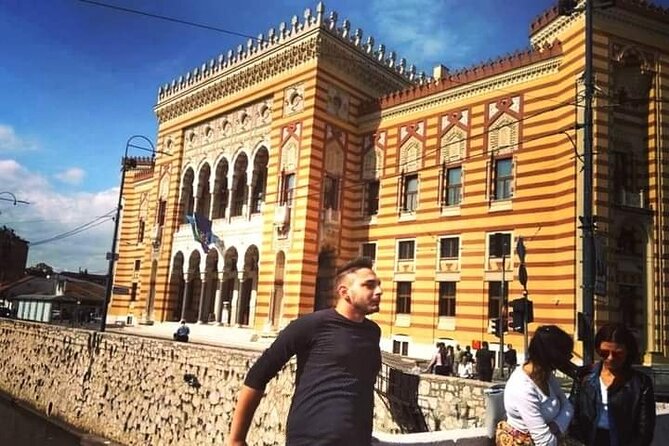
The meeting point is Sarajevo City Hall, at Brodac 1. This is a sensible place to begin because the building gives you an immediate lesson in Sarajevo’s Austro-Hungarian past.
City Hall, known as Vijećnica, is one of the city’s most recognizable buildings. It was built during Austro-Hungarian rule and later served as the National and University Library. Your guide uses it to explain how Sarajevo changed as different empires and communities shaped the city.
You will not spend a long period inside the building as part of the stated route. The stop is listed as about 10 minutes, so think of it as an architectural and historical introduction rather than a full interior visit.
From here, the walk heads toward the old bazaar and the heart of historic Sarajevo. Since the tour covers several landmarks in a short time, wear comfortable shoes and expect ordinary city walking rather than a seated sightseeing experience.
More Coffee Walking Tours in the world:
- Seattle: Coffee Culture Walking Tour
★ 4.8 · 84 reviews - Santo Domingo Small Group Walking Tour: Beer and Specialty Coffee
★ 5.0 · 55 reviews - Melbourne Coffee Lovers Walking Tour
★ 5.0 · 51 reviews
Sebilj and the first taste of Baščaršija
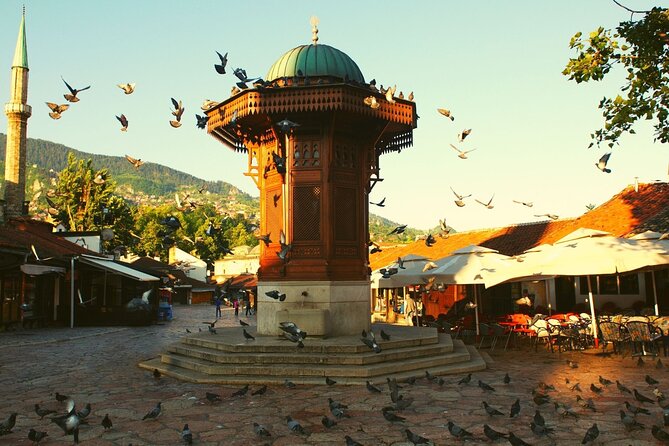
Sebilj, the wooden fountain in Baščaršija’s Pigeon Square, is one of Sarajevo’s most familiar sights. The present fountain dates from the 18th century and gives the square its old Ottoman character.
The planned stop lasts about 25 minutes, one of the longest pauses on the route. That extra time matters because this is where your guide lays out the broader story of Bosnia and Sarajevo, not just the history of one fountain.
The square can be a busy place, with pigeons, people, shops, and cafés around it. That makes it a good setting for getting your bearings, though it is not a quiet place for a long, private lecture. I would use this stop to ask your guide how the city’s Ottoman, Austro-Hungarian, and later periods fit together.
Kazandziluk, where copperwork meets coffee
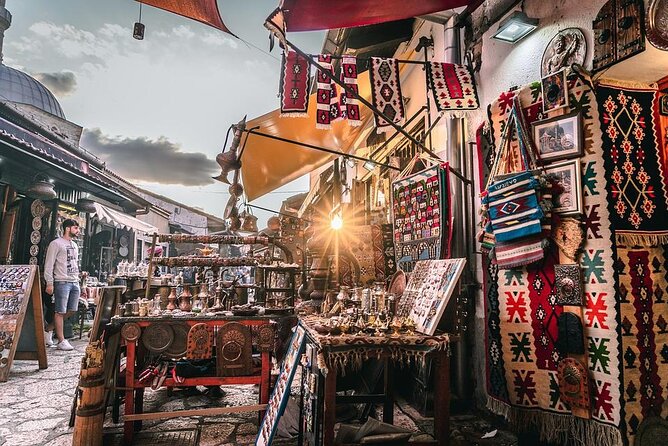
Kazandziluk is Sarajevo’s old coppersmith street. Its small shops display hammered copper and brass goods, from practical coffee pieces to decorative objects.
The craft is not only visual decoration. It connects directly with the coffee portion of the tour, since traditional Bosnian coffee is prepared and served in distinctive metal vessels. Your guide explains why coffee matters in Bosnian social life and shows you the local way to make and drink it.
A particularly meaningful detail is the use of old mortar shell casings to make vases and other objects. That transformation gives the craft a clear Sarajevo connection: something made for destruction becomes something useful or beautiful.
The stop itself is listed at about 10 minutes, so you will get an introduction rather than a full workshop visit. If you want to buy copperware, this is a place to note what you like and return later with more time.
Morica Han and the ritual of Bosnian coffee
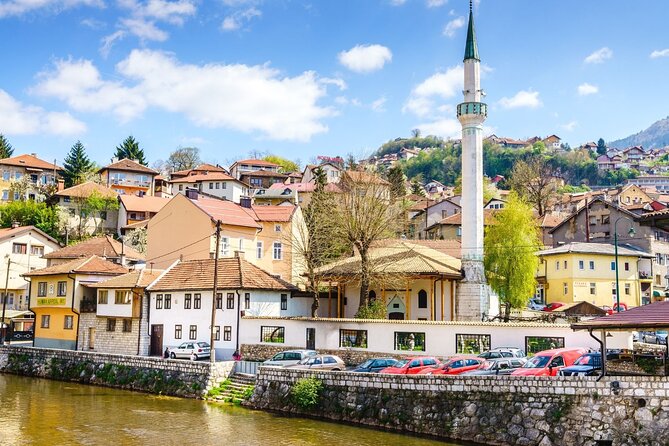
Morica Han is one of the strongest stops on the route. This former caravanserai recalls the Ottoman period, when inns like this offered shelter to people and animals moving along trade routes.
Here, you taste Bosnian coffee as a local. The point is not simply caffeine. Bosnian coffee is tied to hospitality, conversation, and the careful rhythm of serving it. Your guide shows you the traditional method and explains how to approach the cup.
For many visitors, this becomes the tour’s most memorable cultural moment because it is practical. You are not only looking at an old building. You are learning a small custom you can repeat after you leave Sarajevo.
The visit lasts about 25 minutes, giving the coffee lesson room to breathe. Still, do not expect a long café session with unlimited food. This is a focused tasting within a walking tour.
More Coffee Tastings in the world:
- Hanoi Coffee Experience: 6 Brews, 9 Recipes & 3 Liquor Tastings
★ 5.0 · 2,945 reviews - Medellin: Coffee Tour with Transport, Snacks and Tastings
★ 4.7 · 1,357 reviews - Seattle Coffee Tour: Capitol Hill Cafes, Tastings & Local Stories
★ 5.0 · 489 reviews - Buggy Ride Into the jungle with cave coffee & chocolate tasting
★ 5.0 · 465 reviews
Bravadziluk Street and the food tasting
Bravadziluk Street is known for places serving traditional Bosnian food. Your guide points out dishes and sweets that are important to local cooking and recommends what to try during your stay.
The supplied details do not name each dish, so the exact tasting can vary. You should expect traditional Bosnian flavors rather than a generic international food stop. One account describes a generous meal at a small café, with enough food to make the tasting feel like lunch rather than a token sample.
That is a useful distinction when judging the $66.54 price. You are paying for more than a walk past restaurants. The food, coffee, and private guiding form a package that can replace one meal and give you a starting list for later dining.
The stated stop at Bravadziluk is only three minutes, which likely means the street introduction is brief. The actual food service may be handled nearby or as part of the route rather than as a formal stop with a long listed duration. If a full meal is important to you, ask the operator how much food is included and where it will be served before booking.
Sarajevo’s clock, cathedral, and layered faiths
The Old Sarajevo Clock Tower gets only about two minutes, but it carries a curious local story. The clock is famous for showing a different kind of time, connected with the traditional practice of marking the hours from sunset.
This is a quick look, not a full explanation on its own, so listen closely while your guide connects it to the nearby mosque and the old city.
The route also includes the Sacred Heart Cathedral, a large Neo-Renaissance church built under the Austro-Hungarian Monarchy. Nearby is a statue of Pope John Paul II, who visited Bosnia twice.
At the cathedral, your guide also explains Sarajevo roses. These are marks in the pavement associated with mortar explosions, later filled with red material to remember people killed during the siege. The subject is difficult, but it helps you see that Sarajevo’s recent past is present in ordinary streets, not only in museums.
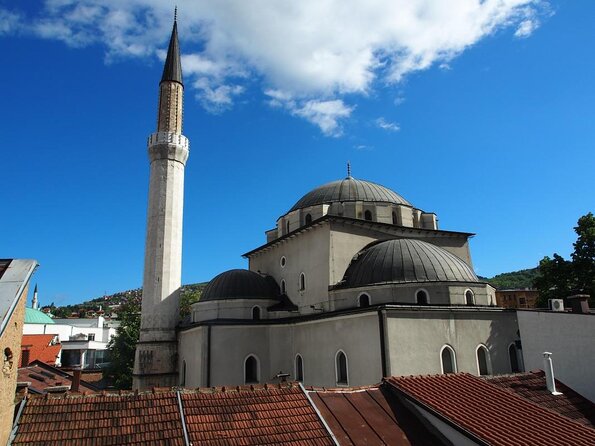
The tour then visits Gazi Husrev-beg Mosque, Sarajevo’s largest mosque and one of its most important Ottoman buildings. It is a major architectural stop, but remember that a mosque is an active place of worship. Dress and behavior should be respectful, and access to interior areas can depend on current conditions.
The close presence of the mosque and cathedral is one of Sarajevo’s most useful lessons. Within a compact area, you can see how Islamic, Catholic, Orthodox, and Jewish communities have shared the city. The route also includes the Serbian Orthodox Cathedral, the Cathedral of the Nativity of the Theotokos, known for its architecture and construction story.
A local synagogue is mentioned in the food-and-history experience described by one participant, but it is not listed as a formal stop in the supplied itinerary. Do not assume an interior visit there is included.
Bezistan and the old Ottoman market
Gazi Husrev Bey’s Bezistan is an old covered bazaar, another reminder of the Ottoman town that once shaped this part of Sarajevo.
The stop is included in the route description but does not have a separate time allocation. That means you should see it as part of the walking flow, not as a long shopping session.
Bezistan helps tie the other Ottoman stops together. Sebilj is the public square, Kazandziluk is the craft street, Morica Han is the caravan inn, and the bezistan is the market. Taken together, they show how the old commercial quarter worked.
Latin Bridge and the event that changed Europe
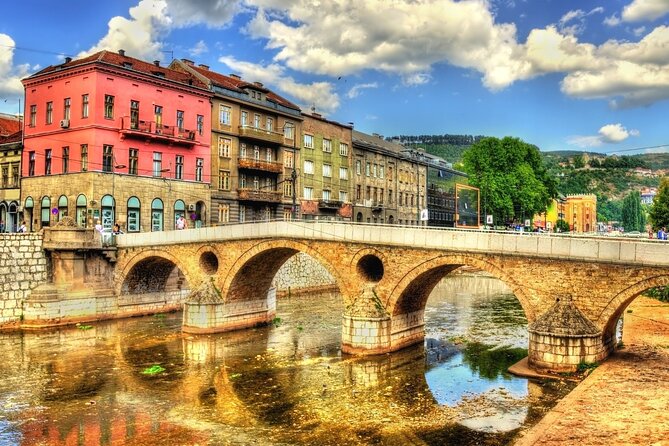
The walk finishes near Latin Bridge, the site associated with the assassination of Archduke Franz Ferdinand in 1914. That event helped set off the chain of events leading to World War I.
Your guide tells the story at the place where it happened, which gives the history a sharper edge than reading the same facts in a guidebook. The listed stop lasts about 10 minutes, enough for an explanation and questions.
The tour description also lists the Serbian Orthodox Cathedral after the Latin Bridge, while the route notes that the activity finishes near the bridge. Because the order and endpoint details are not fully consistent, confirm the exact final meeting point with Bella Bosnia Tours if you need to coordinate transport or another booking afterward.
How the private format changes the experience
This is not a large group outing. Only your party takes part, and that changes the rhythm in useful ways.
You can ask about Bosnia’s wartime past, Ottoman customs, food, architecture, or coffee without waiting for a group of strangers. A private guide can also spend more time on what interests you, although the short overall duration limits how far that flexibility can go.
Emina is specifically praised for easy-to-follow historical explanations and practical suggestions for the rest of a Bosnia visit. Lamija is also named as an informative and engaging guide. These details matter because Sarajevo’s story can become confusing if it is presented as a list of dates and empires. A guide who explains the links clearly is worth more than one who simply points at buildings.
The tour is offered in English. Confirmation is provided when you book, and service animals are allowed. The route is near public transportation, and most people can participate, but it remains a walking tour with several stops across the old center.
Is $66.54 per person fair?
The price is strongest for a small party. If two people book, you are paying for a private guide, roughly two and a half hours of attention, a food tasting, and Bosnian coffee. That is a reasonable way to combine orientation and lunch on your first day.
For a larger private group, the per-person cost may feel especially fair because the guide fee is shared. If you are alone, the same price is less of a bargain, though you still receive a private experience.
The tour does not include major admission tickets, since the stops are primarily public streets, exterior landmarks, religious buildings, and historic spaces. That keeps the price focused on guiding, food, and coffee rather than entry fees.
I would book it early if the timing matters to you. It is commonly reserved about 28 days ahead, which suggests that popular dates can fill before arrival. Free cancellation is available until 24 hours before the start time. After that point, the amount paid is not refunded, and changes are not accepted. A minimum group size is required, so a cancellation by the operator can result in another date, another experience, or a full refund.
Who will get the most from this walk?
I would choose this tour for a first day in Sarajevo. It gives you a map in your head, introduces the main historic quarters, and provides food ideas for the rest of your stay.
It suits you especially well if you want:
- A private guide rather than a large group
- History explained in plain language
- A traditional food tasting
- A practical introduction to Bosnian coffee
- A quick look at several faiths and empires in one district
- Suggestions for what to eat and see later
It is less suitable if you want extensive time inside museums, a long cooking class, or a slow, restaurant-focused food tour. The route moves quickly, and some landmarks receive only a few minutes.
Should you book the Sarajevo food and coffee walk?
Yes, if you want an efficient first look at Sarajevo with food and local customs built into the history. The strongest parts are the private guiding, Morica Han coffee lesson, copperwork street, and the way Ottoman, Austro-Hungarian, religious, and World War I sites fit into one walk.
Before paying, confirm the exact food portions, the final endpoint, and the order of the cathedral and Latin Bridge stops. If those details suit your plans, $66.54 buys a useful introduction to Sarajevo that goes beyond checking off monuments. It gives you a few dishes to seek out, a coffee ritual to repeat, and enough context to make the old city easier to understand.
FAQ
How long does the private Sarajevo walking tour last?
The experience lasts approximately 2 hours and 30 minutes.
What language is the tour offered in?
The tour is offered in English.
Where does the tour begin?
The meeting point is Sarajevo City Hall, Brodac 1, Sarajevo 71000, Bosnia and Herzegovina.
Where does the tour finish?
The tour description says it finishes near the Latin Bridge, but it also lists the Serbian Orthodox Cathedral as a stop. Confirm the precise endpoint with Bella Bosnia Tours if you need a firm departure location.
Is food included in the experience?
Yes. The tour includes a tasting of traditional Bosnian food and sweets, plus Bosnian coffee at Morica Han.
Can I cancel for a full refund?
Yes, if you cancel at least 24 hours before the experience starts. Cancellations made less than 24 hours before the start time are not refunded, and changes are not accepted within that period.
More food stops with a coffee break in the world
- Rome Pantheon: Award Winning Gelato Tiramisu & Espresso Food Tour
★ 5.0 · 99 reviews - Vienna Eats: Private Foodie Walk with Coffee & Markets
★ 5.0 · 77 reviews - Coffee & Food Tastings at Pike Place Market
★ 5.0 · 67 reviews - Ethiopian Culinary Tour – Market, Food, Coffee Ceremony & more
★ 5.0 · 65 reviews
More coffee with something to eat in the world
- Vienna for Food Lovers: Cafés, Markets & Austrian Cuisine
★ 5.0 · 1,063 reviews - Hanoi: Vietnamese Street Food Tour with Egg Coffee
★ 4.9 · 315 reviews - Da Nang Cooking Class with Coffee Tasting and Market Visit
★ 5.0 · 310 reviews - Hungry in Vienna? A Food Lover’s Coffee & Market Walk
★ 4.9 · 276 reviews
Freshly brewed listings in the world
- Vietnamese Coffee 101 Workshop★ 5.0 · 11 reviews
- Vietnamese Coffee Making Class in Hoi An★ 5.0 · 4 reviews
- Vancouver: Street Art & Craft Coffee Walking Tour w/ Tasting★ 4.8 · 11 reviews
- Yerevan: Private Coffee Tour with 2 Café Stops★ 5.0 · 2 reviews
- Ubud: Waterfall, Holy Water Temple,Swing&coffee plantation★ 5.0 · 9 reviews
- Coffee pleasure walking tour★ 5.0 · 12 reviews
- Vienna: Guided Viennese Coffee-House Tour★ 5.0 · 2 reviews
- Turkish Coffee and Traditional Turkish Dessert Cooking★ 4.6 · 8 reviews
Bosnia and Herzegovina Coffee Tours, compared.
Sarajevo Old Town: Bosnian Coffee, Baklava & Panoramic Views
Read our review →
Sarajevo: City Tour with Bosnian coffee ritual ☕️
Read our review →Browse the lists this tour appears in