Review · BOSNIA AND HERZEGOVINA
Sarajevo Old Town: Bosnian Coffee, Baklava & Panoramic Views
Sarajevo reveals its story one street at a time, and this walk gives you a useful introduction to the city’s mix of Ottoman, Austro-Hungarian, religious, and modern landmarks. You’ll hear about the assassination of Franz Ferdinand, the 1984 Winter Olympics, and the city’s more recent wartime experience from a local guide who knows the place personally.
I like the Bosnian coffee break, which turns a standard sightseeing walk into a chance to sit, taste, and talk. I also like the route’s range, from the Eternal Flame and Latin Bridge to Baščaršija, copper workshops, mosques, churches, and a high viewpoint. The main consideration is the amount of walking: the tour lasts from 150 minutes to three hours, so comfortable shoes matter.
- Local guides with personal Sarajevo experience: Amela, Daniella, and Dijana are among the guides named for this experience.
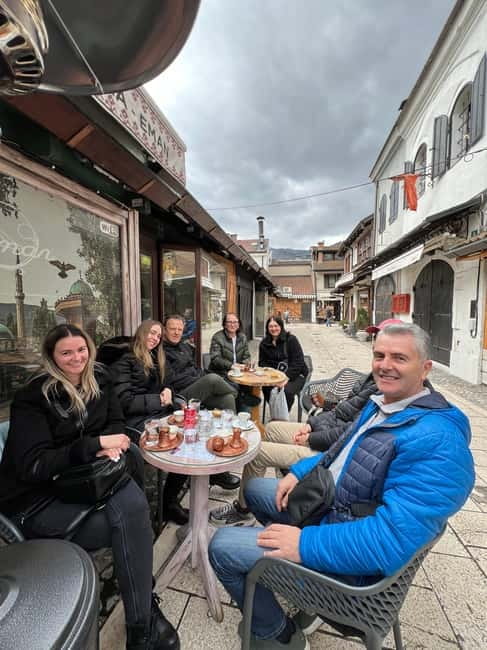
- A proper Bosnian coffee stop: You learn how this traditional drink is prepared and served, with time for coffee and sweets.
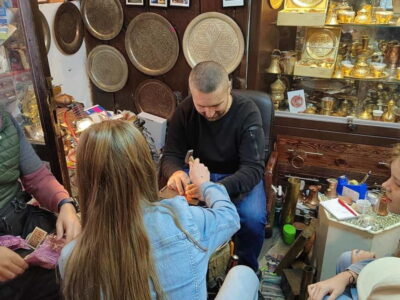
- Five centuries of copper craft: At Kazandžiluk, you can learn about Sarajevo’s copper-working tradition and try it yourself.
- Religious and cultural contrasts: Orthodox, Catholic, Muslim, and civic landmarks appear along one compact route.
- A clear introduction to major events: The walk covers the 1914 assassination and Sarajevo’s role as a 1984 Olympic city.
- A final city view: The route ends near Sebilj after a stop at a viewpoint overlooking Sarajevo.
Sarajevo in one walk, from the Eternal Flame to Sebilj
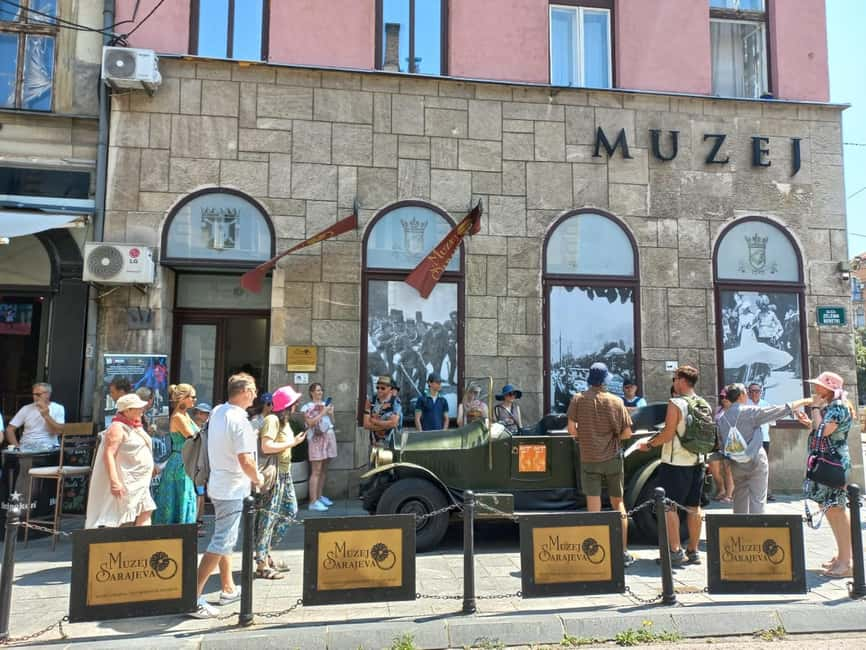
This experience is best understood as an orientation walk with a strong local voice. You begin at the Eternal Flame, the meeting point on Sarajevo’s central pedestrian area, and finish at Sebilj in Baščaršija. Along the way, the guide connects places that can otherwise seem like separate photo stops.
The advertised duration ranges from 150 minutes to three hours. That difference matters. A shorter outing should give you the main landmarks and coffee break, while a longer version leaves more room for questions, explanations, and the copper-craft portion. The exact pace may depend on the group and the guide.
The tour is offered in English, Bosnian, Croatian, Serbian, and Serbo-Croatian. Private groups are available, and private bookings include hotel pickup or pickup at an agreed address. The regular meeting point is the Eternal Flame at 10 am. Look for a Sarajevo Experiences T-shirt or umbrella.
The Eternal Flame and Sarajevo’s central streets
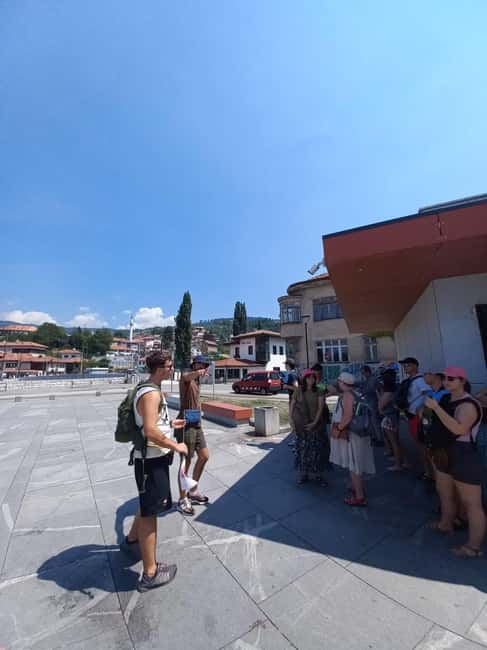
The Eternal Flame is a practical place to begin because it puts you in the middle of modern Sarajevo. From here, the route moves through the city’s central streets toward the older quarters.
You’ll visit the City Market Hall, a handsome reminder of Sarajevo’s Austro-Hungarian period. The market is also a useful sign that this city cannot be reduced to one era or one culture. The guide helps connect the architecture with Sarajevo’s wider story instead of treating each building as an isolated monument.
The route continues to the Cathedral Church of the Nativity of the Theotokos and the Sacred Heart Cathedral. Seeing these two Christian landmarks during the same walk gives you a quick sense of Sarajevo’s religious variety. It is one of the strongest parts of the route because the subject is not presented as a museum display. These are working parts of the city’s public life and identity.
At the Sarajevo Meeting of Cultures marker, the route makes that point especially clear. One side reflects the Austro-Hungarian city, while the other leads toward the Ottoman quarter. It is a simple visual change, but it helps you understand why Sarajevo feels so distinctive.
More Coffee Tours in the world:
- Hanoi Coffee Experience: 6 Brews, 9 Recipes & 3 Liquor Tastings
★ 5.0 · 2,945 reviews - Medellin: Coffee Tour with Transport, Snacks and Tastings
★ 4.7 · 1,357 reviews - Istanbul: Turkish Coffee Making and Fortune Telling Workshop
★ 4.9 · 1,308 reviews
Latin Bridge and the event that changed Europe
Latin Bridge is one of the most important stops on the walk. Near here, Archduke Franz Ferdinand and his wife, Sophie, were assassinated in 1914. The event helped trigger the First World War, so the site carries importance far beyond Sarajevo.
A good guide will explain the setting without turning the stop into a dry date lesson. You’ll hear how one moment in this city became tied to a conflict that reshaped Europe and the wider world. This is also a place where you should listen closely and ask questions, since a short explanation can leave out the political tensions behind the event.
The walk does not focus only on war. It also covers Sarajevo as the host city of the XIV Winter Olympic Games in 1984. That contrast matters. Sarajevo is not only a place associated with assassination and siege. It was also an Olympic city, and the tour gives you a more balanced sense of its public identity.
Ottoman Sarajevo around the Emperor’s Mosque
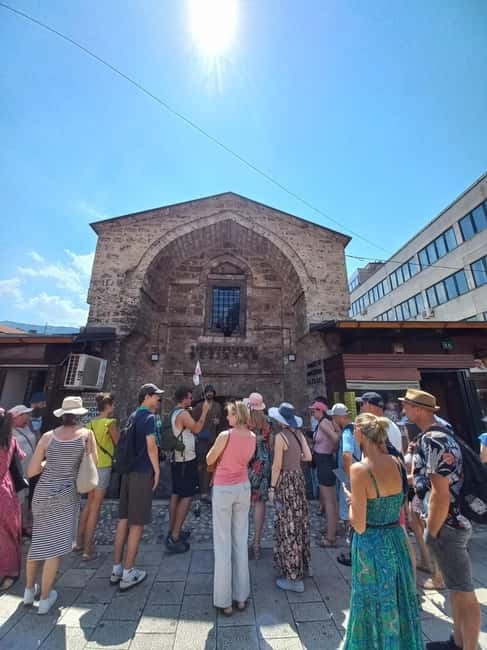
From Latin Bridge, the route turns toward the Ottoman-era heart of the city. The Emperor’s Mosque and Gazi Husrev-beg Mosque show the importance of Sarajevo’s Islamic heritage and the long Ottoman influence on its streets, customs, and architecture.
Gazi Husrev-beg Mosque is one of the key landmarks in Baščaršija. The guide explains its place in the city rather than asking you to simply admire the exterior. If you have never visited Sarajevo, this section helps explain why the old center feels so different from the streets around the Eternal Flame.
Morića Han adds another layer. This historic inn was part of the commercial life of the Ottoman city, when merchants and other visitors needed places to rest. It helps you picture Sarajevo as a meeting point for trade and people, not just as a collection of old buildings.
The route is especially useful here because the guide can explain local customs alongside architecture. The supplied information places strong emphasis on Sarajevo’s hospitality and spirit, and this is where those ideas make the most sense. You are walking through spaces shaped by commerce, faith, craft, and daily social life.
City Hall, copper craft, and the work of the hands
Sarajevo City Hall is one of the city’s most recognizable buildings and another clear marker of the Austro-Hungarian period. The building gives the route a grand architectural pause before it returns to the smaller streets and workshops of Baščaršija.
At Kazandžiluk, you get a different kind of history. This street is connected with Sarajevo’s traditional copper-working trade, described as a craft with roughly 500 years of local roots. The point is not just to look at finished objects. You can learn how the craft fits into Sarajevo’s culture and even try it yourself.
That hands-on element gives the walk extra value. A guide can tell you that a craft is old, but handling the process gives you a better sense of the patience and skill involved. It also makes Kazandžiluk more than another stop for photographs.
You should keep your expectations practical. The information promises an introduction to the craft and a chance to try it, not a full workshop or a finished object made from start to finish. Still, for a low-cost walking tour, this is a welcome feature and one of the more distinctive parts of the experience.
Same town, another way to drink it:
- Hanoi Coffee Workshop: Taste Salt, Coconut and Egg Coffee
★ 5.0 · 1,286 reviews - Vienna for Food Lovers: Cafés, Markets & Austrian Cuisine
★ 5.0 · 1,063 reviews - Big Island Highlights: Coffee, Volcano, Black Sands & Waterfall
★ 5.0 · 1,054 reviews - Hanoi: Salt Coffee Workshop Awake Your Senses With 6 Brews
★ 5.0 · 792 reviews
Baščaršija, Sebilj, and the Bosnian coffee pause
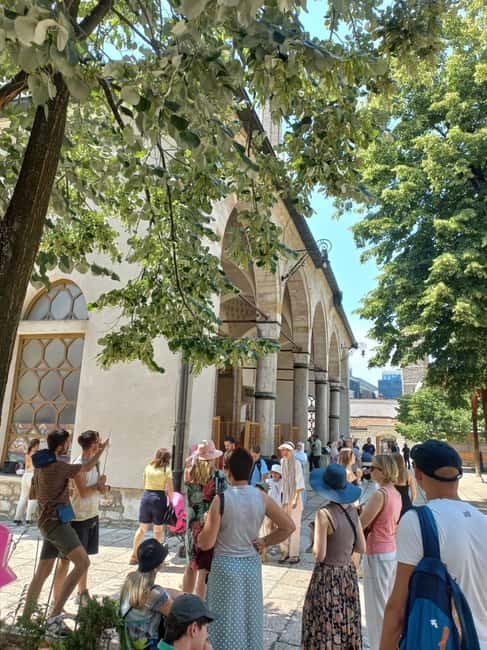
Baščaršija is the natural heart of the route. Its narrow streets, small shops, religious buildings, and traditional crafts give you the clearest picture of old Sarajevo. This is where the walking tour’s different themes come together: Ottoman town planning, local trade, coffee culture, copper work, and the city’s habit of bringing different communities close together.
Sebilj is the final landmark on the regular route and a familiar meeting place in the old bazaar. It is also the end point, so you can continue exploring Baščaršija after the tour without needing to find your way back across town.
The coffee break takes place at a local café and lasts about 20 minutes. You’ll receive Bosnian coffee prepared and served in the traditional way, with traditional sweets such as baklava included in the experience’s theme. This is not meant to be a long meal. Think of it as a short cultural pause where the guide can explain how coffee fits into local life.
I like this part because it slows the pace. Sarajevo’s history can become heavy, especially when the conversation includes war and the assassination of Franz Ferdinand. Sitting down for coffee and sweets gives the experience a human rhythm and lets you ask the guide about food, customs, and everyday life.
Amela, Daniella, and Dijana are among the guides associated with this experience. The comments provided about them point to friendly, clear explanations, with Dijana noted for answering questions about history, architecture, culture, customs, and food. One particularly useful habit is the guide’s willingness to suggest other places to see and things to try after the walk.
The viewpoint above Sarajevo
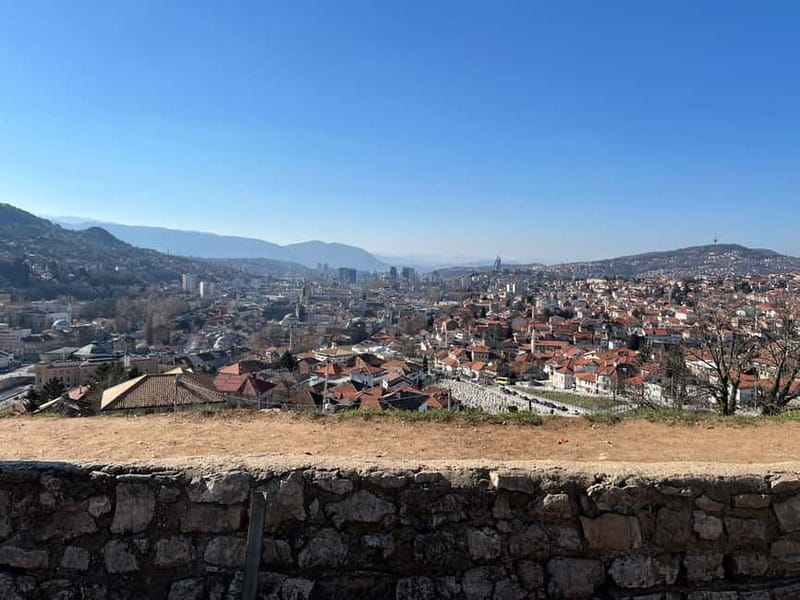
Just when the route seems complete, it includes a viewpoint with a broad view of Sarajevo. The scenic stop lasts about 15 minutes, and it gives you a chance to understand the city’s setting from above.
The exact viewpoint is not specified, so I would not book this expecting a named landmark or a long hilltop excursion. What is clear is that the stop offers a panoramic view and comes near the end of the walk. The city view works best after you have seen the central streets below. You can connect the old quarter, newer city areas, and surrounding hills in one glance.
The viewpoint also gives you a useful way to remember the tour. Sarajevo can feel like a dense sequence of streets when you first arrive. Seeing it from above helps organize the city in your mind.
What the $20 price really covers
At $20 per person, this is a good-value introduction to Sarajevo if you want history, local context, coffee, and a city view in one outing. The price includes the guided walk, an English-speaking local guide, Bosnian coffee, and the panoramic viewpoint.
The value comes mainly from the guide. You can walk past the Eternal Flame, Latin Bridge, the mosques, City Hall, and Sebilj on your own, but you will miss the links between them. The coffee and craft elements also make this more than a basic orientation walk.
No separate entrance tickets are listed as part of the experience, and the route is primarily outdoors. If you prefer a tour built around major indoor museum visits, this may not be the right fit. If you want a compact introduction before exploring Sarajevo on your own, the price is sensible.
The group may also be booked privately. That option can be worth considering if you want to move at your own pace, ask many questions, or arrange pickup from your hotel. The standard meeting point is easy to find, but a private pickup removes one small piece of morning planning.
Practical advice before you go
Wear comfortable shoes. The route includes a moderate amount of walking through narrow streets and squares, and the duration can reach three hours.
Check the forecast before leaving and dress for the weather. The experience is a walking tour with outdoor stops, including the viewpoint, so you should not plan on spending the whole time inside.
The tour is listed as wheelchair accessible, but it is still sensible to confirm the route details when booking if mobility is a major concern. The walk includes several historic areas, and the exact conditions can vary from one street or square to the next.
Cancellation is free up to 24 hours before the tour for a full refund. You can also reserve now and pay later, which is useful if your Sarajevo plans are still changing.
Who should book this Sarajevo walk?
I would recommend this tour to first-time visitors who want a clear introduction to Sarajevo without spending a full day on a formal sightseeing program. It suits people who enjoy a guide’s personal explanations, short cultural tastings, and a route that covers several periods of the city’s past.
It is also a good choice for anyone who wants help understanding Sarajevo’s religious mix. The churches, mosques, Meeting of Cultures marker, and Ottoman and Austro-Hungarian landmarks create a strong framework for independent exploring later.
Families and small groups may prefer the private option, especially if they want hotel pickup or extra time for questions. History-minded visitors should find the stops at Latin Bridge and the Olympic references useful, while food-focused visitors will appreciate the coffee, sweets, and copper-craft elements.
I would hesitate only if you dislike walking, want a quiet museum tour, or need a tightly fixed finish time. The stated duration varies, and a good conversation with the guide may stretch the outing toward three hours.
Should you book it?
Book this walk if you want Sarajevo explained by a local, not simply pointed out from a list. The combination of major sights, personal stories, Bosnian coffee, traditional sweets, copper craft, and a panoramic view gives you a well-rounded first look at the city.
The strongest reason to choose it is the guide’s role. Amela, Daniella, and Dijana are noted for friendly and detailed explanations, and Dijana in particular is described as able to answer questions across history, architecture, culture, food, and local customs. At $20, that human context makes the experience worthwhile.
Skip it if you prefer to explore every stop at your own pace or want a tour focused mostly on museums and formal interiors. Otherwise, this is a practical first morning in Sarajevo, with enough history to orient you and enough local flavor to make the city feel personal.
FAQ
Where does the tour start?
The regular tour starts at the Eternal Flame monument in Sarajevo at 10 am.
Where does the tour finish?
The tour finishes at Sebilj in Baščaršija.
How long does the experience last?
The stated duration is between 150 minutes and three hours. Check availability for the starting time and current duration.
What is included in the price?
The $20 price includes a guided walking tour, an English-speaking local-expert guide, Bosnian coffee, and a panoramic view of Sarajevo.
Is Bosnian coffee included?
Yes. The tour includes a traditional Bosnian coffee stop at a local café, with about 20 minutes set aside for the break.
Which languages are available?
Guides may conduct the tour in English, Bosnian, Croatian, Serbian, or Serbo-Croatian.
Can I book a private group?
Yes. Private groups are available. For a private booking, the guide can offer free pickup at your hotel or another agreed address.
Freshly brewed listings in the world
- Vietnamese Coffee 101 Workshop★ 5.0 · 11 reviews
- Vietnamese Coffee Making Class in Hoi An★ 5.0 · 4 reviews
- Vancouver: Street Art & Craft Coffee Walking Tour w/ Tasting★ 4.8 · 11 reviews
- Yerevan: Private Coffee Tour with 2 Café Stops★ 5.0 · 2 reviews
- Ubud: Waterfall, Holy Water Temple,Swing&coffee plantation★ 5.0 · 9 reviews
- Coffee pleasure walking tour★ 5.0 · 12 reviews
- Vienna: Guided Viennese Coffee-House Tour★ 5.0 · 2 reviews
- Turkish Coffee and Traditional Turkish Dessert Cooking★ 4.6 · 8 reviews
Bosnia and Herzegovina Coffee Tours, compared.
Private Walking Tour, Food Tasting and Bosnian Coffee in Sarajevo
Read our review →