
Review · DOMINICAN REPUBLIC
Santo Domingo Small Group Walking Tour: Beer and Specialty Coffee
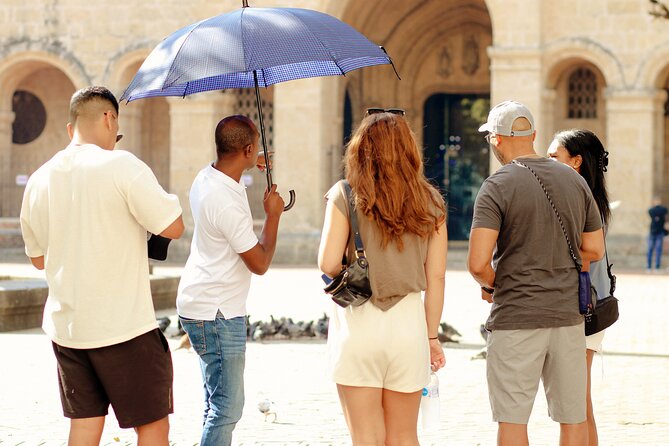
Santo Domingo’s oldest quarter is best understood on foot, and this tour packs a lot into two hours: the first cathedral in the Americas, the first paved street, old military defenses, royal buildings, and crumbling monasteries. Along the way, you get specialty coffee, local beer, and Mama Juana, a spiced Dominican rum drink.
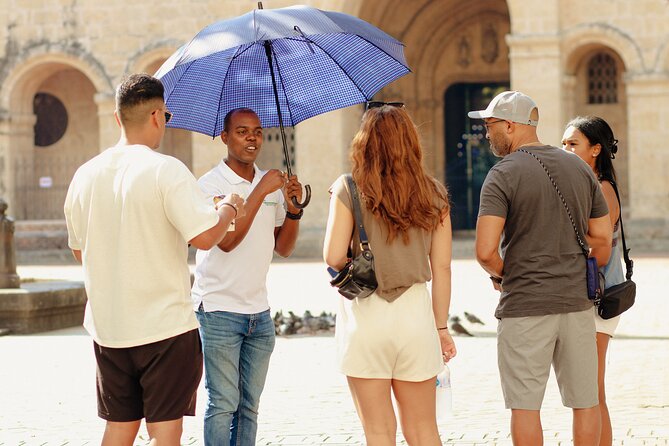
I like the small maximum of 12 people, which gives guides such as Jean Carlos and Paco room to answer questions and adjust the pace. I also like the mix of major landmarks and local drinks. You are not simply ticking off churches and plazas, you are getting a taste of daily Dominican culture too.
The main caution is the pace. There are many stops, and some sites are currently closed or may be unavailable on Mondays. If you want long museum visits or a leisurely look at every building, this tour may feel brisk.
Key points at a glance
- A compact tour of the Colonial Zone: Cover major sights in about two hours, beginning and ending at Casa Barista & Co.
- The cathedral and Royal Houses Museum are included: Admission depends on opening schedules, with Monday closures affecting both.
- Three local drink experiences: Choose a latte, cappuccino, tea, or hot chocolate, then try local beer and Mama Juana.
- A bilingual guide leads the walk: Information is shared in English and Spanish, with guides such as Jean Carlos and Paco praised for humor, patience, and local insight.
- Several landmarks are currently exterior-only: The Alcazar de Colon and Pantheon are closed for renovations, while the Royal Houses Museum may have maintenance work.
- The route suits active sightseers: Expect cobblestones, outdoor walking, and frequent stops rather than a slow museum-focused visit.
Starting with coffee in Santo Domingo’s Colonial Zone
The tour begins at Casa Barista & Co. on Calle Arzobispo Meriño 268. That is a useful starting point because you can settle in with a specialty drink before heading into the old quarter. Your included choice is a latte, cappuccino, tea, or hot chocolate.
This first drink is more than a pleasant extra. Santo Domingo’s historic center can feel like a lot to take in at once, with churches, plazas, museums, vendors, and layers of Spanish colonial architecture close together. Beginning with coffee gives you a moment to meet your guide and get oriented.
The tour is bilingual, with information given in English and Spanish. If you need a slower explanation or want to ask questions, a smaller group helps. The maximum is 12 people, and the tour may become a private experience if few people book that time slot. Jean Carlos has been especially good at combining history, culture, religion, and folklore in an easygoing way. Paco is another guide associated with the experience.
The route lasts about two hours, though a private outing can run closer to two and a half hours when the group moves at its own pace. That difference matters. The advertised schedule is a highlights walk, not a full day of indoor sightseeing.
More Specialty Coffee Tours in the Dominican Republic:
- Cartagena: Colombian Specialty Coffee Tasting
★ 4.4 · 130 reviews - Coffee Farm Tour with Roasting & Tasting Workshop – Da Lat
★ 5.0 · 126 reviews - Private Coffee Roasting Class
★ 5.0 · 101 reviews
Parque Colon and the first cathedral in the Americas
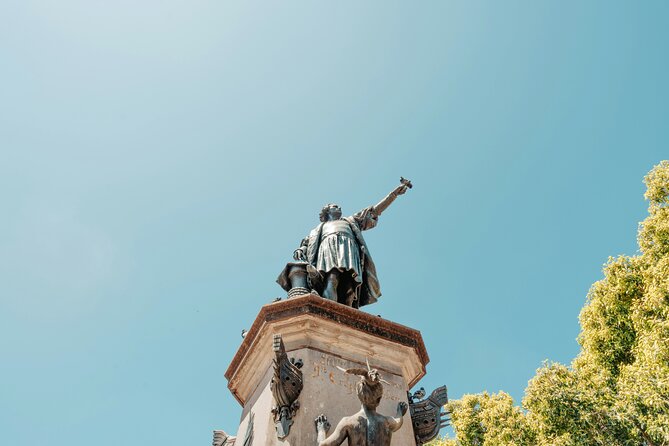
Your first major stop is Parque Colon, the central square of the Colonial Zone. A statue of Christopher Columbus gives the square its name, and the open space offers a useful introduction to the neighborhood. You will spend only about five minutes here, so think of it as a meeting point and orientation stop rather than a detailed visit.
From the park, the route continues to the Catedral Primada de las Américas de Santo Domingo. Construction began in 1504 and took 46 years, making this one of the key sites on the walk. The cathedral is dedicated to St. Mary of the Incarnation and is described as the first and oldest cathedral in the Americas.
You get about 20 minutes here when it is open. That is enough for a guided look and some questions, but not enough for a slow study of every chapel or architectural detail. I would pay close attention to the guide’s explanation, since the value of a short cathedral visit comes from understanding what you are seeing.
Dress carefully if you hope to enter. Shoulders and knees must be covered. The cathedral may be closed on Mondays, and unexpected closures can also affect access. If the doors are shut, your guide will still explain the site from outside, but you should not book this walk expecting guaranteed interior access.
Calle Las Damas and the city’s early Spanish foundations
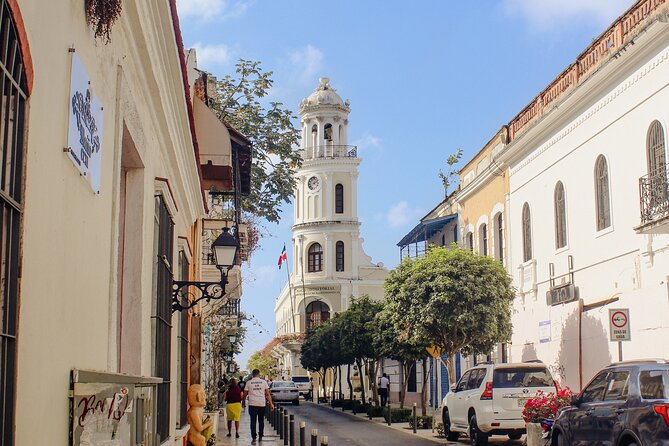
Calle Las Damas is one of the most atmospheric stretches of the walk. Its name means Street of the Ladies, and it is identified as the first paved road in the Americas. The narrow street is lined with colonial buildings now used as museums, embassies, and other public spaces.
You get about 15 minutes here. That is enough to notice the street’s scale and architecture, but the route does not provide a long pause at every doorway. Look up as you walk. The appeal is in the old facades, stonework, balconies, and the way the road connects several important buildings.
The tour then reaches the Ozama Fortress, the first permanent military structure in the Americas. Its medieval-castle appearance makes it easy to understand why this was a useful defensive position for the early Spanish settlement. The stop adds military history to a route otherwise focused on churches, government buildings, and grand residences.
The fortress is one of the places where the guide’s storytelling matters most. On your own, you may see old stone walls and towers. With context, you can better understand how the settlement was defended and how Spanish power took shape in the Caribbean.
The Pantheon, sundial, and Royal Houses Museum
The Pantheon of the Fatherland is a former 18th-century Jesuit church now used as the Dominican Republic’s national mausoleum. It contains the remains of national figures, including Gregorio Luperon, Salome Urena, and Jose Joaquin Perez. The stop lasts about 10 minutes.
At present, the Pantheon is closed for renovations, so you will view it from outside. That limits the visual experience, but the building remains an important part of the route. Your guide can explain why it matters to Dominican national identity and point out its place within the old city.
Next comes the Reloj de Sol, a 12-foot stone sundial installed in front of the Royal Houses Museum in 1753. Government officials once used it to track the time. You spend only about five minutes here, but it is a neat reminder that colonial administration depended on simple, visible tools.
The Museo de las Casas Reales, or Museum of Royal Houses, provides the main indoor history stop. The building served as the Spanish governor’s royal court in the 16th century, and its displays cover the country’s colonial period and independence from Spain in 1821.
Admission is included when the museum is open. Maintenance work may be underway, so conditions can vary. The museum is closed on Mondays, and the operator cannot guarantee access during unexpected closures. If you are especially interested in the museum, avoid Monday and check the schedule before booking.
Ten minutes is listed for this stop, which is brief for a museum. You will get an overview rather than a thorough examination of every exhibit. I see this as a useful introduction that can help you decide if you want to return later for a longer visit.
More Coffee Walking Tours in the Dominican Republic:
- Private Walking Tour, Food Tasting and Bosnian Coffee in Sarajevo
★ 5.0 · 255 reviews - Seattle: Coffee Culture Walking Tour
★ 4.8 · 84 reviews - Melbourne Coffee Lovers Walking Tour
★ 5.0 · 51 reviews - Coffee Farm and Salento Walking Tour
★ 5.0 · 47 reviews
Plaza de España and the Alcazar de Colon
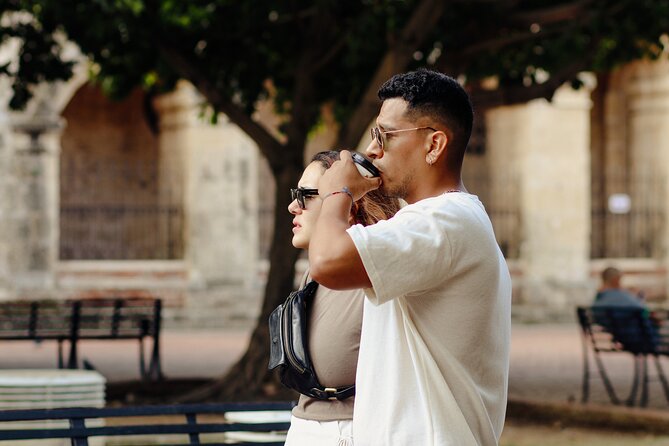
Plaza de España opens up at the end of Calle Las Damas. It is a broad, attractive square with the Alcazar de Colon at one side. This is one of the better points on the route for photographs and for seeing how the Colonial Zone shifts from narrow streets to a more open civic space.
The Alcazar de Colon was built between 1510 and 1514 in Gothic and Renaissance styles. It is described as the first European fortified palace in the Americas and as the only known residence of a member of the Columbus family in the New World.
The scheduled stop is only about five minutes, and admission is not included. At present, the Alcazar is closed for renovations, so you will see it from outside. This is an important limitation. If entering the palace is a priority, this particular tour will not meet that goal right now.
Still, the exterior is a strong part of the walk because of its setting and historical importance. Your guide can help you understand the building’s role without requiring an interior visit. Just keep your expectations clear: this is an exterior look, not a palace tour.
Ruins that show the less polished side of colonial history
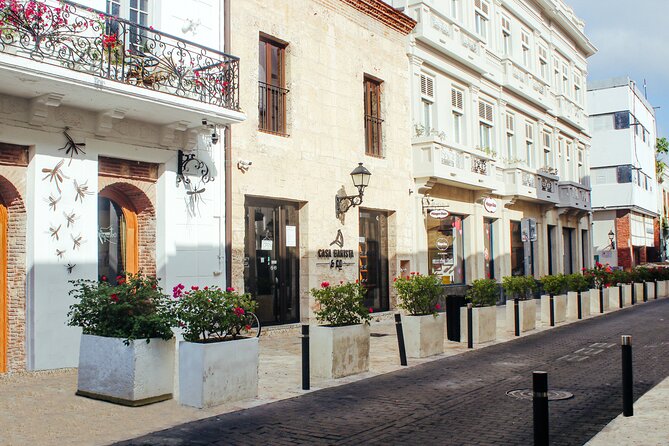
The Ruinas de San Francisco offer a change of mood. These are the remains of the first Franciscan monastery in the New World. The walls have endured fire, storms, and other damage, leaving a rougher site than the restored plazas and working museums nearby.
You spend about 10 minutes here. The ruins are appealing precisely because they are not polished. They show how time has altered the Colonial Zone and provide a good counterpoint to the cathedral and royal buildings.
The route also passes the Hospital Saint Nicholas of Bari, built between 1503 and 1508 under Governor Nicolas de Ovando. It is identified as the oldest hospital in the Americas and as a model for later hospitals. Today, the building lies in ruins on the north side of the old city.
Only about five minutes are set aside for this stop. You should expect an exterior look and an explanation, not a long archaeological visit. Even so, the hospital adds an important human element to the tour. Colonial Santo Domingo was not only about churches, palaces, and military power. It also needed places to treat the sick.
Beer, Mama Juana, and a practical taste of local life
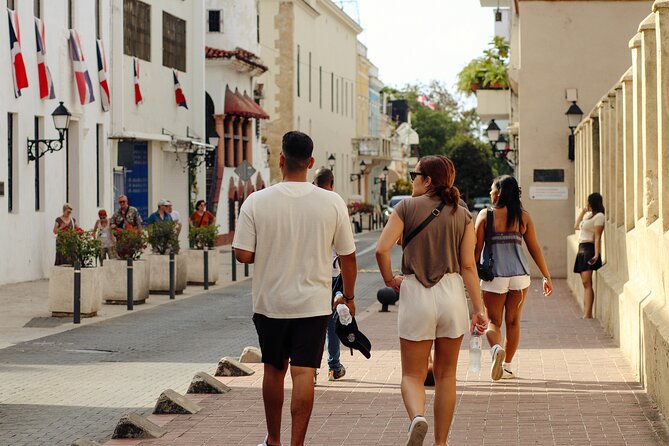
The drinks are what give this tour its own character. Along with your specialty coffee or tea, you receive a local beer tasting, one bottled water, and a taste of Mama Juana, a Dominican drink made with rum and spices.
I like this combination because it breaks up the historical material. Two hours of dates, governors, churches, and colonial institutions can become heavy. A coffee at the start and a beer toward the end make the walk feel more social.
Mama Juana is especially worth trying because it is a distinctly Dominican flavor experience. The tasting is small, not a full food tour, and the package does not promise a meal. Plan to eat before or after if you need more than a drink and a sample.
The tour also leaves room for practical local advice. Jean Carlos has helped with restaurant and shopping suggestions, and the route passes places where you can browse or return later. You may also have the chance to purchase souvenirs.
How the pace and group size affect the experience
A two-hour route with roughly ten major stops requires efficient guiding. You will walk between sites, pause for explanations, and keep moving. That works well if you want a clear introduction to the Colonial Zone in one morning or afternoon.
It works less well if you prefer to linger. The cathedral receives the longest listed stop at 20 minutes, while several other locations receive only five or ten minutes. The Alcazar, Pantheon, and some ruins are also exterior visits because of current closures.
The small group limit of 12 is a real advantage. A guide can answer questions without shouting, and the group is less likely to clog narrow colonial streets. When attendance is very low, the tour may run as a private walk rather than being cancelled. That gives you more control over the pace, though the experience still depends on site opening hours.
Wear comfortable walking shoes. The Colonial Zone is a pedestrian-friendly area, but the route includes cobblestone streets and outdoor stops. Santo Domingo can also be warm, so the included bottled water is useful. If rain threatens, the operator may cancel and offer another date or a full refund.
What the $59 price includes
At $59 per person, the tour is not simply charging for a walk around streets you could visit on your own. The price includes an expert local guide, cathedral admission when available, Royal Houses Museum admission when available, a specialty drink, local beer tasting, Mama Juana tasting, and bottled water.
That makes the value strongest for first-time visitors who want orientation and context without arranging several separate entries. You also avoid having to work out the historic district’s layout yourself.
The value is weaker if the museums are closed or if you already know the Colonial Zone well. Monday is the least attractive day because museums are closed, and the cathedral may also be unavailable. Current renovations reduce the chance of entering the Alcazar and Pantheon, though neither admission is included in the first place.
I would consider $59 fair for the right traveler: someone who values a local guide, wants a compact introduction, and likes adding drinks to a history walk. It is less compelling for someone seeking long interior visits or a food-focused outing.
Who should book this Santo Domingo walk?
I would recommend it to first-time visitors staying near the Colonial Zone, cruise passengers with limited time, couples, and small groups who want history without a formal lecture. It is also a good choice if you want help deciding which museums, restaurants, and streets deserve a second visit.
History fans should enjoy the concentration of firsts: the first cathedral, first paved road, first permanent military structure, oldest hospital, and early royal court. Food and drink fans will appreciate that the tour includes coffee, beer, and Mama Juana rather than treating the old city as a series of monuments only.
I would hesitate if you have limited mobility, dislike walking on cobblestones, or need guaranteed access to every listed site. The route is outdoors, the pace can be brisk, and renovations or Monday closures can change what you see.
Book at least a day before the start time if you want the option of a full refund. Cancellations made at least 24 hours ahead qualify for a full refund, while poor weather may lead to a new date or refund.
Should you book it?
Book this tour if you want a lively introduction to Santo Domingo’s Colonial Zone, especially if Jean Carlos or Paco is leading your departure. Their style, based on the available guide feedback, leans friendly, patient, funny, and strong on history and culture.
The best reason to choose it is the balance: major landmarks, short museum visits, local drinks, and a group small enough for questions. The biggest drawback is the compressed schedule and the current closures.
For a first look at the old city, I would book it, avoid Monday, dress for cathedral rules, and treat the walk as an orientation rather than a complete tour of every museum.
FAQ
How long does the Santo Domingo walking tour last?
The tour lasts approximately two hours. A private outing may take closer to two and a half hours if the group moves at a slower pace.
Where does the tour begin and end?
It begins at Casa Barista & Co., located at C. Arzobispo Meriño 268 in Santo Domingo. The tour ends back at the same meeting point.
What is included in the price?
The price includes a local guide, admission to the Royal Houses Museum when open, cathedral admission when available, one specialty drink, local beer tasting, Mama Juana tasting, and one bottled water.
Which specialty drinks can I choose?
You can choose a latte, cappuccino, tea, or hot chocolate.
Is the tour offered in English?
Yes. This is a bilingual tour, and information is shared in English and Spanish.
How many people can join the tour?
The maximum group size is 12 people.
Can I enter the Alcazar de Colon and Pantheon?
The Alcazar de Colon and Pantheon are currently closed for renovations, so the tour visits them from the outside. Their admission is not included.
Are the museums open every day?
The museums are closed on Mondays. The Royal Houses Museum may also have maintenance work, and unexpected closures can affect access.
What should I wear to enter the cathedral?
You must wear clothing that covers your shoulders and knees to enter the cathedral.
More coffee with something to eat in the Dominican Republic
- Buggy Ride Into the jungle with cave coffee & chocolate tasting
★ 5.0 · 465 reviews - Full-Day Adventure with ATV, Party Boat, Snorkel & Coffee Tasting
★ 5.0 · 93 reviews - Buggy Ride into the Jungle coffee , chocolate tasting Cenote
★ 5.0 · 52 reviews - Higuey discovery, coffee and cocoa tasting from punta cana
★ 4.8 · 11 reviews
Freshly brewed listings in the Dominican Republic
- Dominican Coffee Tasting and Pairing Experience★ 3.5 · 3 reviews
- Discover Dominican Treasures: Rum, Cigars, Coffee & Chocolate★ 3.0 · 5 reviews
- Buggy Ride with Cenote Coffee and Chocolate Tasting★ 5.0 · 2 reviews
- Punta Cana Family Buggy; cave pool, beach, coffee tasting★ 5.0 · 4 reviews
- Full Day ATV, Coffee, Chocolate Tasting & Party Boat★ 5.0 · 5 reviews
- Cigar, Coffee and Mofongo Tour in Dominican Republic★ 5.0 · 3 reviews
- Monte Alto Factory Coffee Tour: Jarabacoa Experience★ 5.0 · 3 reviews
- Higuey discovery, coffee and cocoa tasting from punta cana★ 4.8 · 11 reviews
Dominican Republic Coffee Tours, compared.

Buggy Ride Into the jungle with cave coffee & chocolate tasting
Read our review →
ATV Adventure w/ Chocolate, Coffee & Cave Swim in Punta Cana
Read our review →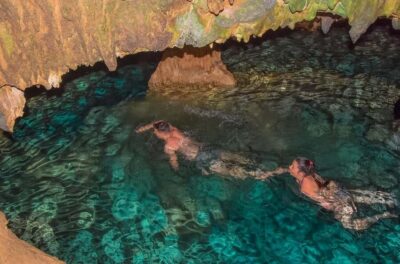
Buggy Tour in Punta Cana: Mamajuana – Coffee – Swimming in Cenote and Macao Beach
Read our review →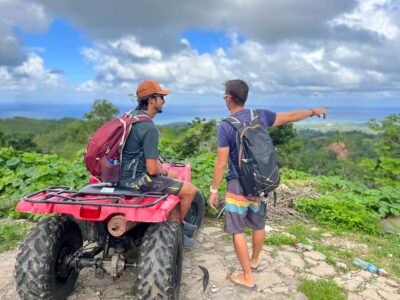
Las Terrenas: Private Coffee Trail ATV Tour in Samana
Read our review →
Shopping tour Punta Cana rum cigars coffee larimar chocolate souvenirs mamajuan
Read our review →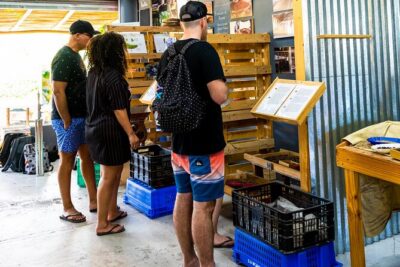
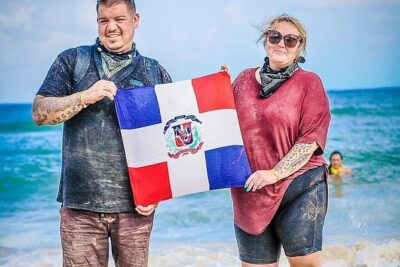
Punta Cana Buggy with Chocolate, Coffee & Cave Swim
Read our review →
Higuey discovery, coffee and cocoa tasting from punta cana
Read our review →Browse the lists this tour appears in