
Review · HO CHI MINH CITY
Ho Chi Minh City: Fun and Easy Coffee Workshop for Beginners
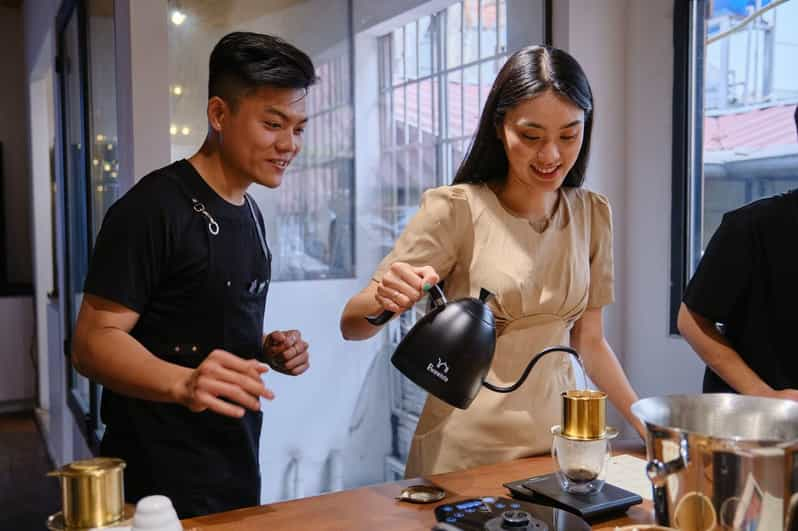
Vietnamese coffee is more than strong coffee poured over condensed milk. In this 90-minute workshop, you learn to use a phin filter, smell freshly roasted beans, and prepare three very different drinks, including Huế-style salt coffee and a creamy coffee with yogurt, cream, and honey. It is a hands-on introduction to a daily Vietnamese ritual.
I like the small-group format, which gives you room to ask questions, and I like the mix of brewing practice, coffee culture, and tasting. Instructors such as Quan, Ny, Sierra, Joey, and Vi have been praised for patient, friendly teaching. The main drawback is that the coffee portions are modest, so this is a tasting class rather than a caffeine marathon.
Key points at a glance
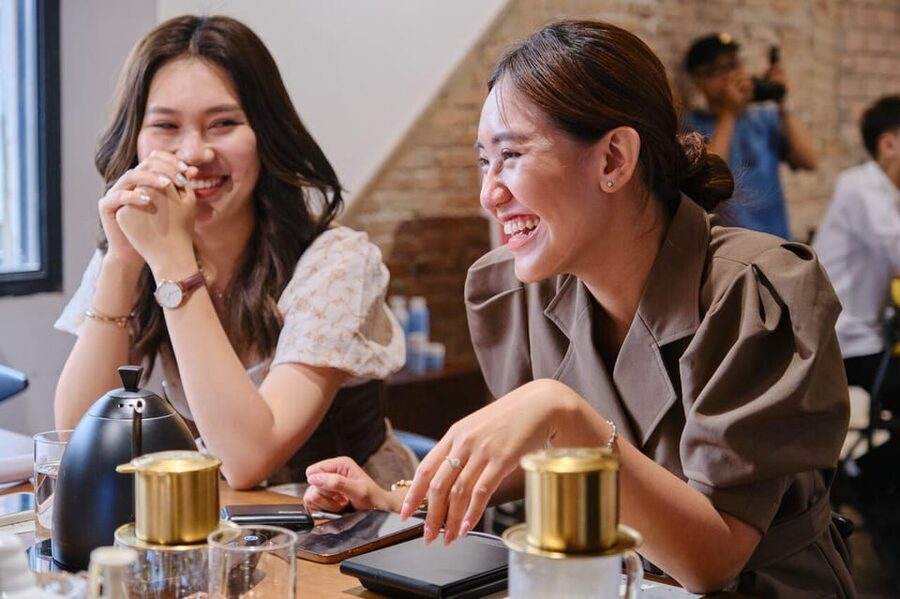
- Three distinct Vietnamese coffees: Make Bạc Xỉu, Cà Phê Muối, and Phin Con Panna rather than sampling only one standard drip.
- A real phin filter lesson: You learn the slow, simple brewing method used in homes and cafés across Vietnam.
- Salt coffee from Huế: The salted cream and coffee combination brings a caramel-like taste and is often the class favorite.
- Bánh mì with honey and yogurt: The bread is used as a sweet, distinctly Vietnamese finish to the tasting.
- Useful English instruction: English and Vietnamese are offered, with visual material helping explain the coffee process and culture.
- Easy central location: The workshop takes place at Lacàph Coffee Experiences Space, 220 Nguyễn Công Trứ, District 1.
What this Ho Chi Minh City coffee class is really about
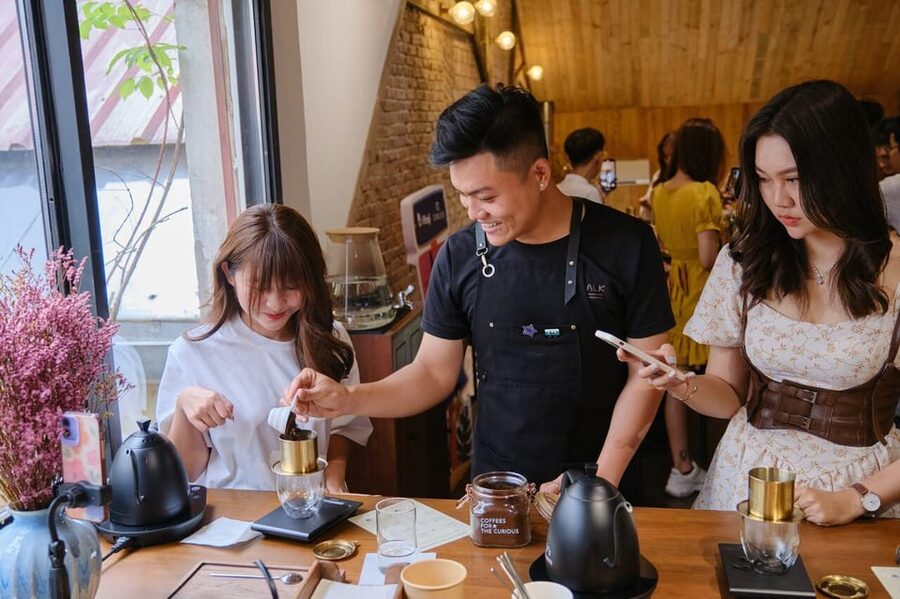
I see this as a cultural food lesson with coffee at its center. You are not simply handed three drinks and told what they are. You prepare each one, watch how the phin works, and learn why Vietnamese coffee has developed such a strong identity.
The class takes place at Lacàph Coffee Experiences Space in District 1. The café and workshop area have been described as attractive, with coffee products and ingredients available to browse afterward. That makes the setting useful for anyone who wants to continue the habit at home, not just take a few photos and move on.
The teaching style is practical. You work alongside an instructor who explains the process step by step. Several instructors have led the session, including Quan, Ny, Sierra, Joey, Vi, Giao, and Tram Anh. The most important quality is not a particular name on the schedule, but the clear, patient approach repeatedly associated with the class.
Visual material, including images and videos, may support the explanation. This helps when the subject moves beyond recipes into growing, roasting, local communities, and Vietnamese coffee culture. If you are new to coffee, you can follow the practical steps without needing specialist knowledge.
More Coffee Making Classes in Ho Chi Minh City
- Fun & Easy Vietnamese Coffee Workshop in Hồ Chí Minh City
★ 5.0 · 293 reviews - Coffee Workshop in Ho Chi Minh City: Discover the art of coffee
★ 5.0 · 35 reviews - HCMc Egg Coffee Class in 1 hour with local intructor & snack
★ 4.2 · 8 reviews
Starting with Bạc Xỉu and the phin filter
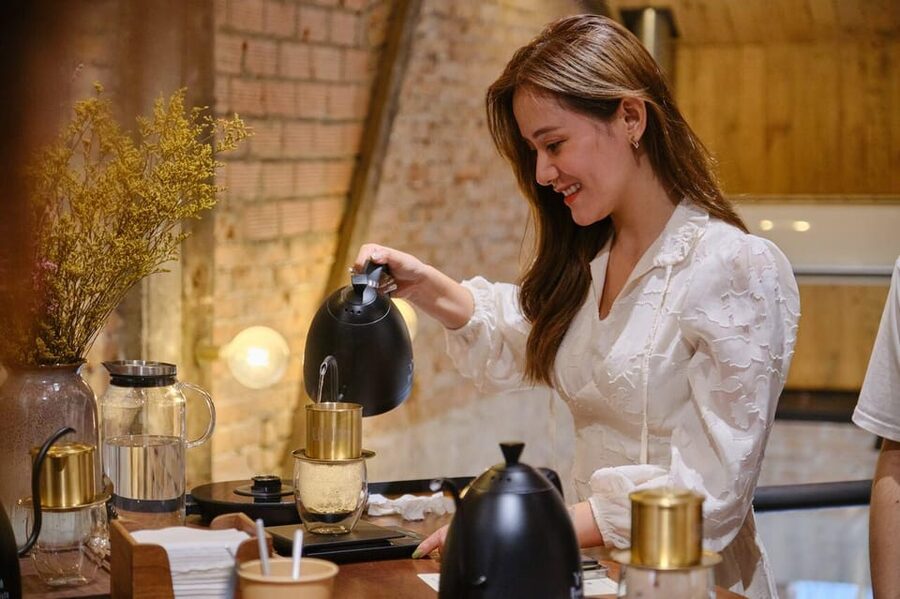
The first coffee is Bạc Xỉu, a milky drink with coffee made through a phin microfilter. This is a good starting point because the drink is approachable and lets you see the brewing method before moving into more unusual combinations.
A phin is compact and uncomplicated. Coffee sits inside a small metal filter, hot water is added, and the brewed coffee slowly drips through. The pace is part of the appeal. It encourages you to watch, smell, and wait instead of rushing toward the final cup.
Freshly roasted beans provide one of the first sensory moments of the workshop. You get to smell the beans before tasting the finished drink, which makes the coffee feel like a product with an origin and process, rather than just a strong beverage.
Bạc Xỉu is milk-forward, so it may suit you if straight black coffee feels too intense. The lesson also shows how Vietnamese coffee can be balanced through texture and sweetness. You are learning a recipe, but you are also learning why milk plays such a central role in many Vietnamese coffee drinks.
The coffee servings are not large. That is useful if you want to taste several recipes without feeling overloaded, but it may disappoint you if you expect full café-sized drinks. Think of the portion as a guided tasting that you make yourself.
The Huế story behind Cà Phê Muối
The most distinctive part of the class is usually Cà Phê Muối, or salt coffee. This drink comes from Huế, and the instructor explains its background as you prepare it.
Salt may sound strange in coffee, but here it works as a counterpoint to bitterness. Combined with a creamy element, it gives the drink a smooth, caramel-like character. The result is not simply salty coffee. The salt helps shape the sweetness and soften the sharper edge of the brew.
This is the recipe I would pay closest attention to if you already drink Vietnamese coffee. It offers something you may not find on every café menu, and the technique is simple enough to repeat at home once you have the right ingredients and a phin.
The class is also a good place to ask questions about how much salt, coffee, and milk to use. Exact results depend on the ingredients and preparation, so watching the instructor matters more than trying to memorize a fixed formula.
Several participants have singled out the salted coffee as their favorite drink, including people who do not normally drink coffee. That makes it a useful choice for mixed groups. Your companion may not be a serious coffee drinker, yet still find this recipe appealing.
Finishing with Phin Con Panna
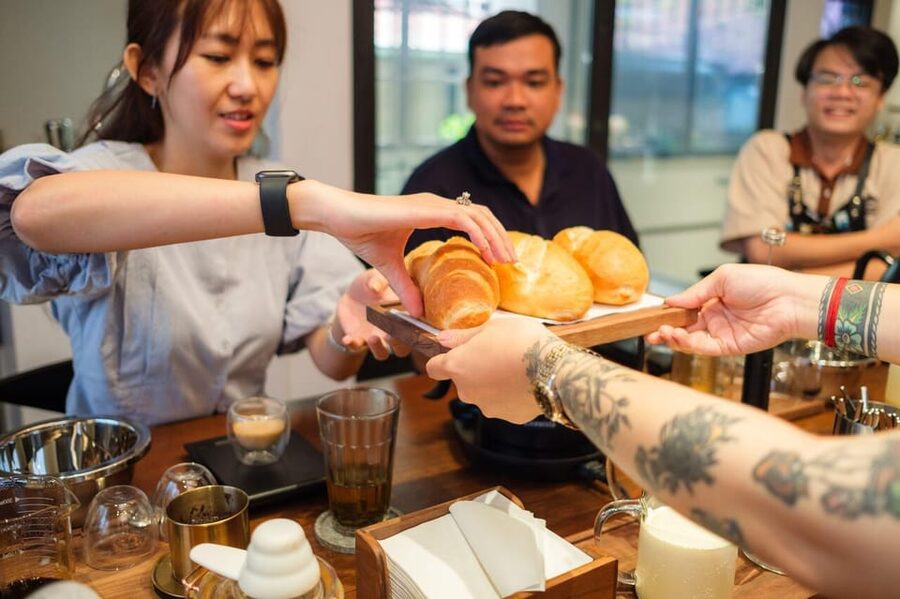
The third preparation is Phin Con Panna, a more dessert-like combination of phin coffee, yogurt, cream, and raw coffee blossom honey. It moves the workshop away from the classic milk-and-coffee formula and into something richer and more layered.
The coffee supplies bitterness, while the yogurt adds tang and the cream adds softness. Coffee blossom honey gives the drink a floral sweetness. The point is not only to make something pleasant, but to show how Vietnamese coffee can be used as the base for a dessert-style creation.
This part should appeal to you if you enjoy tasting contrasts. It has more going on than a basic iced coffee, and the ingredients give you ideas for adapting Vietnamese coffee at home. At the same time, it may be too sweet or rich if you prefer a plain black brew.
The sequence works well: Bạc Xỉu introduces the phin and milk, Cà Phê Muối adds a regional specialty, and Phin Con Panna closes with a creamy dessert profile. Each drink feels different enough to justify its place in a short workshop.
More Coffee Making Classes in Vietnam
- HCM: Egg Coffee Class with local Instructor & Snack
★ 4.7 · 8 reviews - Ho Chi Minh City: Coconut/Eggs Coffee Making Class
★ 5.0 · 8 reviews - Drip Craft Coffee Workshop-Discover 4 Famous Types of Viet Coffee
★ 5.0 · 2 reviews - Hanoi Coffee Workshop: Taste Salt, Coconut and Egg Coffee
★ 5.0 · 1,286 reviews
Bánh mì, honey, and yogurt for dessert
The food element is a Vietnamese twist using Bánh mì. In this workshop, you finish by dipping tasty bread into coffee with honey and yogurt.
This is not presented as a full meal. It is a small dessert-style tasting that gives the session a satisfying end. The bread also adds texture after three liquid samples, and the honey and yogurt connect it to the ingredients used in the final coffee.
If you arrive hungry, eat beforehand. The workshop is focused on learning and tasting, not lunch. The Bánh mì addition is a charming cultural detail, but it should not be treated as a substantial food stop.
The combination is also one of the class’s more playful moments. You are not only learning a formal brewing method. You are seeing how coffee fits into casual eating and social habits, which is often more memorable than a lecture about beans.
Why the teaching matters
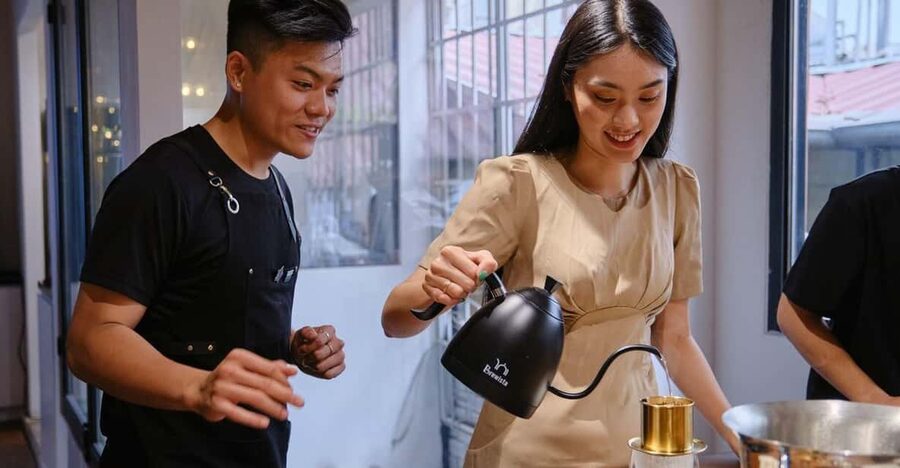
The instructors use English and Vietnamese, and the class has worked well for people who are still building confidence in English. The teaching includes demonstrations, images, videos, and direct guidance, so you do not need to arrive with brewing experience.
A strong instructor makes a big difference here. Quan has been praised for his passion and clear explanations, while Ny has been noted for patience and a friendly style. Sierra, Joey, Vi, Giao, and Tram Anh have also led sessions that included coffee history, preparation advice, and cultural context.
The best part of the format is that you do the work yourself. You are not watching a barista perform everything behind a counter. You handle the process, taste the result, and can ask about mistakes as they happen.
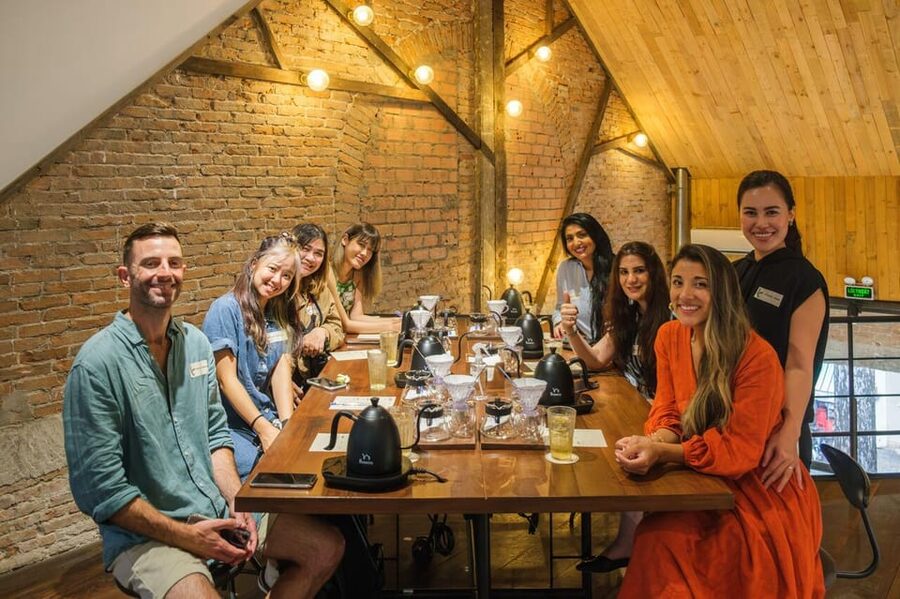
Sessions are described as small, which is valuable for beginners. You have a better chance of receiving direct help, especially when preparing the phin or balancing the more unusual recipes. Group size can affect the feel of any scheduled class, so do not assume a private lesson, but the format is designed for participation rather than a large demonstration.
Price, time, and what you get for $23
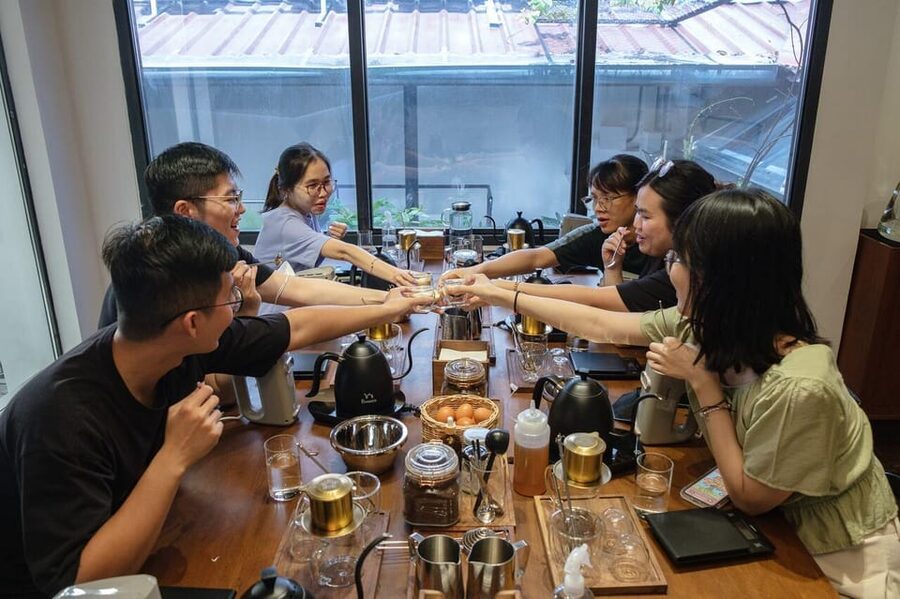
At $23 per person, the workshop is reasonably priced if you value instruction and cultural context as much as the drinks. The 90-minute length gives you enough time to prepare three recipes without turning the lesson into a long half-day commitment.
You are paying for more than three small coffees. The fee includes the workshop, the three named drinks, the ingredients, instruction, and the Bánh mì dessert. You also leave with techniques you can repeat, especially if you later buy a phin and Vietnamese coffee.
The value is strongest for first-time visitors to Vietnam, coffee fans, and anyone who wants an activity that explains a local habit rather than simply serving it. If you only want a cheap cup of coffee, a café is better value. If you want to understand the method and flavors, the workshop earns its price.
The experience can also help you decide what to buy afterward. Lacàph sells coffee products and equipment, so you can inspect the tools used in the lesson. There is no pressure stated in the activity details to purchase anything, but the shop is convenient if you want to recreate the drinks at home.
Getting to the correct Lacàph location

This is the most important practical detail. Lacàph has two locations in Ho Chi Minh City, but this experience takes place at Lacàph Coffee Experiences Space, 220 Nguyễn Công Trứ, District 1.
Do not rely on the brand name alone when entering a ride-hailing destination. Check that the address on your booking matches Nguyễn Công Trứ before setting off. Arriving at the other café would be an avoidable start to a time-limited class.
If you use a motorbike, parking is in the basement of building 57 on Phó Đức Chính Street. Car parking is available at 8 Tôn Thất Đạm Street. These parking areas are not operated by Lacàph, so allow time to find them and do not assume the workshop venue manages the parking.
Hotel transfer is not included. You need to make your own way to the café, which is simple enough if you are already in central District 1 but worth planning around Ho Chi Minh City traffic.
Who should book, and who should skip it
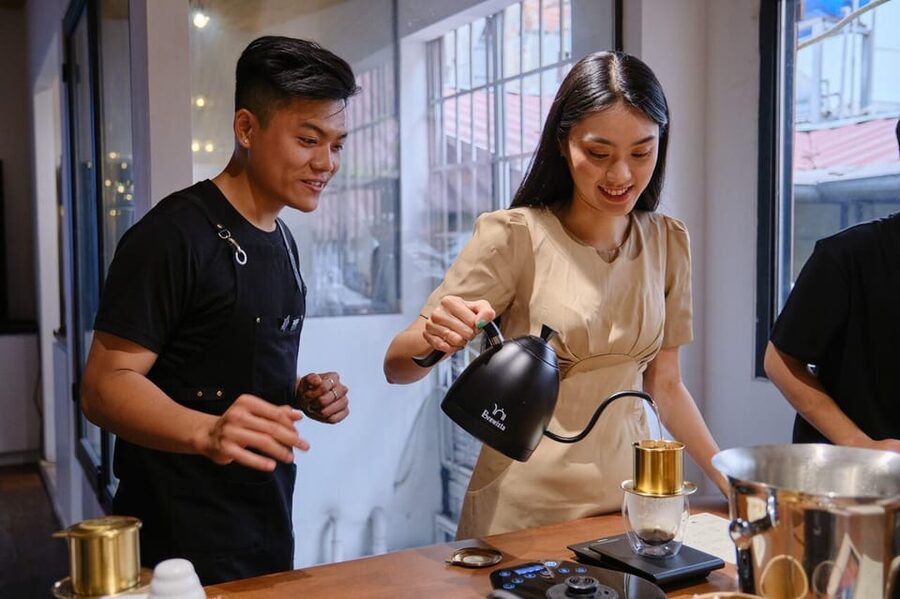
I would recommend this class if you want a calm indoor activity during a busy city visit, especially after arriving in Saigon and needing an easy introduction to local tastes. It also works well for couples and small groups because everyone can prepare and compare the three drinks.
Coffee enthusiasts will get the most from the phin demonstration and the salt coffee. People who rarely drink coffee may still enjoy the class because Bạc Xỉu and Phin Con Panna are softened with milk, yogurt, cream, or honey. Still, the experience is coffee-centered, so non-drinkers should not book expecting a general Vietnamese cooking class.
You should also note the restrictions. The workshop is not suitable for pregnant women, people with heart problems or high blood pressure, wheelchair users, vegans, people with gluten or lactose intolerance, or children under 18. The ingredients and format make those limits important rather than minor fine print.
The class is not designed as a full meal, and the portions are small. Book it for the hands-on lesson, the cultural explanation, and the chance to make three contrasting drinks. Choose another activity if you want a large breakfast, a full cooking course, or extensive food sampling.
Booking flexibility and final practical advice
You can cancel up to 24 hours before the activity for a full refund, and you can reserve now and pay later. That is useful when your Ho Chi Minh City schedule depends on weather, traffic, or a changing arrival plan.
Starting times vary, so check availability when booking. The workshop lasts 90 minutes, but give yourself extra time to reach the correct address and locate parking if needed.
Bring curiosity rather than coffee-making equipment. The ingredients and brewing tools are provided, and the instructor guides you through each stage. If you want to recreate the drinks later, pay attention to the phin technique and ask questions while you are working.
Should you book this coffee workshop?
Book it if you want to understand Vietnamese coffee from the inside: how the phin works, why salt can improve a coffee drink, and how coffee becomes part of a dessert. The class is short, central, practical, and more personal than simply ordering a cà phê sữa đá at a café.
I would especially choose it early in a Ho Chi Minh City stay. It gives you useful context for the coffee shops you will visit afterward, and the 90-minute format does not take over your day.
Skip it if you need a full meal, dislike coffee-based drinks, require wheelchair access, or cannot have dairy, gluten, or caffeine-related ingredients. For everyone else, $23 buys a well-rounded tasting lesson, three recipes, a local story from Huế, and enough technique to keep the Vietnamese coffee habit going after you leave.
FAQ
Where does the coffee workshop take place?
It takes place at Lacàph Coffee Experiences Space, 220 Nguyễn Công Trứ, District 1, Ho Chi Minh City. Lacàph has two city locations, so check this exact address before arriving.
How long does the workshop last?
The activity lasts 90 minutes. Starting times vary, so check availability when booking.
Which coffees will I make?
You will prepare Bạc Xỉu, Cà Phê Muối, and Phin Con Panna. The final coffee includes yogurt, cream, and raw coffee blossom honey.
Is the workshop taught in English?
Yes. The instructor can teach in English or Vietnamese. Visual material, including images and videos, may also be used during the lesson.
Is hotel transfer included?
No. You must make your own way to the coffee experience space. Motorbike parking is in the basement of building 57 Phó Đức Chính Street, and car parking is available at 8 Tôn Thất Đạm Street.
Can I cancel or pay later?
You can cancel up to 24 hours in advance for a full refund. You can also reserve your place and pay later.
Freshly brewed listings in Ho Chi Minh City
- Saigon Special Night Coffee Landmark 81 & Food Tour★ 5.0 · 2 reviews
- Tea & Coffee Experience★ 5.0 · 10 reviews
- Private Ho Chi Minh City Tour from Port & Vietnamese Egg Coffee★ 5.0 · 6 reviews
- Sai Gon Special Coffee At Landmark 81 & Street Food tour★ 5.0 · 3 reviews
- Hands-on making 3 Iconic Coffees of South Central North Vietnam★ 5.0 · 14 reviews
- Drip Craft Coffee Workshop-Discover 4 Famous Types of Viet Coffee★ 5.0 · 2 reviews
- Discover Vietnam’s Coffee Culture.★ 5.0 · 5 reviews
- [Free E-sim] Half day Instagram Cafe Tour in Ho Chi Minh★ 4.5 · 8 reviews
Ho Chi Minh City Coffee Tours, compared.
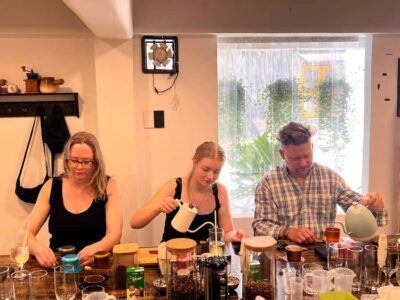
Egg coffee & Course on 4 traditional types of Viet coffee
Read our review →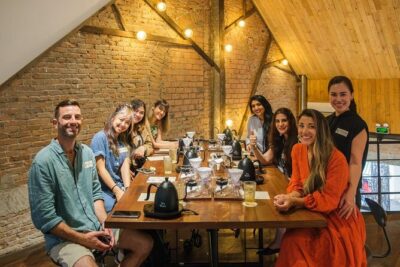
Fun & Easy Vietnamese Coffee Workshop in Hồ Chí Minh City
Read our review →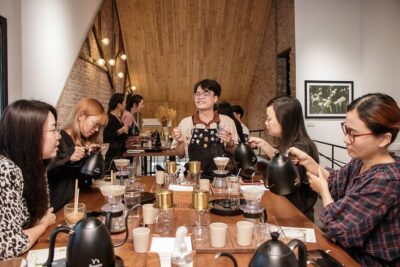
Vietnamese Coffee & Culture Exploration in Hồ Chí Minh City
Read our review →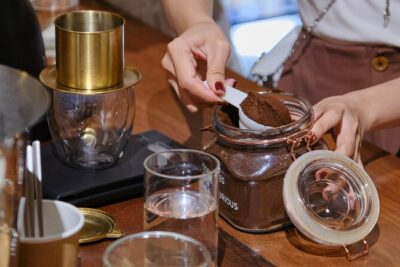
Decadent Vietnamese “Egg Coffee” Workshop in Hồ Chí Minh City
Read our review →
Techniques & Secrets Behind the Famed Vietnamese Egg Coffee
Read our review →
1 hour Egg Coffee Cooking Class with Snack and Local Instructor
Read our review →
Saigon Unseen: Culture, Coffee, Hidden Spots Motorbike Adventure
Read our review →
Vietnam Flavour: Market-to-Table & The Art of Egg Coffee
Read our review →Browse the lists this tour appears in