

Review · HO CHI MINH CITY
Coffee Workshop in Ho Chi Minh City: Discover the art of coffee
Vietnamese coffee is more than a strong drink with condensed milk. In this two-hour workshop, you handle coffee cherries, sort green beans, roast samples, taste different levels, and brew with the traditional phin filter. I like the clear farm-to-cup structure, and I like that you do the work yourself instead of sitting through a long lecture.
The small group limit of 15 people is another plus. Instructors such as Chris and Danny have been praised for patience, humor, and adjusting the class to the people in front of them. The main caution is that the session can become technical, and one participant found a young instructor’s English difficult to follow.
Key points
- Handle real coffee cherries and green beans while learning how beans are selected and processed.
- Sort out defective beans and see how low-quality coffee differs from better stock.
- Roast coffee at three levels to compare how heat changes flavor.
- Taste coffee in a cupping session before making your own drink.
- Brew Vietnamese Fine Robusta with a traditional phin filter.
- Expect a small class in District 7, with a maximum of 15 participants and a return to the same meeting point.
What this two-hour coffee workshop actually teaches
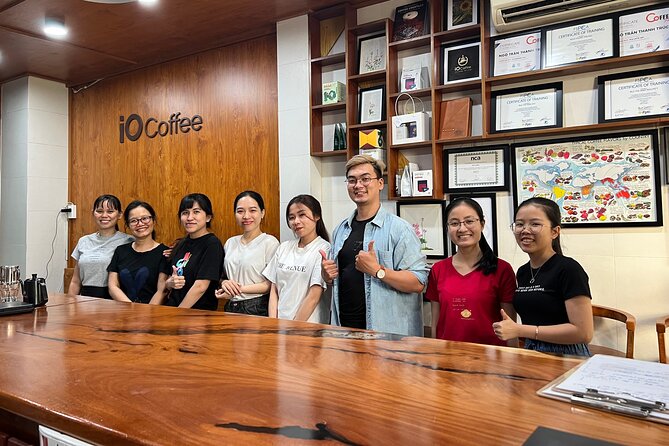
This is not simply a café tasting with a few facts added on. It follows the coffee chain in order: farming, processing, roasting, tasting, then brewing. That sequence matters because you see how each stage changes the final drink.
You begin at the raw end of the process. The instructor explains harvesting and shows the structure of a ripe coffee cherry. You may handle and peel the fruit, then examine the green bean inside. For anyone who usually sees coffee only as dark grounds, this is a useful reset.
Vietnam is one of the world’s major coffee producers, and Robusta is central to its coffee culture. The class focuses on Vietnamese Fine Robusta, so you are not just learning a generic international coffee lesson. You are learning why a local bean works so well in the strong, slow-brewed drinks found across the country.
The class uses hands-on demonstrations rather than relying only on slides or spoken explanations. That makes the session better suited to curious coffee drinkers who want to understand what is in the cup, not only take home a recipe.
More Coffee Making Classes in Ho Chi Minh City
- Fun & Easy Vietnamese Coffee Workshop in Hồ Chí Minh City
★ 5.0 · 293 reviews - Ho Chi Minh City: Fun and Easy Coffee Workshop for Beginners
★ 4.9 · 121 reviews - HCMc Egg Coffee Class in 1 hour with local intructor & snack
★ 4.2 · 8 reviews
Sorting cherries and green beans in the farming section
The first part looks at farming and processing. You learn how ripe cherries are selected and why the condition of the fruit affects the bean. You also see three small-scale processing methods, which gives you a useful sense of how coffee can move from fruit to dried green bean in different ways.
The practical highlight is bean sorting. You personally choose green beans and remove defective ones. This may sound simple, but it gives you a direct lesson in quality control. A poor bean can bring unwanted flavors to a roast, while a more careful selection gives the roaster a cleaner starting point.
I like this stage because it slows the process down. In a café, you see a finished drink arrive in a few minutes. Here, you see how much work comes before grinding and brewing. The class also explains the difference between low-quality and high-quality coffee, which can help you make better buying choices later.
Do not expect a full farm visit. The workshop uses small demonstrations and sample materials rather than taking you into the countryside. That is a sensible tradeoff for a short class in Ho Chi Minh City, but it means the farming section is an introduction, not a complete agricultural course.
Roasting three levels and finding your preference
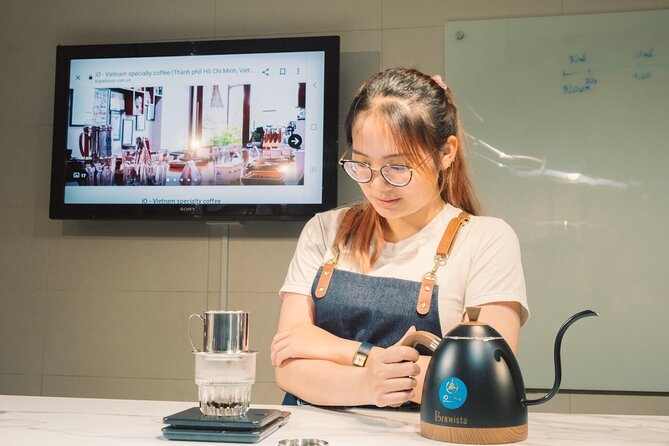
Next comes roasting. You get hands-on exposure to the process and compare three roast levels. This is one of the most useful parts for beginners because roast terms can sound vague until you taste the results side by side.
A lighter roast, a medium roast, and a darker roast can show very different qualities from the same basic ingredient. The point is not to tell you which level is correct. It is to help you notice what you prefer.
Some people like a stronger, darker cup. Others prefer more delicate flavors. The class gives you a way to identify your own taste instead of copying someone else’s coffee rules. You may also begin to understand why a coffee that tastes smooth to one person can seem too mild or too sharp to another.
The roasting section can also become technical. If you are serious about espresso, extraction, or roast science, you may enjoy the detail. If you only want a few simple tips for making better coffee, listen for the practical points and do not worry about remembering every technical term.
That balance is important. The workshop is approachable, but it is not designed as a light café chat. The material follows the SCA Introduction to Coffee program, so the tone may feel more formal and scientific than a casual tasting.
Cupping coffee at different roast levels
The cupping session gives you time to taste what the earlier steps produced. You sample coffee from different roast levels and explore the flavors before moving on to the Vietnamese brewing method.
Cupping is valuable because it removes some of the usual café distractions. There is no milk or sugar covering the taste, and you can compare samples directly. For a first-time taster, the aim is not to identify every flavor with perfect accuracy. Instead, you learn to notice differences in aroma, body, strength, and finish.
This is also where the lesson about quality becomes more real. Green bean selection and roasting are not abstract ideas anymore. You can connect the earlier stages with what you smell and taste in the cup.
The supplied information does not promise a large range of coffees or a formal professional tasting exam. Think of this as a guided introduction. You will receive enough comparison to build awareness, but not necessarily the depth of a full barista certification course.
More Coffee Making Classes in Vietnam
- HCM: Egg Coffee Class with local Instructor & Snack
★ 4.7 · 8 reviews - Ho Chi Minh City: Coconut/Eggs Coffee Making Class
★ 5.0 · 8 reviews - Drip Craft Coffee Workshop-Discover 4 Famous Types of Viet Coffee
★ 5.0 · 2 reviews - Hanoi Coffee Workshop: Taste Salt, Coconut and Egg Coffee
★ 5.0 · 1,286 reviews
Brewing Vietnamese coffee with the phin filter
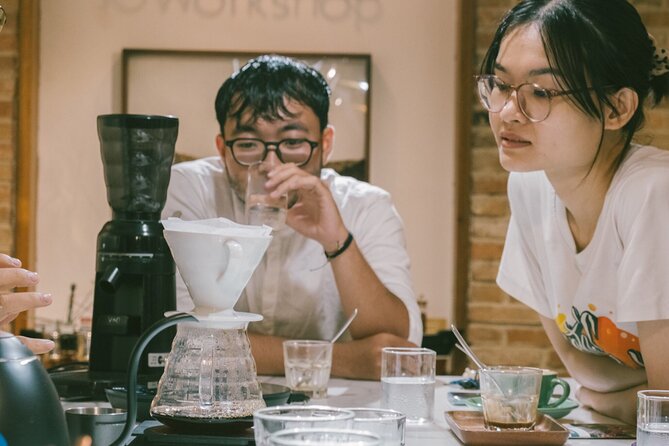
The final section centers on the phin, Vietnam’s traditional metal coffee filter. The device is small, simple, and slow. Coffee grounds sit inside the filter, hot water passes through gradually, and the finished drink collects below.
The method fits Vietnamese coffee culture because it gives you time to watch the brew develop. It also makes a good souvenir skill. Once you understand the basic process, you can prepare a Vietnamese-style cup at home with a phin and suitable coffee.
The workshop uses Fine Robusta beans, connecting the brewing lesson to the earlier discussion of Vietnamese production. You are not simply making a drink by following a recipe. You are learning how the bean, roast, grind, water, and waiting time work together.
This hands-on finish is one of the strongest reasons to book the class. You taste the coffee, but you also make it yourself. The lesson should leave you with a clearer idea of how to repeat the process after your trip.
The information provided does not specify the exact home recipe, amount of coffee, water temperature, or whether condensed milk is included. If those details matter to you, ask the instructor during the brewing section. The class promises authentic phin brewing, but it does not promise a particular sweetened café drink.
The instructors and the feel of a small class
The group is limited to 15 people, and that matters in a practical workshop. You need room to inspect beans, take part in roasting, taste samples, and brew. A smaller group also makes it easier to ask questions without shouting across a room.
Named instructors connected with the experience include Chris and Danny. Chris has been described as kind, funny, and able to adapt the session when only one person attended. Danny has been praised for patience and clear explanations. Those details suggest that the class can work well for both solo participants and couples.
The teaching style may vary by instructor. One participant found a younger instructor’s English difficult to understand, so language clarity is worth keeping in mind. Coffee vocabulary is already technical, and unclear explanations can make the roasting or tasting sections harder to follow.
I would not book this expecting a polished performance from one fixed presenter. The stronger sign is that the class can adjust to its audience. A one-person session may feel almost private, while a fuller group should still remain manageable because of the 15-person limit.
Location, timing, and getting to District 7
The meeting point is The Signature M7, in Lobby Block A and B, in the Phu My Hung urban area of District 7. The activity ends at the same place, so you do not need to arrange a second pickup point after the class.
District 7 is not the central historic core of Ho Chi Minh City. That may be convenient if you are staying in or near Phu My Hung, and less convenient if your hotel is elsewhere. The experience is near public transportation, but the supplied details do not specify a hotel pickup or a particular bus route.
Allow time to reach the building and find the correct lobby. The meeting point includes a building and block designation, so checking your mobile ticket before setting out is sensible. Confirmation is provided at booking, and the mobile ticket makes the entry process easier than carrying printed paperwork.
The session lasts about two hours. That is long enough to cover all four stages without using up half your day. It is also short enough to pair with another District 7 activity, though the timing of the roasting and tasting work may make arriving late especially disruptive.
Is $71 a fair price for this coffee class?
At $71, this is not the cheapest coffee activity in Ho Chi Minh City. You can buy several local coffees for far less. The value comes from the instruction and the number of steps included in a short session.
You are paying for more than a drink. The class covers harvesting, bean structure, three processing methods, quality sorting, roasting at three levels, cupping, and phin brewing. You also get a skill you can use after the trip, rather than a souvenir that sits on a shelf.
The price makes the most sense if you are genuinely interested in coffee, want a structured introduction, or plan to brew Vietnamese coffee at home. It is less convincing if your main goal is simply to try one excellent cup in an attractive café.
The limited group size improves the value. Hands-on lessons are more useful when you can touch the materials, ask questions, and receive help at the brewing stage. A class capped at 15 should offer more contact than a large demonstration, though the exact amount of individual attention depends on attendance.
The strongest value comes for coffee beginners who want a broad overview. Serious baristas may appreciate the technical content, but two hours is not enough for advanced espresso training or professional roasting practice.
Who should book this experience?
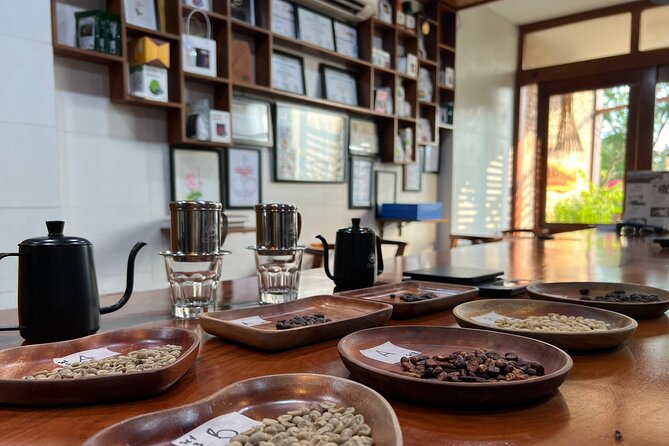
I would recommend the workshop to coffee drinkers who want context behind Vietnam’s famous café culture. It suits people who enjoy learning by doing, especially if sorting beans, comparing roast levels, and making a phin coffee sound more interesting than a standard sightseeing stop.
It also works well for couples or small groups with different levels of interest. One person can focus on flavor and brewing, while another pays closer attention to processing and roast science.
Solo participants should not worry that they need a large group to make the class worthwhile. The teaching can adapt to a single person, and the small format should make questions easier.
You may want to skip it if you dislike technical explanations or want a relaxed tasting with little instruction. The program has real educational content, and the language issue reported by one participant means you should be ready to ask for clarification when needed.
Service animals are allowed. The activity is near public transportation, and confirmation arrives when you book. Cancellation is free if you cancel at least 24 hours before the local start time. Cancellations or changes within 24 hours are not refunded or accepted.
Should you book the iO Specialty Coffee workshop?
Book it if you want to understand Vietnamese coffee from fruit to cup and leave with a practical phin-brewing skill. The combination of bean sorting, three roast levels, cupping, and hands-on brewing gives you more substance than a simple café stop.
Think carefully if you want only a quick taste or a purely casual activity. The class can get technical, and the quality of your experience may depend on how clearly your instructor explains the material.
For curious coffee drinkers, $71 is reasonable because the workshop gives you both knowledge and practice in a small group. If you leave Ho Chi Minh City knowing how to judge a bean, compare a roast, and brew Fine Robusta with a phin, you have gained something you can use long after the last cup.
FAQ
Where does the coffee workshop begin?
It begins at The Signature M7, Lobby Block A and B, in the Phu My Hung urban area of District 7, Ho Chi Minh City.
Where does the activity end?
The workshop ends back at the meeting point.
How long does the coffee workshop last?
The experience lasts approximately two hours.
How many people can join the class?
The class has a maximum of 15 participants.
What coffee-brewing method will I learn?
You will learn to brew Vietnamese coffee with a traditional phin filter.
Will I taste different roast levels?
Yes. The workshop includes tasting coffee from three roast levels during the roasting and cupping sections.
Does the workshop cover coffee processing?
Yes. You will see a small-scale demonstration of three processing methods and learn about harvesting, coffee cherries, green beans, and defective-bean selection.
What is the cancellation policy?
You can cancel at least 24 hours before the local start time for a full refund. Cancellations or changes made within 24 hours are not refunded or accepted.
Freshly brewed listings in Ho Chi Minh City
- Saigon Special Night Coffee Landmark 81 & Food Tour★ 5.0 · 2 reviews
- Tea & Coffee Experience★ 5.0 · 10 reviews
- Private Ho Chi Minh City Tour from Port & Vietnamese Egg Coffee★ 5.0 · 6 reviews
- Sai Gon Special Coffee At Landmark 81 & Street Food tour★ 5.0 · 3 reviews
- Hands-on making 3 Iconic Coffees of South Central North Vietnam★ 5.0 · 14 reviews
- Drip Craft Coffee Workshop-Discover 4 Famous Types of Viet Coffee★ 5.0 · 2 reviews
- Discover Vietnam’s Coffee Culture.★ 5.0 · 5 reviews
- [Free E-sim] Half day Instagram Cafe Tour in Ho Chi Minh★ 4.5 · 8 reviews
Ho Chi Minh City Coffee Tours, compared.
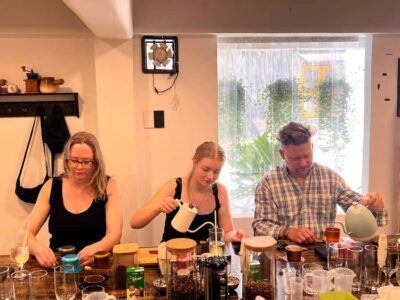
Egg coffee & Course on 4 traditional types of Viet coffee
Read our review →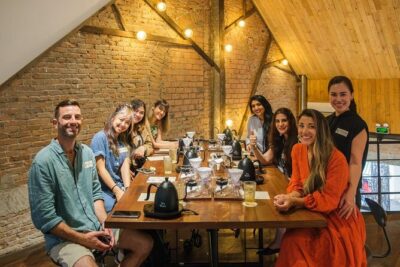
Fun & Easy Vietnamese Coffee Workshop in Hồ Chí Minh City
Read our review →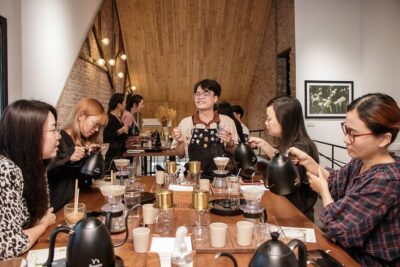
Vietnamese Coffee & Culture Exploration in Hồ Chí Minh City
Read our review →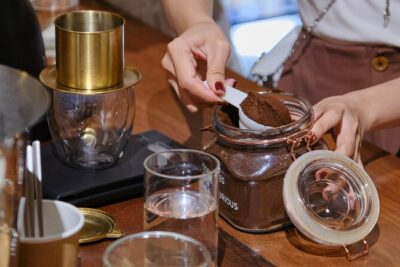
Decadent Vietnamese “Egg Coffee” Workshop in Hồ Chí Minh City
Read our review →
Ho Chi Minh City: Fun and Easy Coffee Workshop for Beginners
Read our review →
Techniques & Secrets Behind the Famed Vietnamese Egg Coffee
Read our review →
1 hour Egg Coffee Cooking Class with Snack and Local Instructor
Read our review →
Saigon Unseen: Culture, Coffee, Hidden Spots Motorbike Adventure
Read our review →Browse the lists this tour appears in