Review · HANOI
Hanoi Coffee Workshop: Master 6 Signature Vietnamese Coffee
The best part of this Hanoi workshop is that coffee is treated as a piece of daily life, not just a drink to copy. In about two hours, you can make four to six Vietnamese styles, from black and brown coffee to egg, coconut, white, and salted versions, while learning how locals balance bitterness and sweetness. Hands-on tasting makes the lesson stick.
I like the small group limit of eight, which gives Jade, Jennifer, or another local instructor time to watch your technique and adjust recipes to your taste. I also like the fresh ingredients and Central Highlands beans, plus the fact that the recipes and practical tips go home with you. No fancy equipment is needed.
The main caution is arrival. The meeting point has changed during a storm, and one person had trouble finding it, so check the address carefully before setting out. The workshop is also short, and the exact number of coffees can vary between four and six.
Key points at a glance
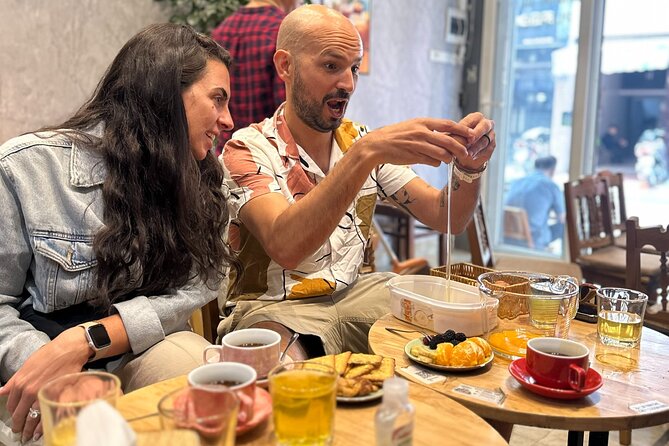
- Six classic Vietnamese styles: You may make black, brown, egg, white, coconut, and salted coffee.
- A maximum of eight people: The small group leaves room for questions and personal adjustments.
- Fresh daily ingredients: Eggs, milk, and coconut are prepared on the day, with no artificial premixes.
- Guides with local coffee roots: Jade and Jennifer are among the instructors who explain both technique and coffee culture.
- Recipes you can repeat at home: You learn ways to control bitterness and improve flavor without costly gear.
- A practical Hanoi location: The workshop starts and ends at 34 P. Cầu Đất, near public transport, with air conditioning and a pet-friendly garden space.
Six Vietnamese coffees in one small Hanoi bar
Vietnamese coffee is often described by its strength, but that only tells half the story. The fun comes from how the same bold base changes when you add condensed milk, egg, coconut, salt, or other fresh ingredients.
This class lets you compare those changes in one sitting. You do not simply watch someone pour coffee into a glass. You brew, whisk, taste, and adjust. That sequence matters because it teaches you what each ingredient does.
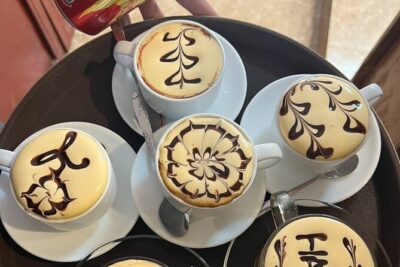
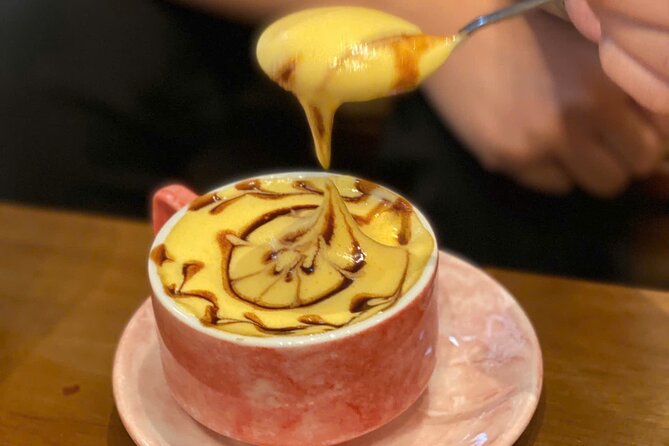
You may begin with black coffee, the clearest way to understand the beans. From there, brown coffee adds sweetness and creaminess. Egg coffee brings a soft, dessert-like texture, while coconut coffee gives the drink a cooler, rounder character. White and salted coffee add more ways to see how milk, sweetness, and seasoning affect the final cup.
The exact selection can vary. The description promises four to six iconic coffees rather than a fixed six-drink flight, so I would not book expecting every style at every session. Still, the range is generous for a two-hour class, especially when you are making the drinks yourself.
More Coffee Making Classes in Hanoi
- Hanoi Coffee Workshop: Taste Salt, Coconut and Egg Coffee
★ 5.0 · 1,286 reviews - Hanoi: Salt Coffee Workshop Awake Your Senses With 6 Brews
★ 5.0 · 792 reviews - Hanoi: Vietnamese Coffee Workshop with 6 Brews and 8 Recipes
★ 5.0 · 237 reviews
Why the hands-on format matters
A demonstration can show you what Vietnamese coffee looks like. This class aims to show you why it tastes the way it does.
You learn to adjust sweetness and intensity instead of following one rigid recipe. Prefer a bolder cup? You can work toward that. Like a sweeter drink? The instructor helps you make the change without losing the character of the coffee.
That is useful because home kitchens rarely match a professional café. You may not own the same tools, use the same beans, or have perfect control over every ingredient. The workshop focuses on methods that can be adapted, including ways to make coffee taste better without fancy equipment.
The bar is described as an open place to explore, so you are encouraged to ask questions and try things. This is a good fit if you like learning by doing. It is less suited to someone who wants a quick tasting with no participation.
Starting with Central Highlands beans
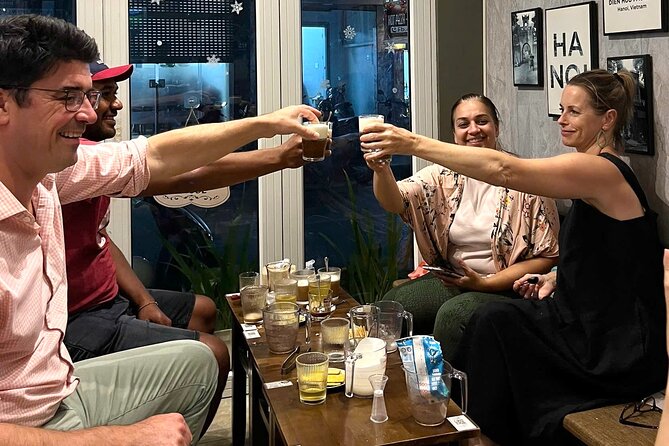
The coffee comes from Vietnam’s Central Highlands, one of the country’s main coffee-growing areas. The beans are selected with attention to seasonal harvests, and the coffee can change during the year depending on what is in good condition.
That seasonal approach gives the lesson a useful layer of context. You are not working with a generic instant powder or a pre-made café base. The instructor can explain how the coffee itself affects bitterness, aroma, and strength.
Fresh eggs, milk, and coconut are prepared daily. Nothing is described as pre-made or artificial, which matters most for egg and coconut coffee. Those drinks depend on texture and freshness, and the difference between a freshly whisked mixture and something sitting in a container is easy to notice.
You should still keep expectations sensible. This is not presented as a formal professional barista course, and the two-hour schedule cannot cover every brewing method or growing region in Vietnam. It is a compact introduction to familiar local styles, with enough technique to repeat them at home.
The coffee sequence, from black to salted
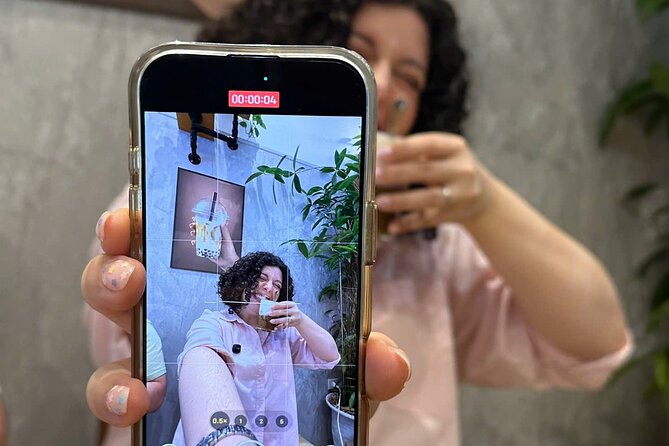
The first cups help you understand the base. Black Vietnamese coffee lets the character of the beans come through without milk or other additions. It can be strong and bitter, which makes it a useful starting point for learning how locals balance those qualities.
Brown coffee changes the picture with sweetness and milk. It is one of the most recognizable Vietnamese combinations, and making it yourself lets you see how the ratio affects the drink. Too much sweetness can cover the coffee. Too little can leave the bitterness exposed.
Egg coffee is likely to be the most memorable style for many people. Whisking is part of the lesson, so you get a direct feel for how the topping or mixture becomes light and creamy. The instructor can help you adjust it to your preference rather than treating one exact level of sweetness as the only correct version.
Coconut coffee brings a different texture and flavor. It shows how a familiar Vietnamese coffee base can take on a cooler, softer profile without losing its strength.
White and salted coffee round out the possible menu. Salted coffee is especially useful as a lesson in balance. A small amount of salt can change how you perceive bitterness and sweetness, but the point is restraint. The class gives you a chance to taste that adjustment rather than simply hearing an explanation.
Because the session may include four to six drinks, you may not make all six every time. Ask at the beginning which styles are planned if you have one particular favorite.
More Coffee Making Classes in Vietnam
- Ha Noi Egg Coffee Class
★ 5.0 · 227 reviews - Hanoi Coffee Class learning 5 famous coffee in Hanoi
★ 5.0 · 161 reviews - Mini Hanoi Coffee Workshop: Pick Any Signature Coffee You Like
★ 5.0 · 160 reviews - Hanoi Egg Coffee making course
★ 4.9 · 112 reviews
Local stories beyond the recipes
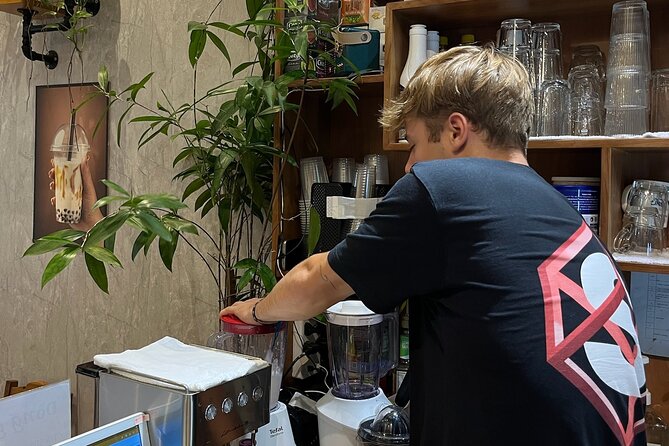
The strongest part of a food lesson is often the explanation around it. Here, the instructors connect the drinks to ordinary life in Hanoi, old cafés, and the way local people taste and enjoy coffee.
That context keeps the class from becoming a string of disconnected recipes. You learn why a drink matters, not only what goes into the glass. Stories are said to flow naturally while you work, so the cultural material should feel connected to the coffee rather than delivered as a long lecture.
The instructors are described as people raised around coffee culture, with years of tasting and experimenting behind their approach. Names that may appear include Jade and Jennifer. Both are praised for making the class friendly and clear, while Jennifer is specifically associated with explaining the background and techniques for black, brown, white, and egg coffee.
There is also a local family element. Warm-hearted older residents may welcome your curiosity, adding a more personal touch than you get at a large cooking school or commercial tasting counter. The exact interaction can vary, but the setting is intended to feel lived-in rather than staged.
A small group with room for questions

The maximum group size is eight. That is small enough for the instructor to see how you whisk, taste, and adjust, but it is not the same as a private class.
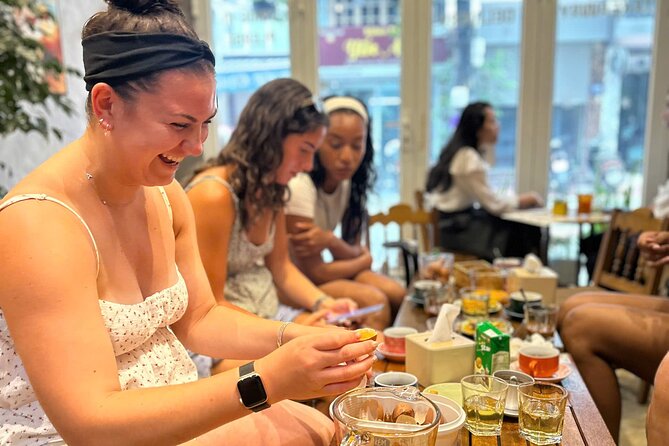
A compact group also helps with the social side. You can compare results, share a table, and talk about which drink works best for your palate. Coffee gives people an easy subject, even if they arrive not knowing anyone.
The setup includes ceramic tools, a working bar, sterilized utensils, and a dishwasher. Air conditioning is a practical bonus in Hanoi, particularly if you have been walking in humid weather before the session.
The space also includes a pet-friendly garden area. That does not mean pets are part of the lesson or guaranteed to be present, but it may help if you are looking for a relaxed setting and are traveling with a service animal. Service animals are allowed.
What the two hours feel like
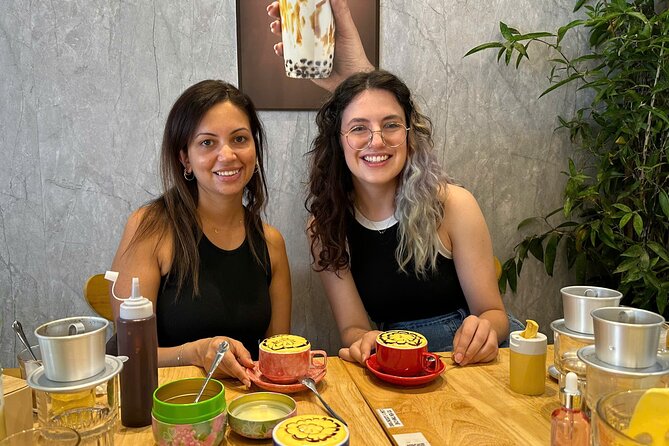
The experience starts and ends at 34 P. Cầu Đất, Chương Dương Độ, Hoàn Kiếm, Hanoi. It is near public transportation, and you should allow enough time to find the exact entrance rather than arriving at the last minute.
Once the group gathers, the instructor introduces the coffee styles, ingredients, and tools. The lesson then moves into preparation. You are likely to switch between making, tasting, and listening instead of sitting through a long opening talk.
The middle of the session is the busiest part. You whisk egg mixtures, work with fresh milk and coconut, taste the coffee, and decide what needs changing. The instructor can help you control bitterness, adjust sweetness, and understand why a cup tastes too sharp, too weak, or too heavy.
The class finishes with more tasting and the practical material you can use later. Full recipes are included, and the recipes are also sent at the end according to the information provided. The instructor acts as the photographer as well, so you may leave with pictures from the session without paying for a separate photographer.
The activity returns to the starting point. It does not include a separate café crawl or a tour of Hanoi’s coffee shops, so think of it as a focused workshop rather than a broader city outing.
Is $18.20 a good price?
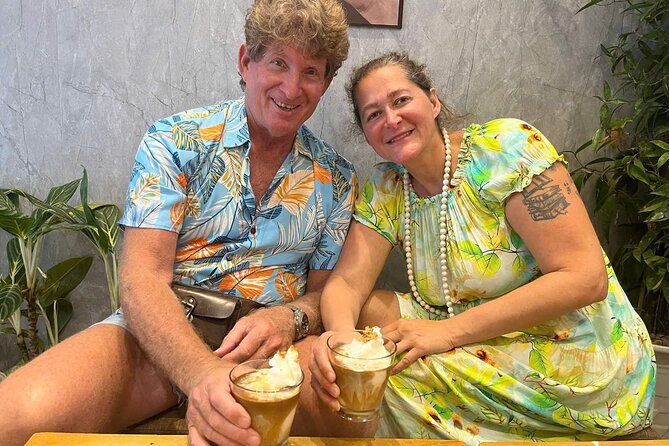
At $18.20 per person, this is strong value if you want more than a single coffee and a short explanation. You receive roughly two hours of instruction, several drinks, fresh ingredients, access to the tools, recipes, and direct help from a local instructor.
The value is greatest for people who will use what they learn. If you enjoy cooking, coffee, or bringing food skills home from a trip, the recipes can make the fee worthwhile long after Hanoi. You also get a clearer sense of why Vietnamese coffee tastes different, rather than simply taking a photograph of an egg coffee.
The value is less clear if you do not drink coffee, dislike sweet drinks, or want a broad history lesson. Some of the styles are dessert-like, and the focus is firmly on preparation and tasting.
There is no separate tip included, so plan for that only if you wish to thank the instructor. The listed price does not include any extra transportation, though the meeting point is near public transport.
What could go wrong, and how to avoid it
The main practical issue is the meeting point. One person had trouble after the location changed during a storm. That kind of disruption is unusual but worth planning around, especially in Hanoi, where similar-looking lanes and addresses can slow you down.
Check the meeting details shortly before leaving, keep the mobile ticket available, and do not rely on memory if the weather is poor. If you are unsure, contact the provider before the start time rather than wandering around after the class has begun.
A second consideration is the changing menu. The experience promises four to six coffees, and seasonal ingredients may affect what is served. If you want egg coffee, coconut coffee, or salted coffee in particular, ask whether it is planned for your session.
The small group is a benefit, but it also means the class depends on the pace of the people present. Some people may want more time to experiment, while others may prefer to move quickly. The instructor’s guidance helps, but this is still a shared activity.
Who should book this coffee workshop?
I would recommend it to coffee drinkers who want to understand Vietnamese café culture through their own hands. It is also a good choice for couples, friends, solo visitors who enjoy meeting people, and anyone who likes bringing home a practical skill rather than another souvenir.
It suits first-time visitors because the activity offers cultural context without requiring prior knowledge. It also suits people who have already spent time in Vietnam and want to recreate the drinks they have been ordering. One particularly useful point is that you can learn how to make a favorite coffee after sampling it around the country.
Families may find the food preparation appealing, but the provided information does not set a minimum age, so confirm that before booking for children. People with service animals can attend, and the space is pet-friendly, but ordinary pets should be checked with the provider in advance.
Free cancellation is available if you cancel at least 24 hours before the start time. Inside that window, the fee is not refunded and changes are not accepted, so keep the weather and your Hanoi schedule in mind.
Should you book the Hanoi Coffee Workshop?
Book it if you want a small, practical class with real tasting, fresh ingredients, and a clear connection to Hanoi’s coffee habits. The combination of four to six drinks, local instruction, recipes, and a maximum of eight people gives you more substance than a standard café stop.
I would skip it if you want a quick drink, a private lesson, or a fixed guarantee of all six coffees. I would also be cautious if your schedule is so tight that a meeting-point change could cause trouble.
For most coffee fans, the price is reasonable and the skills are useful. Check the address before you leave, arrive ready to whisk and taste, and ask which styles are on the menu. That small bit of preparation should leave you with more than a caffeine boost: you will have a better feel for how Vietnamese coffee is made and enjoyed.
FAQ
Where does the Hanoi Coffee Workshop start?
It starts at 34 P. Cầu Đất, Chương Dương Độ, Hoàn Kiếm, Hanoi, Vietnam.
Where does the activity end?
The workshop ends back at the same meeting point where it begins.
How long does the coffee workshop last?
The activity lasts approximately two hours.
How many people can join the workshop?
The maximum group size is eight people.
Which Vietnamese coffees might I make?
You may make four to six styles, including black, brown, egg, white, coconut, and salted coffee.
Are the ingredients prepared fresh?
Yes. Eggs, milk, and coconut are prepared daily, and the workshop states that nothing is pre-made or artificial.
Do I receive the recipes?
Yes. Full recipes and additional material are included, and the recipes are sent at the end of the experience.
Is the workshop accessible by public transportation?
The meeting point is near public transportation.
What is the cancellation policy?
You can cancel at least 24 hours before the local start time for a full refund. Cancellations or changes made within 24 hours are not refunded or accepted.
More Vietnamese Coffee Experiences in Hanoi
- Hanoi Cooking Class: Pho/Bun Cha/Banh Xeo…+Free Egg/Salt Coffee
★ 5.0 · 267 reviews - Hanoi: Rose Kitchen: Pho/Bun Cha/Nem+ Free Egg/ Salt Coffee
★ 5.0 · 57 reviews - Six Cups of Vietnam Coffee Workshop in Hanoi with Local Barista
★ 5.0 · 54 reviews - Hanoi Egg Coffee & Coconut Coffee Making Class with Free Banh Mi
★ 5.0 · 41 reviews
Freshly brewed listings in Hanoi
- Vietnamese Coffee 101 Workshop★ 5.0 · 11 reviews
- Private Hà Nội Coffee History Tour★ 5.0 · 6 reviews
- Private tour: Hanoi city tour-Van Phuc silk village with egg coffee, lunch★ 5.0 · 2 reviews
- Taste of Vietnam’s Coffee Scene – A Guided Experience★ 5.0 · 2 reviews
- hidden gems cafe – learn making coconut and egg coffee★ 5.0 · 2 reviews
- Walking Tour in Hanoi Old Quarter with Street Food & Coffee★ 5.0 · 4 reviews
- Hanoi Private And All Inclusive Coffee Lovers Tour in Vietnam★ 5.0 · 6 reviews
- Hanoi Coffee Culture Tour: Sip, Taste & Hear Local Stories★ 5.0 · 13 reviews
Hanoi Coffee Tours, compared.
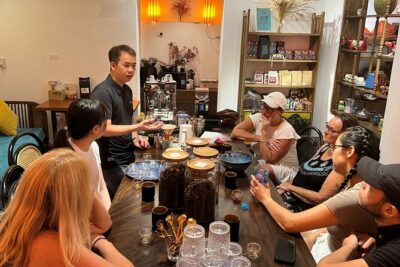
Hanoi Coffee Experience: 6 Brews, 9 Recipes & 3 Liquor Tastings
Read our review →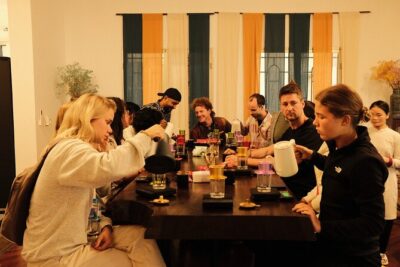
Hanoi Coffee Workshop: Taste Salt, Coconut and Egg Coffee
Read our review →
Hanoi: Salt Coffee Workshop Awake Your Senses With 6 Brews
Read our review →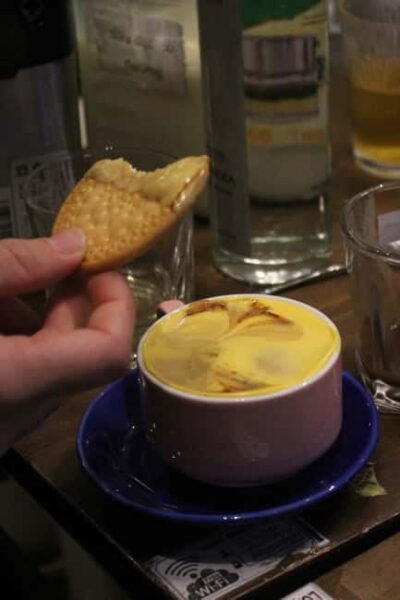
Hanoi: Master the Art of 4-6 Signature Vietnameses Coffees
Read our review →
Hanoi: Vietnamese Street Food Tour with Egg Coffee
Read our review →
Hanoi Cooking Class: Pho/Bun Cha/Banh Xeo…+Free Egg/Salt Coffee
Read our review →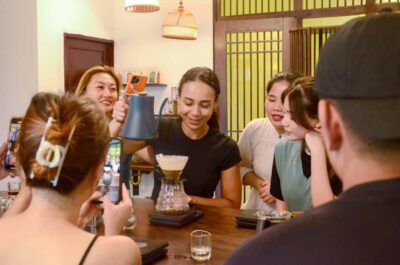
Hanoi: Vietnamese Coffee Workshop with 6 Brews and 8 Recipes
Read our review →