
Review · CARTAGENA
Walking Tour of Cartagena Including a Colombian Cup of Coffee
Cartagena’s past comes at you quickly on this private three-hour walk. You move from the old slave market and city walls to the clock tower, Bolívar Square, Getsemaní, and a jewelry workshop where you learn how emeralds are judged. It is a compact way to see the city’s major sights while hearing about piracy, the Inquisition, independence, and Simón Bolívar.
I like the personal attention of a small private group, and I like the practical emerald lesson, which gives the tour more substance than a simple photo walk. Guide Angel Duran is specifically praised for his clear English and strong command of Cartagena’s past, making this a good choice if history is your main reason for visiting.
The main drawback is the price: $160 per person is a serious outlay for three hours. You are paying for a private format, guide, included fees, gratuities, drinks, and help with long lines, but visitors seeking a low-cost stroll may find better value elsewhere.
Key points to know before you book
- Three hours, many landmarks: The route covers the old city, walls, clock tower, Bolívar Square, the former slave market, Getsemaní, and more.
- A useful emerald lesson: At a real jewelry factory, you learn how emeralds are made, tested, and graded from poor to excellent quality.
- History with a personal guide: Angel Duran leads the experience and has been praised for fluent English and clear historical storytelling.
- Coffee comes with air conditioning: You can stop for Colombian coffee, beer, or water in a cool space with a free bathroom.
- A private group of up to 10: The small size allows questions and a more flexible conversation than a large group walk.
- A strong short-stay option: Hotel pickup and drop-off are offered, though the listed meeting point is at Crepes & Waffles in the old city.
A fast way to read Cartagena’s old city
This experience is built for a visitor who wants the main story of Cartagena without giving up a full day. In roughly three hours, you cover several central sights and get a guided explanation of how conquest, slavery, piracy, religion, trade, and independence shaped the city.
The route begins at Crepes & Waffles, at Pl. de San Pedro Claver, at 8:30 am. That early start matters in Cartagena, where a morning walk can be easier than a midday outing. From there, expect a steady sequence of historic places rather than one long stop at a single monument.
The city is a UNESCO World Heritage Site, and the tour gives you a useful first look at why. You see the old walls, colonial streets, important squares, and gateways that made Cartagena one of the key fortified ports of the Caribbean. The guide connects the buildings to events, rather than leaving you with a string of names and dates.
That approach is especially helpful if you have only one day in port or a short stay in town. You get enough orientation to return later to a museum, church, plaza, or neighborhood that catches your attention.
More Coffee Walking Tours in Colombia:
- Coffee Farm and Salento Walking Tour
★ 5.0 · 47 reviews - Coffee Farm and Salento Walking Tour
★ 5.0 · 3 reviews - Private Walking Tour, Food Tasting and Bosnian Coffee in Sarajevo
★ 5.0 · 255 reviews
The old walls, slave market, and Bolívar Square
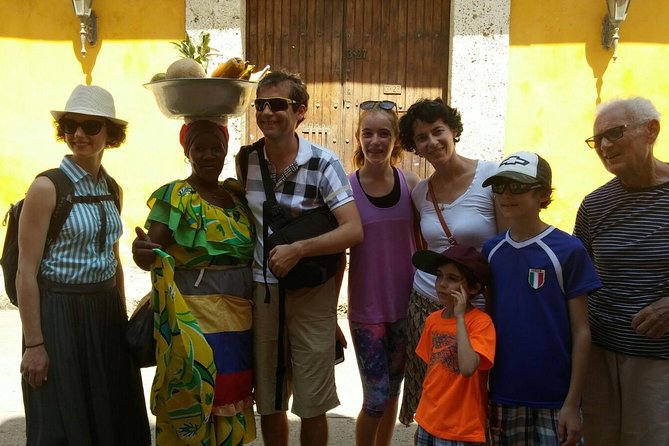
The old city’s walls are more than a photogenic backdrop. They help explain the constant threat faced by Cartagena and the need to protect its wealth, people, and port. As you walk near them, the tour discusses piracy and the colonial power struggles that shaped the city.
The former slave market adds a harder and necessary part of the story. Cartagena’s beauty can make it easy to focus only on balconies, plazas, and bright colors. This stop places slavery within the city’s history and gives the walk a more honest balance.
Bolívar Square brings another layer. The square is tied to Simón Bolívar and the independence period, and the guide also discusses how public spaces, monuments, and political memory connect. This is the sort of context that can make a short city walk worthwhile: you are not just checking off a square, but learning why it matters.
The exact amount of time at each sight is not fixed in the supplied details. The tour description gives about 15 minutes for the main stop that includes the museum, factory, refreshments, and facilities, but the whole experience is paced as a three-hour route through many places. If you want long museum visits or time for detailed photographs at every stop, this format may feel quick.
The gold museum, if it is open
The gold museum is included when open. That wording is important. You should not book this tour assuming a guaranteed museum visit, since access depends on whether it is operating during your tour.
If the museum is open, it adds a useful indoor stop to a mostly outdoor walk. Gold objects can help you understand the skill, wealth, and cultural traditions connected with Colombia before and during Spanish conquest. If it is closed, the tour still includes many other historic locations, but you should treat the museum as a possible bonus rather than the central reason to book.
The guide’s explanation can also help you put the displays in context. A museum visit without background can become a quick look at attractive objects. A guide who links them to Cartagena’s colonial and commercial story can make the stop more meaningful.
The clock tower and a Botero photo
The Clock Tower Monument, or Torre del Reloj, is both a major landmark and the listed end point of the tour. It is one of the most recognizable entrances to Cartagena’s old city, so ending there leaves you in a useful central spot for independent exploring afterward.
The route also includes a photo beside an enormous Botero sculpture. Fernando Botero’s work is known for rounded, exaggerated forms, and a large public sculpture gives you a fun change of pace after the heavier subjects of slavery, piracy, and the Inquisition.
This is one of the tour’s better contrasts. Cartagena is not only forts and colonial politics. Public art, street life, architecture, beauty contests, and modern city culture also appear in the conversation. The result is a broader picture of the city, though the experience still leans heavily toward historical sightseeing.
Because the tour ends at the clock tower, ask about the precise order of the stops if the sculpture or museum is especially important to you. The published route explains what is included, but not the exact minute-by-minute sequence.
More Coffee Tours in Colombia:
- Medellin: Coffee Tour with Transport, Snacks and Tastings
★ 4.7 · 1,357 reviews - Medellín Coffee Farm Tour with Trolley and Cable Car Ride
★ 4.9 · 277 reviews - Coffee Tour at the Finca del Café
★ 5.0 · 213 reviews - Medellin: Coffee Tour and Wellness Spa
★ 4.8 · 209 reviews
Learning to judge a Colombian emerald
The jewelry factory is one of the most distinctive parts of the experience. You do not simply pass a shop window. You see how jewelry is made and learn how to tell if an emerald is genuine, fake, or of good, regular, or excellent quality.
That lesson has practical value in Cartagena, where emeralds are a familiar part of the shopping scene. Even if you do not plan to buy anything, you gain a better sense of the language used to describe stones and the questions worth asking.
The factory visit also gives the tour a hands-on element missing from a standard architecture walk. You are looking at a working craft process, not just an old building. Still, keep your expectations clear: the supplied details promise instruction and a look at production, not a purchase discount or a required shopping stop.
I would treat the jewelry factory as an educational visit. If someone tries to pressure you into buying, you can simply listen, compare, and decide later. The tour’s stated value is the lesson about authenticity and quality, not a guarantee that you will leave with an emerald.
Coffee, beer, water, and a cool break
The Colombian coffee stop is small but well judged. A three-hour walk through Cartagena can be tiring, so a short break in an air-conditioned setting gives you a chance to cool down and use a free bathroom.
You can have Colombian coffee, beer, or water. Bottled water is included, and the experience also covers taxes, fees, handling charges, and gratuities. Those inclusions make the final price easier to understand, since you are not adding a guide tip or basic drink cost at the end.
The coffee itself is not presented as a separate tasting class. Expect a pleasant local refreshment during the tour, not a detailed lesson on growing regions, roasting, or brewing. That is fine for most people. The value lies in the pause and the chance to enjoy a Colombian drink while continuing the conversation.
The air conditioning is a useful detail, not a luxury to ignore. Cartagena’s old streets are best enjoyed when you are not overheated, and the break can help you stay focused during the later part of the walk.
Getsemaní, street life, and the city beyond the walls
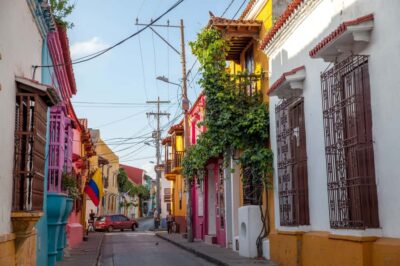
The tour includes Getsemaní, described as Cartagena’s most beautiful district. The neighborhood brings a different feel from the formal squares and grander historic buildings inside the old city.
Here, the guide discusses architecture, independence, beauty contests, and other parts of Cartagena’s social story. That wider subject range helps keep the tour from becoming a narrow account of Spanish conquest and military defense.
Getsemaní is also a useful place to see how Cartagena’s past and present share the same streets. The itinerary does not promise a meal, nightlife, or a separate food tasting, so you should not expect a neighborhood dining tour. Instead, you get a guided look at the district as part of the larger walk.
I like this inclusion because it adds variety. The old city gives you formal history and landmark architecture. Getsemaní gives you a different neighborhood setting and a chance to understand Cartagena as a lived-in city, not only a preserved historic center.
What $160 per person buys you
At $160 per person, this is not a bargain walking tour. The price makes the most sense for someone who values privacy, a professional guide, a short schedule, and bundled costs.
The tour is private and limited to a maximum of 10 people. A group of 10 is not completely intimate, but it is far more manageable than a large coach excursion. You can ask about slavery, emeralds, Bolívar, or the Inquisition without trying to speak over a crowd.
The price includes all taxes, fees, handling charges, gratuities, bottled water, and the professional guide. It also promises help with long lines. Lunch is not included, so plan to eat before or after the experience.
Hotel pickup and drop-off are offered, which may improve the value for visitors who want door-to-door convenience. At the same time, the listed meeting point is Crepes & Waffles in the old city, and the published end point is the Clock Tower Monument. Confirm the pickup arrangement when booking so you know where to meet and where the walk finishes.
I would recommend the tour more readily to two or three people sharing a private booking than to a solo visitor focused on price. For a family or small group with limited time, the cost may be easier to justify because the guide’s attention and the included services are spread across the party.
What the guide adds
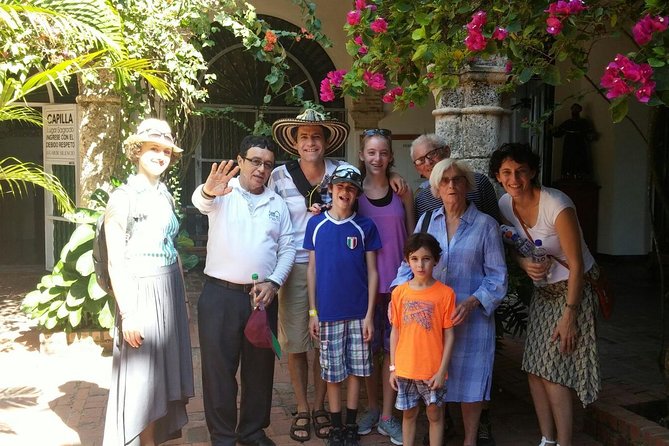
The strongest praise for this experience focuses on Angel Duran. He is described as kind, very pleasant, and fluent in English, with an ability to guide both an adult and a child through Cartagena’s key sites.
That matters because the tour covers difficult and complicated subjects in a short period. A good guide has to move from slavery to piracy, from architecture to independence, and from Bolívar to emerald quality without making the walk feel like a school lecture.
You should also expect a guide-led conversation rather than silent sightseeing. The format gives room for questions and interpretation, which is one reason the private setup can be worth more than a basic self-guided route.
Children must be accompanied by an adult. Most people can participate, and the tour is near public transportation. Smart casual clothing is requested, a practical choice for a walk that combines historic streets, a jewelry facility, and a coffee break.
Who should book this three-hour walk?
I would choose this tour if you want a broad first look at Cartagena and prefer a guide to explain what you are seeing. It suits first-time visitors, short-stay visitors, cruise passengers with limited time, families, and small groups that want a private pace.
It is also a good fit if you care about history but want more than monuments. The slave market, piracy, the Inquisition, independence, and Bolívar give the walk serious content, while the Botero sculpture, Getsemaní, coffee, and jewelry workshop add lighter and more practical moments.
You may want another option if your top priority is a long museum visit, a food-focused outing, a full-day archaeological trip, or the lowest possible price. The gold museum is conditional on being open, lunch is not included, and three hours is enough for an overview rather than a slow study of every landmark.
The tour has a 4.9 rating from 30 reviews, with 97 percent recommending it. Those figures suggest a strong record, but the most useful takeaway is more specific: the guide’s personal approach and historical explanations are the heart of the experience.
Should you book it?
Book this walk if you want Cartagena’s main historic sights, a clear English-speaking guide, and a private format in a short window. Angel Duran’s role is a major reason to consider it, especially if you want the stories behind the streets rather than a list of photo stops.
At $160 per person, it earns its price through privacy, included gratuities and drinks, a small group, the emerald lesson, and coverage of many central sights. I would confirm the hotel pickup details and the gold museum’s opening status before paying.
For a compact introduction to Cartagena, this is a sensible choice. For a low-budget stroll or a slow museum day, it is probably more tour than you need.
FAQ
How long is the Walking Tour of Cartagena?
The tour lasts approximately three hours.
What time does the tour begin?
The listed start time is 8:30 am.
Where does the tour start?
The listed meeting point is Crepes & Waffles at Pl. de San Pedro Claver #4 #31-24 in El Centro, Cartagena de Indias.
Where does the tour end?
The listed end point is the Monumento Torre del Reloj, also known as the Clock Tower Monument, at Boca del Puente in El Centro.
Is the tour private?
Yes. It is a private tour with a maximum of 10 travelers.
Is hotel pickup available?
Hotel pickup and drop-off are offered. The published meeting point is still Crepes & Waffles, so confirm the pickup details when booking.
Is the gold museum guaranteed to be open?
No. The gold museum is visited if it is open.
What drinks are available during the tour?
You can have Colombian coffee, beer, or water. Bottled water is included.
Does the tour include lunch?
No. Lunch is not included.
What is the cancellation policy?
You can cancel up to 24 hours before the experience starts for a full refund. Cancellations or changes made less than 24 hours before the start time are not accepted for a refund.
Freshly brewed listings in Colombia
- Salento: Coffee Master Roasting, Brewing and Tasting Tour★ 4.8 · 6 reviews
- Private Tour to Coffee Farm (farm of your choice)★ 5.0 · 2 reviews
- Medellin: Coffee Farm Tour & Spa with Overnight Glamping★ 4.5 · 3 reviews
- Minca: Hidden Waterfall + Coffee and Cocoa Workshop★ 4.9 · 6 reviews
- Most complete COFFEE TOUR at local family farm★ 5.0 · 2 reviews
- Medellin: The Best Coffee Tasting Experience★ 5.0 · 5 reviews
- Medellin: Avoeden Café Coffee Brewing Workshop★ 5.0 · 12 reviews
- Medellin: Coffee and fruit tour★ 4.9 · 12 reviews
Cartagena Coffee Tours, compared.


Cartagena Highlights: San Felipe, Popa & Coffee Experience
Read our review →


Cartagena Coffee Masterclass: Artisanal Roasting and Brewing
Read our review →Browse the lists this tour appears in