
Review · GYUMRI, ARMENIA
Private Traditional Coffee And Dessert Making Activity
Gyumri’s food story comes alive in a museum and guest house where old tools, family objects, and historic photographs share the room with bowls of dough and coffee pots. You’ll first see antiques dating to the Russian Empire, including a large collection of old Gyumri photographs, then work with a local chef to make coffee, ghayfa, and one traditional dessert.
I like the unusual focus on ghayfa, a roasted wheat drink that was once common in Gyumri but is now rarely made. I also like the private format: your group gets the chef’s attention, and you finish by eating the sweets with your homemade drinks. The main drawback is location. Chalet Gyumri is outside the city center, so you’ll need to allow extra time to reach Movses Khorenatsi Street.
Key points at a glance
- A museum visit comes first: See antiques from the Russian Empire and a large collection of historic Gyumri photographs.
- Ghayfa adds real local character: Make a roasted wheat drink that has nearly disappeared from everyday life.
- You choose one dessert: Pick yaghli, bishi, shakar lokhum, or sweet or salty bagharj.
- A local chef leads the cooking: You do the hands-on work instead of simply watching a demonstration.
- Farm ingredients and antique tools connect past and present: Many ingredients come from a local farm, while the equipment and tableware have been carefully saved.
- The private format suits families and small groups: The activity lasts about one hour and costs $30 per person.
Starting at Chalet Gyumri on Movses Khorenatsi Street
The activity begins at Chalet Gyumri, a museum and guest house in Gyumri. The address is on Movses Khorenatsi Street, postal code 3126, and the activity ends at the same place.
The setting matters. This is not a cooking class in a modern studio stripped of local context. You begin among old objects and photographs connected to Gyumri, then use traditional food and equipment in the same setting. That gives the hour a clear sense of place.
The location is a little off-center, so I would not treat this as a quick stop between central sights unless you have already planned your route. The practical upside is that you do not need to arrange a separate return transfer. Once the cooking and tasting are done, you are back where you started.
Because the activity is private, only your group takes part. That is useful if you are traveling with children, relatives, or friends who want to ask questions and work at different speeds. It also makes the short one-hour schedule more efficient than a larger class, where time can be lost waiting for other people.
More cake-and-coffee stops in the world:
- Award Winning Farm Tour: Coffee, Chocolate and Unique Gifts
★ 5.0 · 484 reviews - Vienna Coffee, Cake & Pastries Tour with Local Stories
★ 5.0 · 470 reviews - Buggy Ride Into the jungle with cave coffee & chocolate tasting
★ 5.0 · 465 reviews
The museum: old Gyumri before the cooking begins
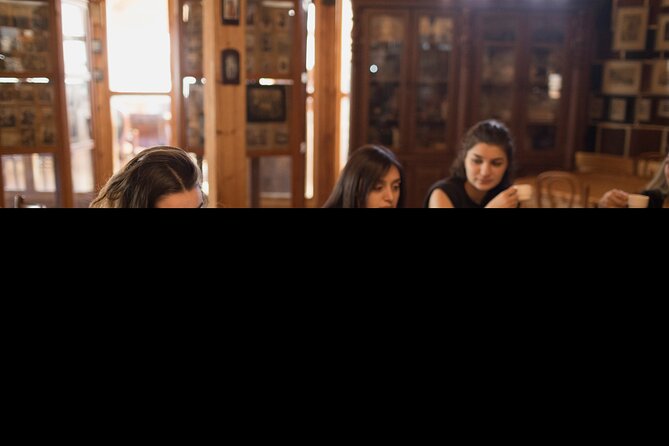
The first part is a tour of the museum. You will see antiques dating as far back as the Russian Empire, along with what is described as the largest collection of historic photographs of Gyumri.
Those photographs are especially important for understanding the food lesson. Cooking traditions do not exist in isolation. Old images can show the homes, clothing, tools, and streets that shaped daily life, while the coffee and desserts give you a small, edible link to that earlier world.
You should not expect a huge museum visit. The full activity lasts about an hour, and that time also includes preparation and eating. Think of the museum portion as a compact introduction rather than a long guided tour. Its value is in setting the scene before you start handling ingredients.
The antique tools are more than decoration. You will use carefully saved antiques to make and eat the food. That can make the class feel less like a standard recipe lesson and more like a practical look at how local households once prepared treats.
Armenian coffee and the nearly forgotten taste of ghayfa
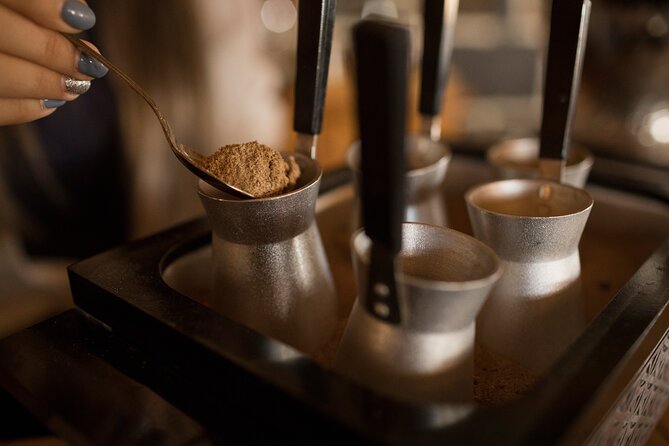
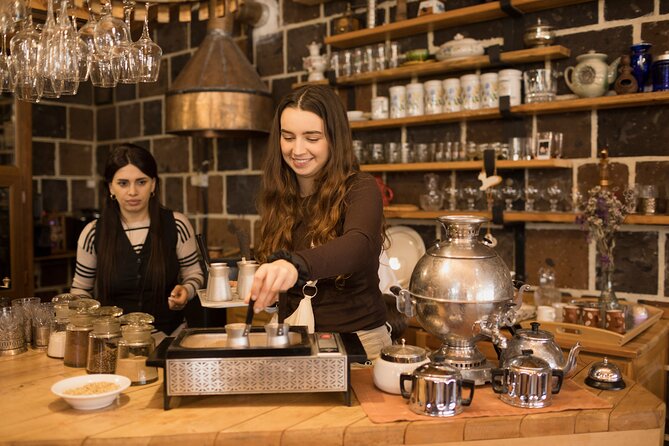
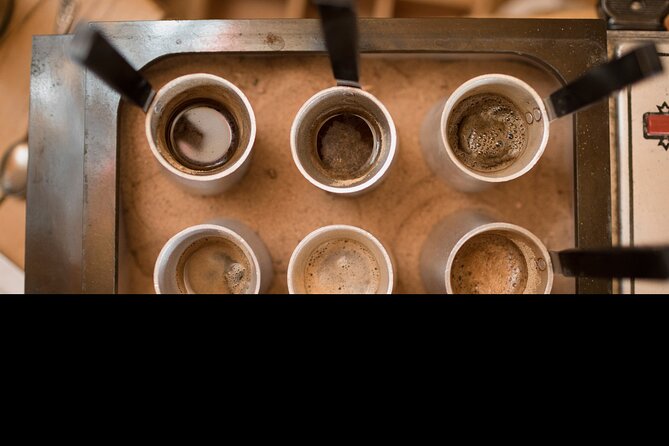
After the museum portion, you will make traditional Armenian coffee with the chef. The coffee is paired with ghayfa, a roasted wheat drink that was once popular in Gyumri and is now all but forgotten.
Ghayfa is the most distinctive part of the activity for me. Armenian coffee is familiar enough to many visitors as a regional tradition, but a roasted wheat drink gives you something harder to find elsewhere. It is a small but meaningful example of how local food customs can fade from ordinary use.
The activity lets you prepare the drinks rather than simply receive them at the end. That gives you a better sense of how they fit with the desserts. You then sit down and enjoy the results with tea as well, making the tasting a proper part of the lesson instead of an afterthought.
The exact balance between the museum tour, drink preparation, baking, and tasting can vary. Since the entire session is only about an hour, you will not be learning a long list of recipes. You will get a focused introduction to a few traditional drinks and one selected sweet.
Choosing between four Armenian desserts
You choose one of four desserts. Each offers a different kind of hands-on work and a different flavor profile.
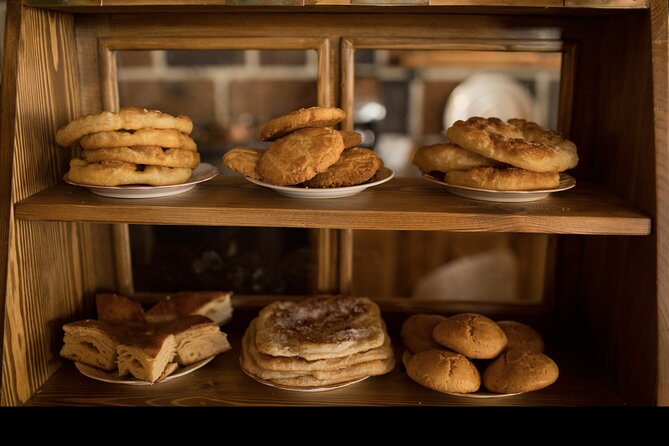
Yaghli is made from layers of thin dough and oil. The layers are fried and topped with sugar, so this is the choice for someone drawn to crisp, simple sweetness. Its preparation also gives you a direct feel for the work involved in handling thin dough.
Bishi is a yogurt-based pastry. It is fried and eaten with hot chocolate, giving the finished dish a different pairing from the other choices. If you like the idea of a warm pastry with a drink on the side, bishi may be the most appealing option.
Shakar lokhum is an oily, sweet cake baked in the oven. It is less about frying and more about a baked, cake-like result. This may suit you if you prefer a softer dessert or want to try something that feels different from the fried pastries.
Bagharj is another yogurt-based pastry. It can be made sweet or salty and decorated with intricate designs. This is the most flexible choice, especially if not everyone in your group wants a sugary dessert. Its decoration also adds a visual element to the work.
The choice is a useful feature because it gives your group some control. You are not locked into a single recipe that may not suit everyone. At the same time, the activity is not long enough to make all four, so you should decide before arriving if your group has strong preferences.
More private coffee sessions in the world:
- Private Walking Tour, Food Tasting and Bosnian Coffee in Sarajevo
★ 5.0 · 255 reviews - Salento: Private Cocora Valley, Salento & Coffee Farm Tour
★ 4.9 · 202 reviews - Private Coffee Roasting Class
★ 5.0 · 101 reviews - Coffee & Chocolate Private Tour in Medellin: Genuine Experience
★ 5.0 · 100 reviews
Local farm ingredients and saved kitchen tools
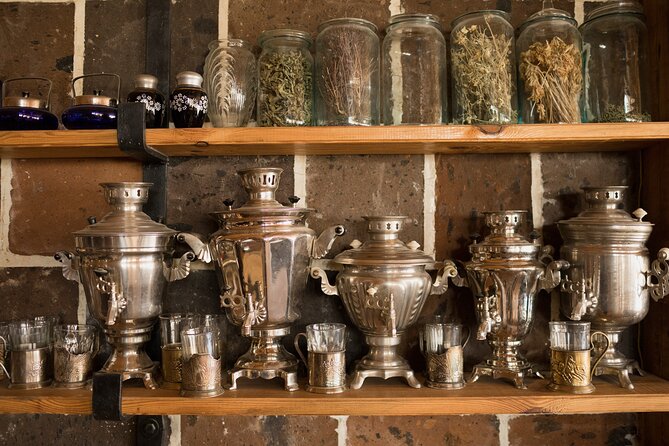
Many of the ingredients come from the provider’s local farm. That does not turn the activity into a full farm visit, and you should not expect a separate agricultural tour. It does, however, bring the food closer to its source and helps explain why these recipes belong in Gyumri rather than on a generic cooking-school menu.
The antique tools also add practical interest. You are not only hearing about older cooking customs. You are using equipment that the team has saved, then eating with antique items as well. That link between preparation and presentation is one of the strongest reasons to choose this activity over a basic dessert demonstration.
For me, the best part is the connection between the physical setting and the food. The museum objects show the past, the recipes carry older habits forward, and the local ingredients keep the lesson tied to daily life. It is a modest activity, but it has more cultural weight than a class that simply hands you a printed recipe.
What the one-hour schedule feels like

One hour is enough for an introduction, not a full culinary course. You will tour the museum, make the drinks, prepare one dessert, and eat what you made. The compact timing works well if you are fitting the activity between other Gyumri plans.
You should arrive ready to participate. The point is to roll up your sleeves and work with the local chef, not sit at a table while someone else does everything. The private setup means your group can focus on the parts that interest you most, though the short duration still requires a fairly brisk pace.
The tasting at the end gives the session a satisfying finish. You get to try your dessert with the coffee, ghayfa, and tea, rather than leaving with an unfinished recipe or a quick sample. For families, that shared meal can be as enjoyable as the cooking itself.
The activity is offered in English. Confirmation is provided when you book, and service animals are allowed. The tour is a private activity, so only your group participates.
Is $30 per person a fair price?
At $30 per person, the value depends on what you want from a food class. If your goal is to master several Armenian recipes, this is too short. You make only one dessert, and the complete session lasts roughly an hour.
If you want a compact cultural activity that combines a museum visit, local drinks, a hands-on recipe, and a final tasting, the price is more convincing. You are paying for more than the ingredients. The fee also covers the private format, the chef-led preparation, access to the museum, use of saved antique tools, and the chance to try ghayfa.
The local farm connection improves the value, too, since some of the ingredients come from nearby production rather than an anonymous supplier. I would see this as a good add-on to a Gyumri visit, especially if you want an activity that gives you something to talk about after you leave.
Group discounts are available. Since this is a private activity, it may be worth asking about the discount if you are traveling with several people. The exact discount is not specified, so check the price for your group before booking.
Who will enjoy this Gyumri cooking activity?
This is a good fit for families because the work is hands-on, the session is short, and the reward is immediate. Children may especially enjoy shaping or decorating the dessert, though the activity details do not specify a minimum age, so ask the provider if that matters for your group.
It also suits couples and small groups who prefer local food stories to formal sightseeing. The private format gives you room to ask questions and choose a dessert that fits your taste.
Food-focused visitors will appreciate the rare ghayfa lesson. If you already know Armenian coffee, the roasted wheat drink adds something less familiar. History-minded visitors will like the photographs and antiques, though the museum portion is brief.
This is less suitable if you need a central location, want a long cooking workshop, or hope to prepare every dessert on the menu. The off-center address and one-hour limit are the two practical points to weigh before you reserve.
Booking and cancellation details
The experience is offered in English, includes a mobile ticket, and can be canceled free of charge up to 24 hours before the start time. For a full refund, you must cancel at least 24 hours in advance using the local start time as the cutoff.
Changes or cancellations made less than 24 hours before the activity are not accepted for a refund. I would confirm your route to Movses Khorenatsi Street before booking, since the location is not in the center and the activity begins and ends there.
Should you book it?
Book this if you want a short, personal look at Gyumri through food, photographs, and old household tools. The strongest reasons are the private chef-led format, the chance to make the nearly forgotten ghayfa, and the choice of four desserts.
Skip it if you are looking for a long class or a central-city activity. But if you can spare an hour and do not mind going a little off-center, $30 buys a useful mix of local history, practical cooking, and a proper sit-down tasting. For many visitors, the unusual drink and warm hospitality of the team will be the lasting part.
FAQ
Where does the activity begin?
It begins at Chalet Gyumri on Movses Khorenatsi Street in Gyumri, Armenia.
Where does the activity end?
The activity ends back at the meeting point at Chalet Gyumri.
How long does the activity last?
The activity lasts approximately one hour.
How much does it cost?
The listed price is $30 per person. Group discounts are available.
Which desserts can I choose?
You can choose yaghli, bishi, shakar lokhum, or bagharj. Bagharj can be prepared sweet or salty.
Is the activity private?
Yes. Only your group participates.
Can I cancel for a full refund?
Yes, if you cancel at least 24 hours before the experience start time. Cancellations or changes made less than 24 hours in advance are not refunded or accepted.
Freshly brewed listings in the world
- Vietnamese Coffee 101 Workshop★ 5.0 · 11 reviews
- Vietnamese Coffee Making Class in Hoi An★ 5.0 · 4 reviews
- Vancouver: Street Art & Craft Coffee Walking Tour w/ Tasting★ 4.8 · 11 reviews
- Yerevan: Private Coffee Tour with 2 Café Stops★ 5.0 · 2 reviews
- Ubud: Waterfall, Holy Water Temple,Swing&coffee plantation★ 5.0 · 9 reviews
- Coffee pleasure walking tour★ 5.0 · 12 reviews
- Vienna: Guided Viennese Coffee-House Tour★ 5.0 · 2 reviews
- Turkish Coffee and Traditional Turkish Dessert Cooking★ 4.6 · 8 reviews