Review · FRANCE
Paris Left Bank: Writers, Revolution, and Black Coffee
Paris’s Latin Quarter is not just a pretty collection of old streets. It is where university students argued, writers drank cheap coffee, churches held power, and new ideas repeatedly caused trouble. This 90-minute walk follows that tension from the Horseman statue near Notre-Dame to the Panthéon.
I like the personal angle. Guides such as Yago, Mathieu, and Floriane have studied or lived in the district, so the walk reaches beyond dates and monuments. I also like the small-group format, the medieval lanes, and the stories tied to Cyrano de Bergerac, Hemingway, Picasso, Dante, jazz, cinema, and student life. The main drawback is pace: 90 minutes goes quickly, and museum or monument entries are not included.
Key points
- A story-led route from Notre-Dame to the Panthéon: Follow the Left Bank through medieval streets, university squares, churches, and old institutions.
- Personal Parisian guides: Yago, Mathieu, Floriane, and other local guides connect the district to their own studies and daily life.
- Strong literary and artistic focus: Hear about Shakespeare & Company, Cyrano de Bergerac, Hemingway, Picasso, Dante, jazz, and cinema.
- Good value at $23: The price is modest for a live, English-language walk through one of Paris’s most layered neighborhoods.
- Rain-or-shine small-group walk: Bring water, wear sensible shoes, and expect to keep moving in poor weather.
- Not suitable for wheelchair users: Medieval lanes and the walking format can make access difficult.
Why the Latin Quarter rewards a slower walk
The Latin Quarter gets its name from the Latin once used in the area’s schools and universities. It grew around intellectual life, religious institutions, student housing, cafés, bookshops, and debate. You still feel that mix today, even when the streets are full of people heading between major sights.
This experience gives you a useful bridge between famous Paris and everyday Paris. Notre-Dame and the Panthéon are major landmarks, but the real subject is the ground between them. You follow narrow lanes, pause in small squares, pass old academic buildings, and hear why this corner of the city has attracted rule-breakers for centuries.
I would choose this walk if you like history best when it is attached to a place. Instead of hearing a long lecture about Hemingway, you are near the bookshops and streets that made this part of Paris attractive to writers. Instead of receiving a dry account of the Sorbonne, you hear how its relationship with the Church changed and why its name still carries such weight.
The tone is meant to be casual and lively. A guide may bring photographs or a book to show you how a place looked in an earlier period. That small touch matters in a district where modern streets often hide medieval or Roman layers.
More Coffee Tours in the world:
- Hanoi Coffee Experience: 6 Brews, 9 Recipes & 3 Liquor Tastings
★ 5.0 · 2,945 reviews - Medellin: Coffee Tour with Transport, Snacks and Tastings
★ 4.7 · 1,357 reviews - Istanbul: Turkish Coffee Making and Fortune Telling Workshop
★ 4.9 · 1,308 reviews
Meeting the guide under the Horseman statue
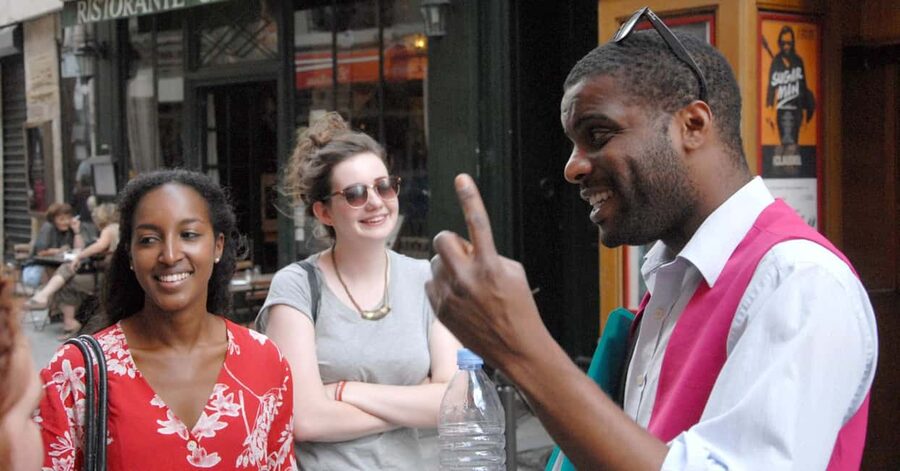
The meeting point is the Statue of Charlemagne and his leudes, in front of Notre-Dame. Look for a guide wearing a pink vest under the horseman statue. This is a busy part of Paris, so allow enough time to find the exact spot rather than arriving at the last second.
The walk starts on time. If you miss the departure, you can try to catch the group about 20 minutes later at 77 rue Galande, outside Café Odette. That is a useful backup, but it is not a substitute for arriving promptly. The group may already have moved on.
The route begins near the Seine, then works inland through the Latin Quarter. You should bring a reusable water bottle. Stops for water and shade are included, but this remains a walking tour with no indoor vehicle transfer or guaranteed shelter.
The advertised format is a small group in English. That is especially helpful in the Latin Quarter, where a large group can clog a narrow lane and make it hard to hear. The tour runs rain or shine, so check the forecast and dress for the day rather than assuming Paris will provide perfect walking weather.
Square René Viviani and the view toward Notre-Dame
The first stop is Square René Viviani, a small green space close to the river and Notre-Dame. It gives the guide a calm place to introduce the Left Bank and explain how the district developed around the Seine, religious power, and learning.
This is a smart opening because it lets you get your bearings before entering the tighter streets. You are close enough to Notre-Dame to feel its presence, yet the square offers a break from the crowds around the cathedral.
The stop lasts about 10 minutes. Do not expect an extended garden visit. It is a scene-setting pause, useful for understanding the location and hearing the first stories about the neighborhood’s long connection with books, faith, and education.
Notre-Dame, Shakespeare & Company, and literary Paris
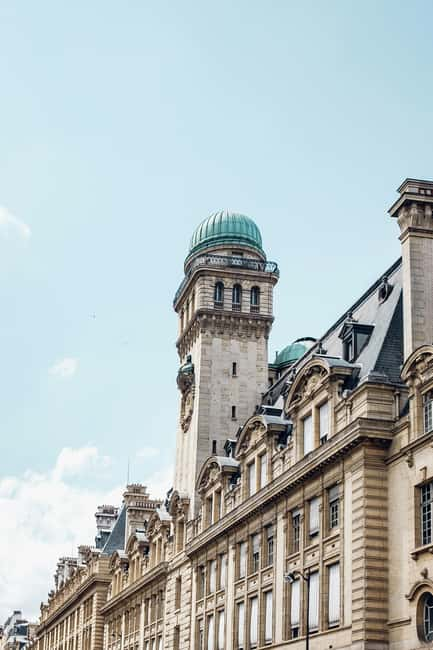
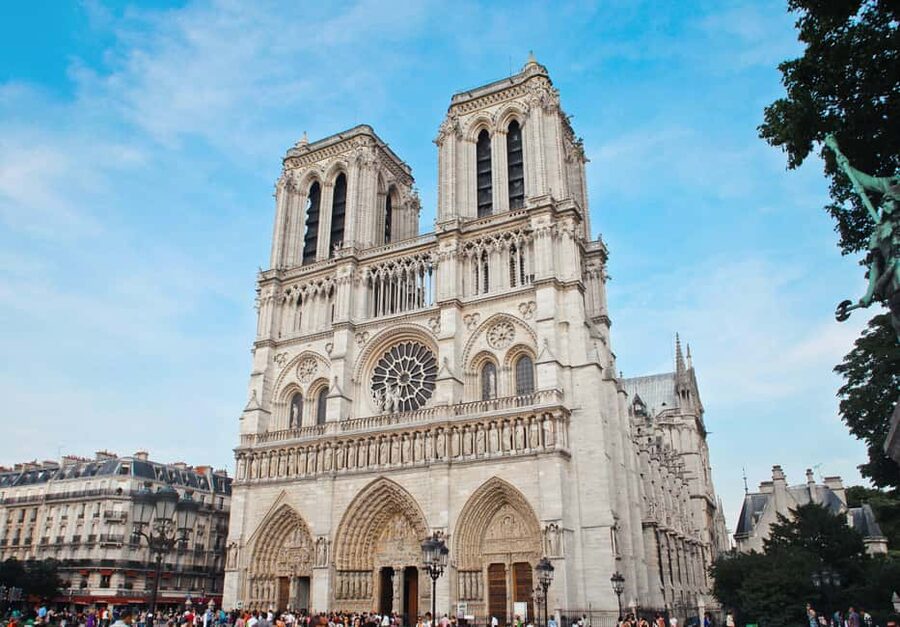
Notre-Dame is another short stop, also listed at about 10 minutes. The purpose is not to replace a full cathedral visit. Instead, the guide places the church within the story of the Left Bank and points out how religious institutions shaped the district before universities and writers gave it a different kind of fame.
Entry to Notre-Dame is not included. If you want to go inside, plan that separately and do not assume the walking tour includes admission or a reserved visit. The guide may offer practical advice about finding a quieter time to enter, which can be useful when the cathedral is crowded.
Next comes Shakespeare & Company, one of the most recognizable bookshops in this part of Paris. Its name brings together the city’s modern literary identity and its older habit of welcoming outsiders, students, and writers.
You should expect a short visit rather than a long browsing session. Ten minutes is enough to understand why the shop matters, hear related stories, and take in the setting. If you want time to browse the shelves, return later on your own.
This is where the literary thread becomes clearer. The tour connects the district with Hemingway and other writers drawn by books, conversation, inexpensive coffee, and the freedom to argue late into the evening. The point is not that every famous writer lived on every street. The point is that the Latin Quarter gave writers a social world in which ideas could circulate quickly.
Same town, another way to drink it:
- Hanoi Coffee Workshop: Taste Salt, Coconut and Egg Coffee
★ 5.0 · 1,286 reviews - Vienna for Food Lovers: Cafés, Markets & Austrian Cuisine
★ 5.0 · 1,063 reviews - Big Island Highlights: Coffee, Volcano, Black Sands & Waterfall
★ 5.0 · 1,054 reviews - Hanoi: Salt Coffee Workshop Awake Your Senses With 6 Brews
★ 5.0 · 792 reviews
The Sorbonne and the power of a university name
The Sorbonne is one of the tour’s central subjects. The itinerary includes stops at Sorbonne University and La Sorbonne, each planned for about 10 minutes. The repeated naming reflects the institution’s importance, though the wording can feel slightly confusing if you expect two entirely separate attractions.
The guide explains how Europe’s university system was first tied closely to the Church and later pushed toward greater independence. That change is one reason the Latin Quarter has long been a place where authority gets questioned.
I like this part because the Sorbonne is more than an impressive academic name. It represents the power of education to shape politics, religion, literature, and public life. The guide also explains why the word Sorbonne still carries international weight.
Do not expect a campus tour or access to academic interiors. Much of the value comes from standing outside, looking at the buildings, and hearing how the institution fits into the neighborhood. If you want a detailed architectural visit, this walk will not provide enough time.
The personal connection helps here. Some guides have studied in the area, and that gives the explanation a lived quality. You hear about the district as a place of lectures, debate, student routines, and late nights, not simply as a chapter in a textbook.
Medieval lanes and courtyards away from the main routes
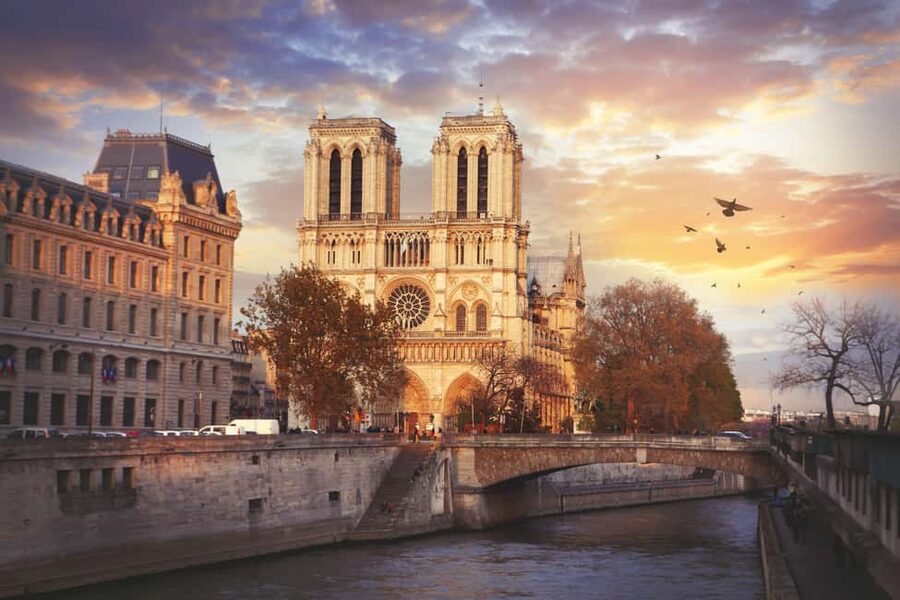
Between the major stops, the walk turns into the kind of neighborhood exploration many people have trouble finding alone. The Latin Quarter has narrow medieval lanes, tucked-away courtyards, old façades, and streets that do not announce their importance.
You should not expect every side street to look untouched. Paris is a working city, and the district includes cafés, shops, traffic, and modern life. That mix is part of the appeal. The guide helps you notice traces that you could easily pass without context.
The route includes a street known as the street of the English, along with places connected to cinema and student culture. The exact smaller stops are brief, with some lasting only a few minutes. That means the guide has to keep the pace moving, but it also lets the walk cover a broad range of subjects.
One of the best features is the sense of discovery without pretending the district is secret. These are public streets, not private discoveries. The advantage is having a local guide explain why a particular lane, courtyard, church, or building matters.
Because the route uses old streets, comfortable shoes are more useful than stylish ones. You may also find that the narrow passages make it harder to walk side by side with everyone in your group. Stay close to the guide, especially at crossings and busy corners.
Roman baths, the Cluny Museum, and medieval Paris

The Musée National du Moyen Âge, also called the Cluny Museum, appears on the route as a guided stop of about 10 minutes. The museum is especially important because it preserves the site of Roman bathhouses and connects the ancient city with medieval Paris.
This is one of the most useful historical pauses. The Latin Quarter is often described through writers and students, but its story reaches much further back. Roman remains show that this part of Paris mattered long before the Sorbonne or the modern café culture.
The tour does not include museum admission. The short stop is therefore best understood as an introduction from outside or around the site, not a full museum visit. If medieval art, Roman archaeology, or the famous Lady and the Unicorn tapestries appeal to you, set aside separate time to return and enter.
That limitation is easy to understand given the 90-minute duration. Trying to include a full museum visit would turn the walk into a rushed indoor tour. Here, you get the setting and the reason to come back.
Cyrano, Dante, Hemingway, Picasso, and the neighborhood of ideas
The names attached to this walk are wide-ranging. Cyrano de Bergerac brings theatrical bravado. Dante connects the area with the wider world of European letters. Hemingway represents the expatriate writer drawn to Paris, while Picasso adds the perspective of an artist working within the city’s creative circles.
The guide uses these figures to show how the Latin Quarter attracts people who want to write, paint, study, perform, or challenge accepted ideas. You are not simply collecting famous names. You are learning why this particular district has offered the right mixture of cheap coffee, institutions, arguments, bookshops, churches, cinemas, and late-night conversation.
Jazz and cinema also enter the story. One guide brought the subject of jazz into the walk, along with the district’s art-house cinema culture and Catholic identity. These details give the tour a wider reach than a standard medieval sightseeing route.
The strongest guides appear to be energetic and willing to add personal observations. Yago is described as young, dynamic, and passionate about Paris. Mathieu is noted for his insight into the district, while Floriane has led small groups in an authentic and enthusiastic way. A guide may vary, so you should expect the exact personality and emphasis to change.
Finishing at the Panthéon
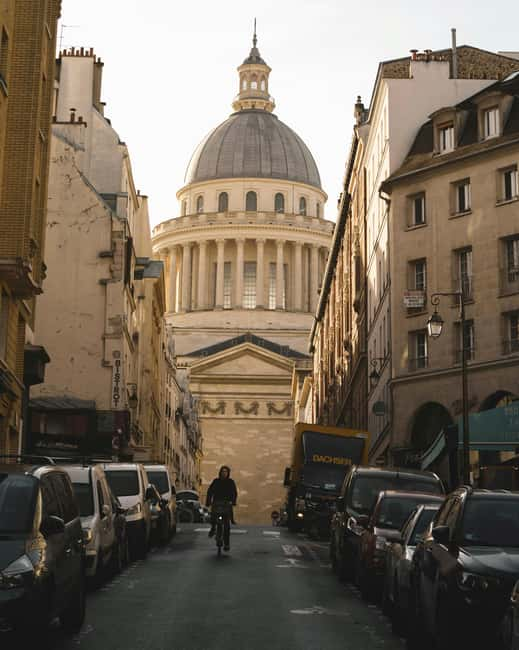
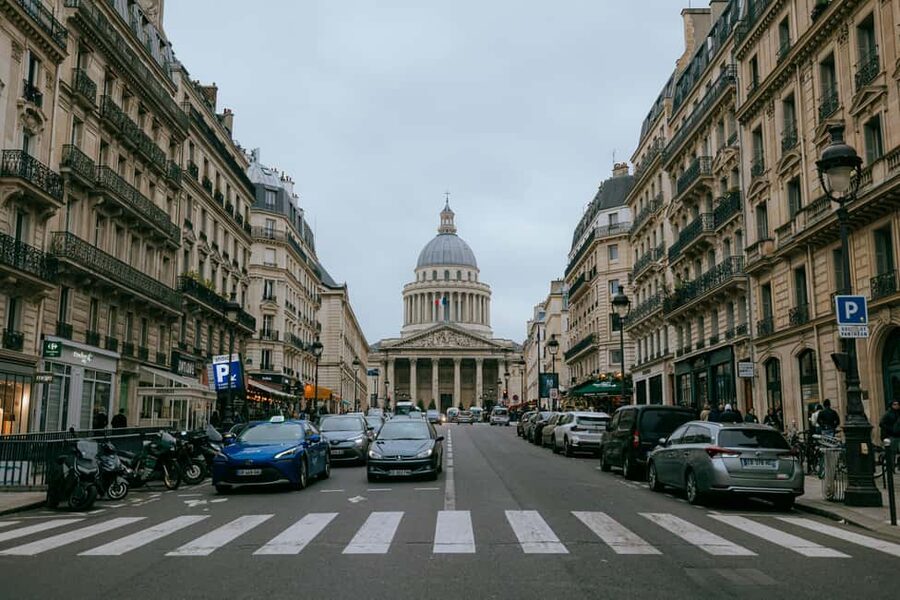
The walk ends at the Panthéon, one of the Latin Quarter’s most imposing landmarks. The building provides a fitting finish because the tour has moved from ordinary streets and student life toward national memory and public honor.
The Panthéon is not simply a final photo stop. It raises the question of which thinkers, writers, scientists, artists, and political figures France chooses to celebrate. After hearing about rebels and outsiders, you arrive at a place where the nation decides who belongs among its heroes.
Admission is not included. The tour ends outside the Panthéon rather than becoming a full interior visit, so you can choose to enter later if your schedule allows. Finishing here also makes it easy to continue exploring the surrounding streets or head toward the Luxembourg Garden, which belongs to the wider route area.
The ending is practical as well as symbolic. You are no longer near the starting point, so plan your next stop from the Panthéon rather than assuming the walk returns you to Notre-Dame.
Is 90 minutes enough for this route?
Ninety minutes is enough for an introduction, not a full study of the Latin Quarter. You will see a strong selection of places and get a clear sense of how religion, education, literature, art, and rebellion overlap here.
The benefit of the short format is focus. You can fit this walk into a morning or afternoon without giving up half a day. It works well early in a Paris visit because it helps you understand the Left Bank before you return to explore the museums, bookshops, churches, and cafés on your own.
The cost is depth. Several stops receive only 5 or 10 minutes, and some locations are seen from the outside. If you want long photo sessions, extended shopping time at Shakespeare & Company, or a full visit inside the Cluny Museum and Panthéon, add separate time.
I would treat it as a lively orientation with real historical substance, not as a substitute for museum admission.
The $23 price and who gets the best value
At $23 per person, this is a sensible price for a live, English-language walking tour led by a local guide. You are paying for interpretation and route planning, not entrance tickets. The value is strongest if you want the neighborhood to make sense rather than simply want to tick off landmarks.
The price also keeps the commitment low. You can book now and pay later, and cancellation is free up to 24 hours before the start. Those terms help if your Paris plans are still shifting.
I would choose this tour for:
- First-time Paris visitors who want context around Notre-Dame and the Left Bank
- Readers, writers, students, and art lovers
- People who prefer small groups and local stories
- Anyone who enjoys walking through old streets more than entering several monuments
- Visitors with only a short amount of time for the Latin Quarter
I would be more cautious if you have limited walking ability, need a wheelchair-accessible route, or dislike tours that move between many short stops. The experience is not suitable for wheelchair users, and the medieval streets may be difficult for anyone who needs smooth, spacious paths.
Practical tips for making the walk better
Arrive early at the horseman statue and look for the pink vest. The meeting point is near a major landmark but can still be confusing in the flow of people around Notre-Dame.
Wear shoes for uneven streets and bring a reusable water bottle. The tour includes stops for water and shade, but you should not count on long indoor breaks.
If rain is forecast, take the rain-or-shine promise seriously. A light waterproof layer will make the walk much more pleasant. The same applies to sun: much of the route is urban, but shaded pauses are part of the plan.
Keep another hour or two free if you want to enter the Cluny Museum or the Panthéon. Also consider returning to Shakespeare & Company after the tour, since 10 minutes is enough for an introduction but not enough for a relaxed look around.
Should you book Paris Left Bank: Writers, Revolution, and Black Coffee?
Book it if you want the Latin Quarter explained through people, arguments, books, and daily life rather than only through monuments. The strongest reasons are the local guides, the personal connection to the neighborhood, the small-group setting, and the unusual mix of medieval, Roman, academic, literary, and cinematic stories.
Skip it if you need a fully accessible route, a museum-heavy experience, or a long stop at each landmark. At $23, the walk offers good value, but its purpose is to connect the dots. You will leave with a better map of the Left Bank and several good reasons to come back on your own.
FAQ
How long is the Paris Left Bank walking tour?
The tour lasts 90 minutes.
What language is the tour offered in?
The live tour guide speaks English.
Where does the tour meet?
Meet under the Statue of Charlemagne and his leudes, the horseman statue in front of Notre-Dame. Look for the guide wearing a pink vest.
What happens if I miss the start?
You can try to find the group about 20 minutes after departure at 77 rue Galande, in front of Café Odette.
Are museum and monument entry fees included?
No. Entry to museums and monuments is not included in the tour price.
Is the tour suitable for wheelchair users?
No. The experience is listed as not suitable for wheelchair users.
Freshly brewed listings in the world
- Vietnamese Coffee 101 Workshop★ 5.0 · 11 reviews
- Vietnamese Coffee Making Class in Hoi An★ 5.0 · 4 reviews
- Vancouver: Street Art & Craft Coffee Walking Tour w/ Tasting★ 4.8 · 11 reviews
- Yerevan: Private Coffee Tour with 2 Café Stops★ 5.0 · 2 reviews
- Ubud: Waterfall, Holy Water Temple,Swing&coffee plantation★ 5.0 · 9 reviews
- Coffee pleasure walking tour★ 5.0 · 12 reviews
- Vienna: Guided Viennese Coffee-House Tour★ 5.0 · 2 reviews
- Turkish Coffee and Traditional Turkish Dessert Cooking★ 4.6 · 8 reviews
France Coffee Tours, compared.
Montmartre & Sacré Coeur : Museum & Coffee In A Tiny Group Tour
Read our review →