
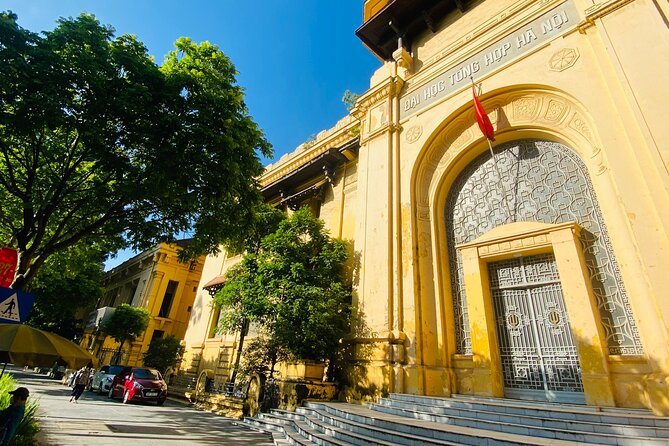
Review · HANOI
Hanoi French Quarter: Coffee and Stories
Hanoi’s French Quarter makes most sense on foot, and this tour gets you into places you could easily pass without noticing. You’ll pair colonial-era landmarks with Vietnamese coffee in a former French villa, a small pagoda tucked beside a busy street, and plenty of local stories from guides such as Mina, Thea, Pinky, Vu, and Cong.
I like the small group limit of 10, which makes it easier to ask questions and cross Hanoi’s busy roads with help. I also like the coffee-and-ice-cream rhythm: the tour is not just a march from building to building, and the included treats add a real taste of the city.
The main consideration is that this is a walking tour, not a vehicle tour. You’ll cover several stops in roughly two and a half hours, and the French Quarter can be hot, noisy, and crowded. The meeting time may also need careful checking, since the operator contacts you with final details before the tour.
Key points at a glance
- Coffee in a French villa: Try Vietnamese coffee with condensed milk, plus possible specialties such as egg, coconut, or lemon coffee.
- Eight compact stops: The route links St. Joseph’s Cathedral, colonial landmarks, Hoan Kiem Lake, and Hanoi University of Pharmacy.
- Local storytelling: Guides including Mina, Thea, Pinky, Vu, and Cong explain history, culture, and the difficult sides of French and American involvement in Vietnam.
- Small groups: A maximum of 10 people keeps the experience more personal than a large city tour.
- Included treats: Coffee or tea and ice cream are part of the price.
- Easy half-day plan: The tour ends with the rest of your day free for food, museums, shopping, or another part of Hanoi.
Why this walking tour works in Hanoi
The French Quarter is not a single attraction with a gate and a ticket. It is a district of grand buildings, quiet corners, old streets, churches, hotels, shops, and modern Hanoi life layered together.
That makes a guide useful. On your own, you can admire the Opera House or photograph the Metropole, but you may miss the connections between French planning, Vietnamese culture, education, religion, and modern city life. A good guide turns those separate sights into one clear story.
This experience is built around that idea. You walk from the meeting point on Au Trieu Street to the cathedral, then through the Quarter toward the Opera House, Trang Tien Plaza, Hoan Kiem Lake, and the university. Along the way, coffee and ice cream break up the sightseeing.
I would treat it as a strong first activity in Hanoi. It gives you a sense of direction and introduces local customs without using up your whole day. The route lasts about 2 hours and 30 minutes, so you can still plan lunch, a museum, or an evening food outing afterward.
More Coffee Tours in Hanoi:
- Hanoi Coffee Experience: 6 Brews, 9 Recipes & 3 Liquor Tastings
★ 5.0 · 2,945 reviews - Hanoi Coffee Workshop: Taste Salt, Coconut and Egg Coffee
★ 5.0 · 1,286 reviews - Hanoi: Salt Coffee Workshop Awake Your Senses With 6 Brews
★ 5.0 · 792 reviews
Starting at St. Joseph’s Cathedral
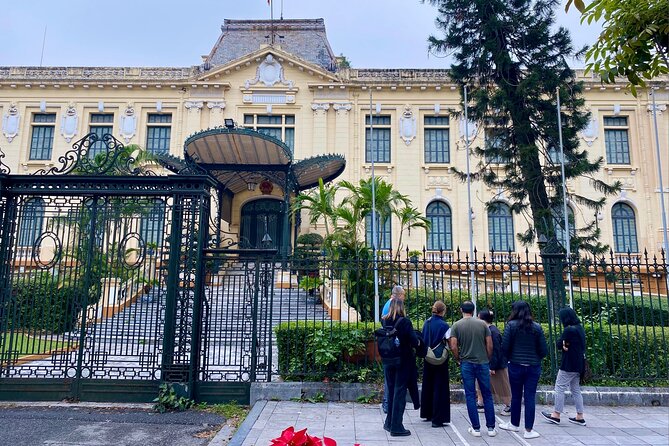
The tour begins at 6 P. Au Trieu, close to St. Joseph’s Cathedral at 40 Nha Chung Street. The cathedral is one of Hanoi’s best-known landmarks, with a late 19th-century Gothic Revival design.
The stop is scheduled for about 15 minutes. That is enough time for an outside look, photographs, and an explanation of why the building became such a strong symbol of the city. Do not expect a long church visit or a formal architectural lecture. This is a quick opening stop that helps set the French colonial context.
The cathedral also makes a practical meeting point. It is easy to identify, and the tour begins in a central part of Hoan Kiem District rather than requiring a long transfer from the city center.
Coffee, condensed milk, and stories in a French villa
The coffee stop is one of the most distinctive parts of the experience. At Loading T Café, you try ca phe sua da, Vietnamese coffee with condensed milk, in a former French villa.
The stop lasts about 20 minutes. That may sound brief, but it gives you time to taste the drink, look around the building, and hear stories about the area. Some guides also introduce visitors to egg coffee, coconut coffee, or lemon coffee, depending on what is available and how the guide shapes the visit.
I like this pause because it connects history to daily life. Vietnamese coffee is not an extra decoration added to a sightseeing route. Sitting down with a strong coffee and condensed milk gives you a small but useful introduction to how Hanoi’s café culture fits into its older buildings.
Coffee preferences vary, of course. If you dislike sweet drinks or strong coffee, tea is also included. The exact drink selection may depend on the café and the guide, so do not book this expecting one fixed tasting menu.
Finding Chua Ba Da beside the busy streets
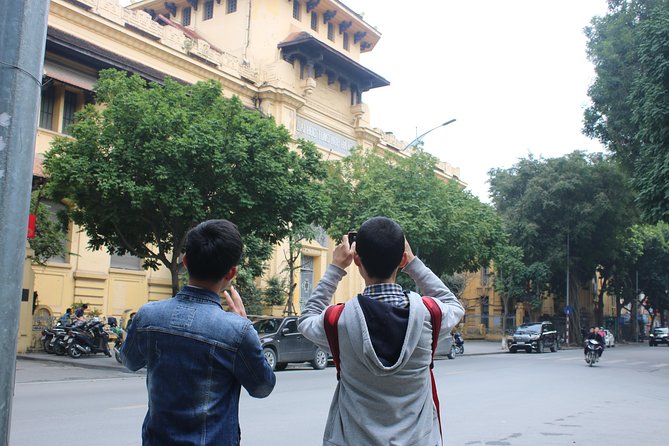
Chua Ba Da is described as a very hidden pagoda near one of Hanoi’s busiest streets. The visit is short, around 10 minutes, but it changes the mood of the walk.
This is the kind of stop that benefits most from a local guide. A major church or hotel is easy to locate on a map. A smaller religious site can be much harder to spot, especially when traffic and shopfronts pull your attention elsewhere.
The contrast matters. The tour does not present Hanoi as only French or only Vietnamese. Instead, you see different layers close together: colonial architecture, local religious life, commercial streets, and modern city movement.
Because the stop is brief, your guide’s explanation will likely matter more than the building’s size. Keep your expectations reasonable. This is a short look at a lesser-known place, not a long temple visit.
Same town, another way to drink it:
- Hanoi: Master the Art of 4-6 Signature Vietnameses Coffees
★ 5.0 · 517 reviews - Hanoi: Vietnamese Street Food Tour with Egg Coffee
★ 4.9 · 315 reviews - Hanoi Cooking Class: Pho/Bun Cha/Banh Xeo…+Free Egg/Salt Coffee
★ 5.0 · 267 reviews - Hanoi: Vietnamese Coffee Workshop with 6 Brews and 8 Recipes
★ 5.0 · 237 reviews
The Metropole and the city’s colonial story
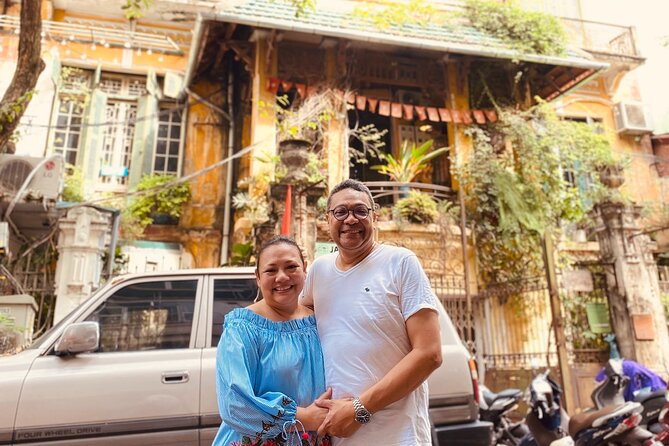
The route continues to the Sofitel Legend Metropole at 15 Ngo Quyen Street. The hotel is one of the most famous colonial-era buildings in Hanoi, and the stop lasts about 15 minutes.
The Metropole is valuable as a visual anchor. Its appearance helps you understand the scale and style of the French Quarter, while the guide can place the hotel within Hanoi’s political and social past. One itinerary detail calls it the most beautiful colonial-era hotel, but beauty is subjective. Its importance comes more from its long presence and landmark status.
You may also hear about areas inside the hotel, though access is not guaranteed by the tour details. Treat this as an exterior and historical stop unless your guide says otherwise.
For photographers, this is one of the more polished parts of the route. For history-minded visitors, it offers a chance to ask about colonial rule, Vietnamese society, and how old buildings continue to function in the present city.
Hanoi Opera House and Trang Tien Plaza
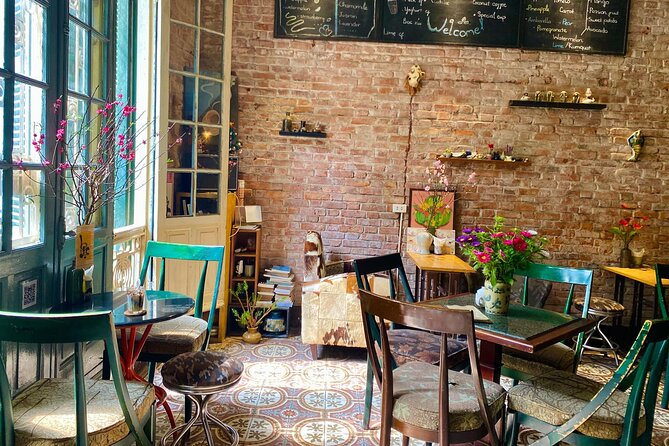
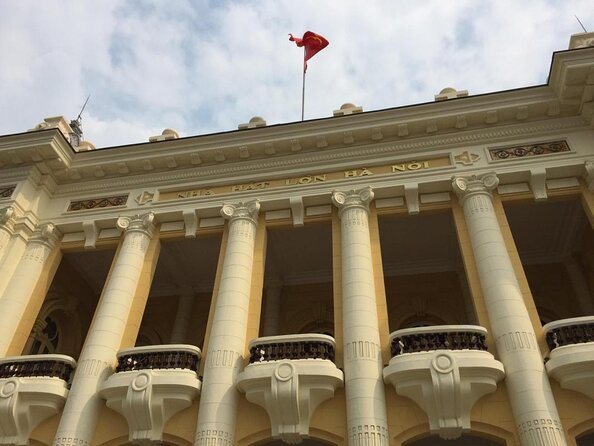
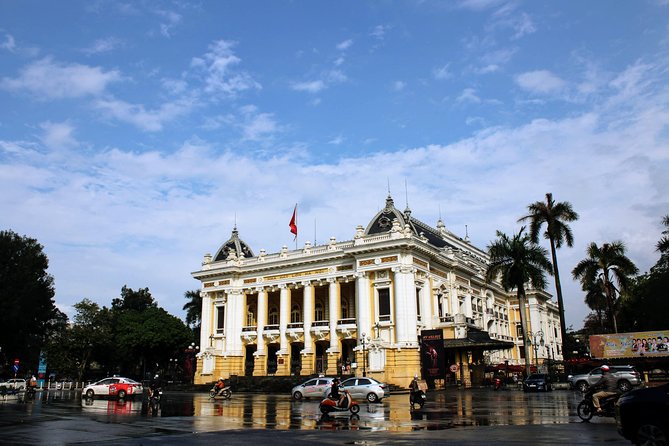
The Hanoi Opera House, at No. 1 Trang Tien, is another 15-minute stop. It represents French influence on Hanoi’s architecture and cultural institutions, but the story is not simply about attractive buildings.
A good guide can explain how the Opera House relates to social and cultural change under French rule. One strength of this tour is its willingness to cover both the attractive and uncomfortable parts of that period. The French influence brought new architectural and institutional forms, but it also existed within colonial control. You should expect a broader account than a simple celebration of European design.
From the Opera House, the walk reaches Trang Tien Plaza and Trang Tien Street. This part shows how the district changed from the early days of modern Hanoi, through the French period, to the present. The street is familiar to many Hanoians, and that everyday connection keeps the route from becoming a parade of old façades.
The 15-minute timing at each stop keeps the tour moving. That is useful if you want an overview, but it can feel quick if you want to study each building at length.
Hoan Kiem Lake and Turtle Tower
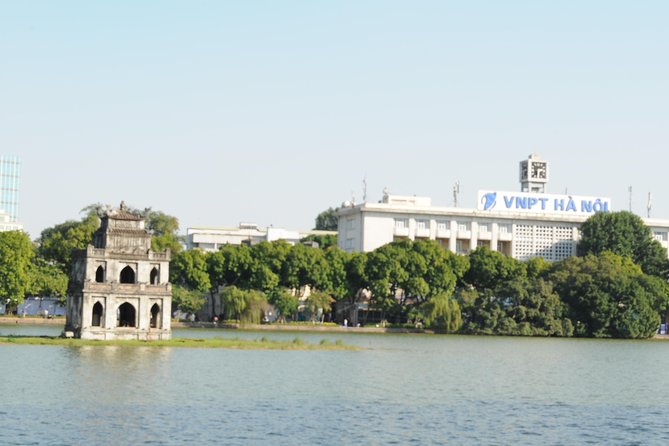
The walk then reaches Hoan Kiem Lake, also called the Lake of the Restored Sword. The scheduled stop is about 15 minutes.
This is one of Hanoi’s central public spaces, and Turtle Tower is its most recognizable feature. The tower combines European and Asian architectural details, including Gothic-style arches at the lower levels. Its setting in the lake gives the stop a visual break from the streets and buildings.
The lake also helps explain Hanoi’s identity beyond the colonial district. The French Quarter route is not only about French architecture. It also leads into a place tied to Vietnamese patriotism and local cultural memory.
You should not expect a full circuit of the lake during this tour. The stop is a short introduction, followed by more walking. If you want a slower lake visit, save time later in your day.
Ending at Hanoi University of Pharmacy
The final stop is Hanoi University of Pharmacy at 13 to 15 Le Thanh Tong Street. It is described as the first modern university built by the French.
This gives the route a useful ending. You begin with a church, pass through cafés and religious sites, see major hotels and cultural buildings, and finish with education. The guide can show how French-era institutions shaped parts of modern Hanoi while also discussing what those institutions meant for Vietnamese society.
The tour ends here rather than returning to the cathedral. That point-to-point design is convenient if you plan to continue around the French Quarter, but you should note the location when arranging your next activity.
What the guides add to the walk
The guide is the main reason to choose this experience over a self-guided stroll. The route itself is easy to map. The value comes from the explanations, local viewpoints, and questions you can ask along the way.
Mina is frequently described as energetic, friendly, clear in English, and generous with practical advice about food, coffee, and other things to see. Thea is praised for combining information with humor and for bringing the Quarter’s culture to life. Pinky is known for enthusiasm and for adjusting the walk to a visitor’s interests.
Vu is a strong fit if you want clear explanations of Vietnam and Hanoi, including the positive and negative sides of French rule and the Vietnamese view of American involvement in the war. Cong is described as a passionate storyteller who uses humor, which can make a history-heavy walk easier to follow.
Guides can vary, and your guide is assigned by the operator. That is worth keeping in mind. The experience depends heavily on who leads your group, but the repeated focus on storytelling, English communication, and personal attention is encouraging.
Group size, pace, and practical comfort
The maximum group size is 10. That is small enough for a more conversational walk, while still keeping the cost below a private tour.
You will cross Hanoi streets during the route. One useful feature of the guide service is help with road crossings, especially for visitors still learning how traffic flows. Still, stay alert and follow the guide. This is a city walk, not a protected pedestrian route.
Most people can participate, and the tour is near public transportation. The details do not promise a fully accessible route, so if you have specific mobility needs, confirm them before booking. The tour requires good weather. If bad weather forces cancellation, you are offered another date or a full refund.
The operator provides mobile tickets and sends confirmation at booking. It is also sensible to watch for a message with final meeting information. One practical note from the experience details is that the start time may be adjusted, so do not ignore last-minute contact from the operator.
Is $29 a fair price?
At $29 per person, this is a reasonable price for a 2.5-hour small-group walk with a local guide, coffee or tea, and ice cream. The cost is not just paying for access to buildings, since the listed stops are free. You are paying for the route, explanations, local context, and the convenience of combining several places in one morning or afternoon.
The value is strongest if you are new to Hanoi, short on time, or interested in the way colonial and Vietnamese influences meet in one district. It is also useful for solo visitors who want company without paying for a private guide.
The value is weaker if you prefer to move slowly, spend a long time inside museums, or take your own photographs without a schedule. The stops are short, and the route covers several places rather than exploring one building in depth.
The included treats help. Coffee in a former French villa and ice cream during a city walk feel more useful than a generic snack because they are tied to the local setting. Just remember that drink choices and exact café orders may vary.
Who should book the French Quarter walk?
I would recommend this tour to first-time Hanoi visitors, short-stay visitors, couples, solo travelers, and anyone who wants a practical introduction to the city’s architecture and history.
It suits you especially well if you like to ask questions. The small group format gives you a better chance to discuss Vietnamese coffee, colonial rule, religion, education, food, and other Hanoi topics with the guide.
Families and older visitors may also appreciate the modest group size and the guide’s help with busy crossings. The route is still a walking tour, so anyone who struggles with heat, traffic, or sustained walking should consider that before booking.
It is less suited to travelers who want a private, slow, highly specialized architecture tour. It is also not the right choice if your main goal is visiting interiors, since many stops are brief outdoor looks.
Should you book it?
Book this tour if you want Hanoi’s French Quarter explained rather than simply photographed. The strongest parts are the local guides, the smaller group, the coffee stop in a French villa, and the route’s mix of famous landmarks and easy-to-miss places such as Chua Ba Da.
I would choose it early in a Hanoi visit. You can use the guide’s suggestions for later meals and sightseeing, then spend the rest of the day exploring on your own.
Skip it if you dislike walking tours or need long visits at each stop. For most visitors, though, $29 buys a useful introduction, two local treats, and a much clearer sense of how Hanoi’s French and Vietnamese stories share the same streets.
FAQ
Where does the Hanoi French Quarter tour start?
The tour starts at 6 P. Au Trieu, Hang Trong, Hoan Kiem, Hanoi. The route also visits St. Joseph’s Cathedral at 40 Nha Chung Street.
Where does the tour end?
The tour ends at Hanoi University of Pharmacy, 13 to 15 Le Thanh Tong Street, Phan Chu Trinh, Hoan Kiem, Hanoi.
How long does the experience last?
The tour lasts approximately 2 hours and 30 minutes.
What is included in the price?
Coffee and/or tea and ice cream are included. The tour also includes a local guide and the walking experience through the French Quarter.
How many people can join the tour?
The maximum group size is 10 travelers.
Is this a walking tour?
Yes. The route connects the listed stops on foot through Hanoi’s French Quarter and nearby central areas.
Which landmarks are visited?
Stops include St. Joseph’s Cathedral, Loading T Café, Chua Ba Da, the Sofitel Legend Metropole, Hanoi Opera House, Trang Tien Plaza, Hoan Kiem Lake, and Hanoi University of Pharmacy.
Can I cancel for a full refund?
Yes. You can receive a full refund if you cancel at least 24 hours before the experience start time. Cancellations within 24 hours are not refunded.
What happens if the weather is poor?
The experience requires good weather. If it is canceled because of poor weather, you are offered a different date or a full refund.
Freshly brewed listings in Hanoi
- Vietnamese Coffee 101 Workshop★ 5.0 · 11 reviews
- Private tour: Hanoi city tour-Van Phuc silk village with egg coffee, lunch★ 5.0 · 2 reviews
- Taste of Vietnam’s Coffee Scene – A Guided Experience★ 5.0 · 2 reviews
- Private Hà Nội Coffee History Tour★ 5.0 · 6 reviews
- Walking Tour in Hanoi Old Quarter with Street Food & Coffee★ 5.0 · 4 reviews
- Hanoi Private And All Inclusive Coffee Lovers Tour in Vietnam★ 5.0 · 6 reviews
- hidden gems cafe – learn making coconut and egg coffee★ 5.0 · 2 reviews
- Hanoi History Coffee Tour★ 5.0 · 2 reviews
Hanoi Coffee Tours, compared.
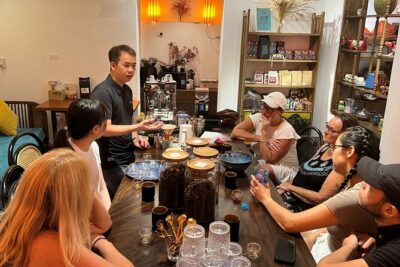
Hanoi Coffee Experience: 6 Brews, 9 Recipes & 3 Liquor Tastings
Read our review →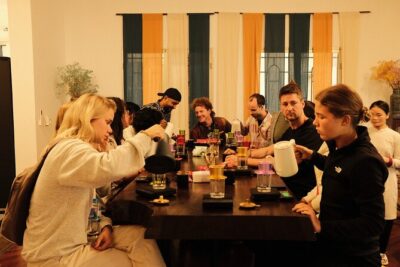
Hanoi Coffee Workshop: Taste Salt, Coconut and Egg Coffee
Read our review →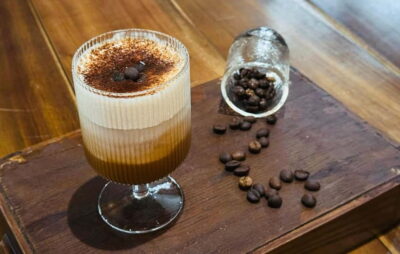
Hanoi: Salt Coffee Workshop Awake Your Senses With 6 Brews
Read our review →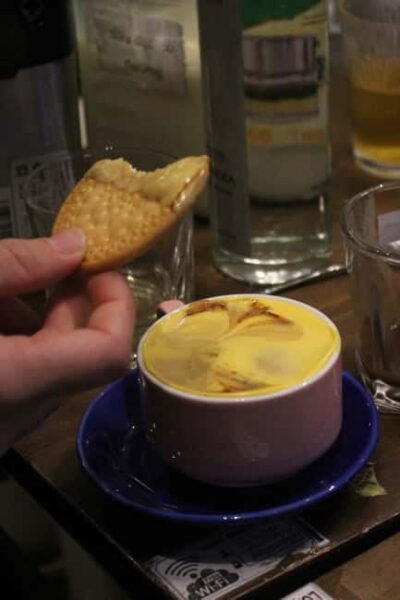
Hanoi: Master the Art of 4-6 Signature Vietnameses Coffees
Read our review →
Hanoi: Vietnamese Street Food Tour with Egg Coffee
Read our review →
Hanoi Cooking Class: Pho/Bun Cha/Banh Xeo…+Free Egg/Salt Coffee
Read our review →
Hanoi: Vietnamese Coffee Workshop with 6 Brews and 8 Recipes
Read our review →
Browse the lists this tour appears in