
Review · COPENHAGEN, DENMARK
Brew and Brunch Mastering the Perfect Espresso with Breakfast
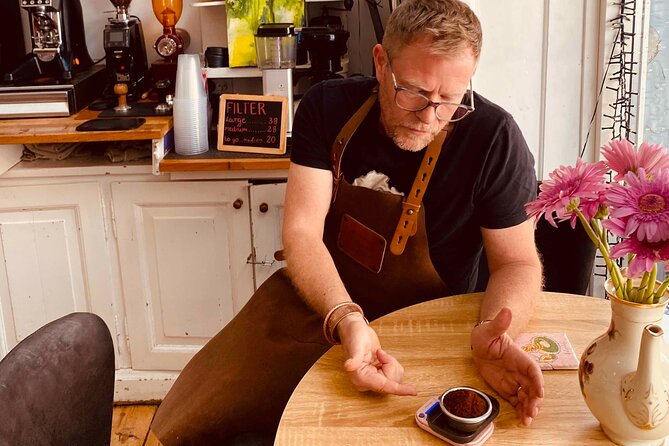
Copenhagen’s espresso class takes place in a real neighborhood cafe, not a staged workshop. Mark, the owner and SCA-certified roaster, teaches each step while you eat a simple breakfast, answer questions, and eventually pull your own espresso. At the 11:30 a.m. session, regulars may be nearby, and you might even prepare a coffee for a customer.
I like the small group size, capped at 10, and the chance to learn on both commercial and home espresso machines. I also like that breakfast is part of the lesson rather than an afterthought: you get an egg, croissant, fresh orange juice, and coffee while learning. The main consideration is the cafe setting during opening hours, which feels local and social but may be less quiet than a private class.
Key points at a glance
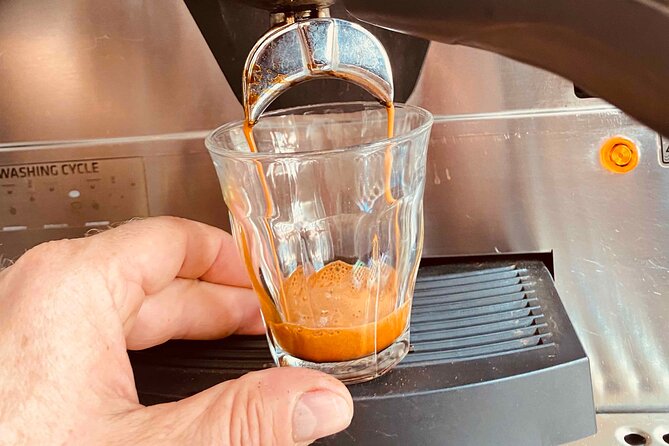
- Learn the full espresso process: The lesson focuses on the order and care needed to produce a good espresso.
- Meet Mark in his own cafe: The class is led by the owner, an experienced roaster and SCA-certified barista.
- Eat a practical Danish-style breakfast: Your meal includes a soft or hard-boiled egg, croissant, fresh orange juice, and coffee.
- Make your own final espresso: Each participant finishes by preparing an espresso.
- Expect a local cafe atmosphere: The 11:30 a.m. session runs during normal opening hours, with regular customers around.
- Keep the group personal: The class allows a maximum of 10 people and is offered in English, Portuguese, German, or French.
A real Copenhagen cafe, not a classroom set
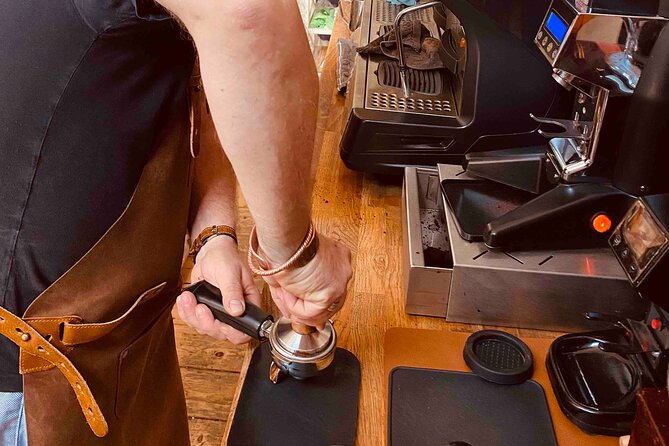
The best part of this experience is its setting. You meet at Holmbladsgade 14, in a working neighborhood cafe owned by the person teaching the class. That matters because coffee is shown as part of daily life, not just as a polished tasting exercise.
You are not simply handed a cup and told that the beans are special. Mark explains how the drink comes together, then gives you a chance to follow the process yourself. The class is aimed at specialty coffee, but the tone is casual. You can ask as many questions as you like, which makes this a good choice if you have a home espresso machine and want practical guidance rather than coffee jargon.
The cafe is also meant to highlight local life for people visiting Copenhagen. At the 11:30 a.m. session, it remains open to its regular customers. You may hear ordinary cafe conversation, see people stopping in for coffee, and perhaps find yourself making an espresso for someone who has come in for breakfast.
That public setting is a strength if you want a social experience with a genuine neighborhood feel. It is less ideal if you expect a silent, private workshop where every minute is devoted only to your group.
More Coffee Tours in the world:
- Hanoi Coffee Experience: 6 Brews, 9 Recipes & 3 Liquor Tastings
★ 5.0 · 2,945 reviews - Medellin: Coffee Tour with Transport, Snacks and Tastings
★ 4.7 · 1,357 reviews - Istanbul: Turkish Coffee Making and Fortune Telling Workshop
★ 4.9 · 1,308 reviews
What the 90-minute class actually teaches
The central lesson is that a good espresso comes from a chain of steps. Mark takes you through those steps in order, showing why each one matters. The supplied details do not specify the exact technical measurements or equipment settings used, so you should think of this as a guided foundation rather than a written recipe with fixed numbers.
That distinction is useful. Espresso machines differ, coffee beans behave differently, and home equipment rarely works exactly like a commercial setup. Learning the reasoning behind the process can help you adjust at home instead of copying one number and hoping for the best.
The class covers the process from preparation through extraction, with the aim of giving you a clear picture of what must happen to make a great espresso. Mark’s experience as a roaster and SCA-certified barista adds useful context, especially for anyone who has wondered why the same coffee can taste different from one day to the next.
You should arrive ready to ask questions. The format welcomes them, and the small group limit gives the lesson a more personal feel than a large demonstration. If you already make coffee at home, bring your practical concerns in your head: the point is to understand how careful steps affect the cup.
Breakfast comes first, and it fits the lesson
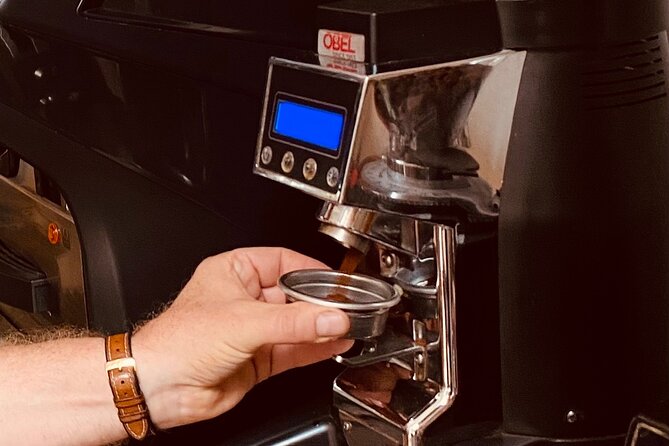
The meal is simple, filling, and well matched to a morning cafe class. You receive:
- A soft or hard-boiled egg
- A croissant
- Fresh orange juice
- A coffee of your choice
This is not a long brunch with several courses. It is a mini-breakfast built into the 90-minute session. That keeps the price in perspective: part of what you pay covers instruction, part covers hands-on coffee work, and part covers a complete light meal.
I like this arrangement because you can settle into the cafe before handling the espresso equipment. The egg and croissant give you something substantial, while the orange juice adds a fresh counterpoint to the coffee. Your coffee choice also lets the meal feel personal rather than fixed from start to finish.
Do not book this expecting a full restaurant brunch. If you want a large meal, you may need to eat again later. For a morning activity, though, the breakfast is sensible and useful.
The hands-on finish is the reason to book
The class culminates with each participant making an espresso. This is the point at which the information becomes practical. You are not just watching Mark prepare coffee, you are asked to follow the process yourself.
For beginners, that final turn at the machine can clarify why espresso sometimes seems difficult at home. A small error in one stage can affect the result, and the class gives you a chance to connect the explanation with the physical routine.
For experienced home brewers, the benefit is different. You can compare your own habits with the method taught in the cafe and ask about problems you have already encountered. The information provided does not promise a personalized repair session for a particular home machine, so you should not assume Mark will troubleshoot every piece of equipment you own. Still, the class is designed to apply to both commercial machines and home espresso machines.
The most useful takeaway is likely the importance of consistency. Espresso is not improved by guessing at each step. A clear routine gives you a better chance of repeating a good result.
Same town, another way to drink it:
- Hanoi Coffee Workshop: Taste Salt, Coconut and Egg Coffee
★ 5.0 · 1,286 reviews - Vienna for Food Lovers: Cafés, Markets & Austrian Cuisine
★ 5.0 · 1,063 reviews - Big Island Highlights: Coffee, Volcano, Black Sands & Waterfall
★ 5.0 · 1,054 reviews - Hanoi: Salt Coffee Workshop Awake Your Senses With 6 Brews
★ 5.0 · 792 reviews
A social class with regular customers nearby
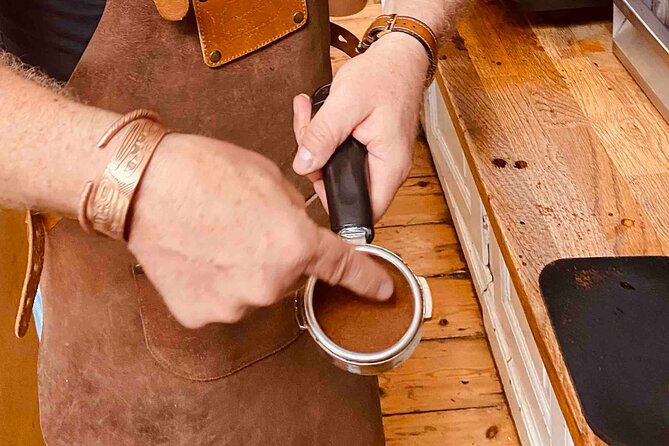
The 11:30 a.m. start is worth considering before you reserve. Because the cafe is open during that session, you share the space with regular customers. That can add charm, but it also means the class is not completely separated from everyday cafe activity.
I see this as a strong match for you if you like meeting people and prefer an ordinary local setting to a formal studio. You may get a more honest sense of how the cafe operates, and the chance to prepare an espresso for a customer is an unusual touch.
If you want the instructor’s full attention without background activity, ask yourself how much atmosphere you prefer. A maximum of 10 participants keeps the group from becoming unwieldy, but the cafe itself remains active.
The experience also suits people who enjoy asking questions. Mark’s style is described as open and friendly, with room for personal questions and plenty of conversation. The class is not presented as a stiff lecture. It is meant to be a relaxed exchange built around coffee.
Mark’s role makes the class personal
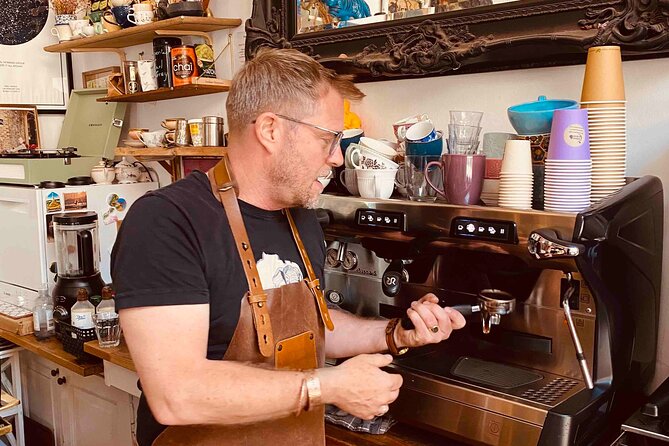
Mark is more than a hired guide standing in front of a machine. He owns the cafe, roasts coffee, and holds certification from the Specialty Coffee Association. That combination gives him a direct connection to the place where the lesson happens.
You also benefit from a guide who can speak English, Portuguese, German, or French. The available guide languages make this a practical option for a wider range of visitors, though you should select or confirm the language you need when booking.
The strongest praise for the class focuses on Mark’s warmth, passion, and ability to answer questions. That comes through in the structure of the activity itself. You are encouraged to participate, not simply listen.
The cafe setting also keeps the lesson grounded. Mark is teaching from the same environment where coffee is served to ordinary customers, so the subject remains connected to real work rather than only theory.
Is $38.99 a fair price?
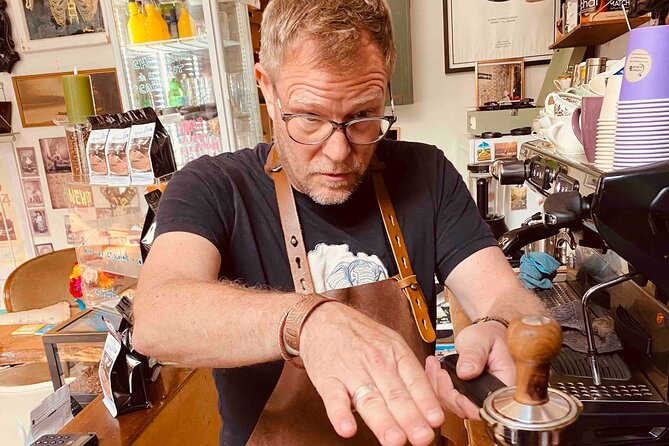
At $38.99 per person, the value depends on what you want from a morning in Copenhagen. If you only want a coffee and a croissant, this is not the cheapest way to get them. The price makes more sense when you count the 90-minute lesson, guided practice, breakfast, fresh orange juice, coffee, and the chance to make your own espresso.
The small group limit helps the value. A class capped at 10 people has a better chance of giving you time at the machine than a large demonstration. The owner-led format also means your questions are part of the activity rather than an interruption.
I would consider it especially worthwhile for:
- People who own or plan to buy a home espresso machine
- Coffee fans who want to understand specialty coffee better
- Couples looking for a relaxed morning activity
- Visitors who prefer local cafes to polished tourist attractions
- Anyone who enjoys food and drink classes with hands-on practice
It may be less useful if you do not drink coffee, dislike group instruction, or want a full brunch. The experience is about learning a process as much as eating a meal.
The fact that it is often booked 27 days ahead is a practical signal. If the timing suits your Copenhagen plans, reserve before arrival rather than assuming you can find a last-minute place. The maximum group size is 10, so availability may be limited.
Getting there and planning your morning
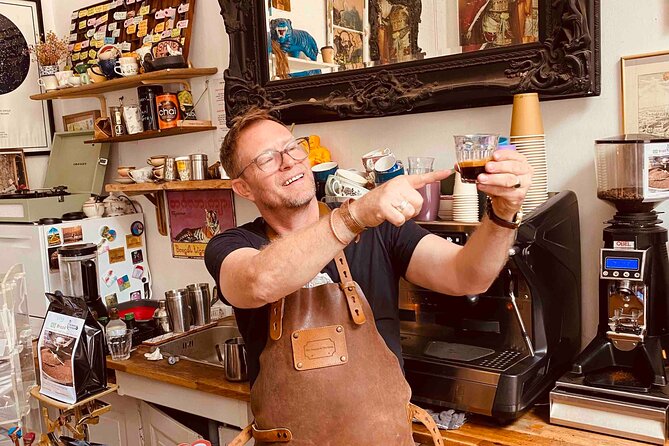
The meeting point is Holmbladsgade 14, 2300 København, Denmark. The cafe is near public transportation, which makes it easier to reach without building your morning around a long walk.
The activity begins and ends at the same location. That is helpful when planning the rest of your day, since you do not need to arrange a separate return point.
Bring a mobile ticket. Confirmation is provided at booking, and the format is straightforward for a short morning activity. The class lasts about 1 hour and 30 minutes, so allow a little extra time around it if you have a timed museum visit or another reservation.
The breakfast includes a boiled egg that may be soft or hard, a croissant, orange juice, and coffee. If you have strict dietary needs, the provided information does not list substitutions, so you should not assume the menu can be changed.
Service animals are allowed. The activity also has a weather-related cancellation condition, even though the class takes place in a cafe. If poor weather leads to cancellation, you are offered another date or a full refund. The same applies if the minimum number of participants is not reached.
Free cancellation is available until 24 hours before the start time. Inside that window, you do not receive a refund, and changes are not accepted. Since the class is commonly reserved well in advance, this policy gives you some flexibility if your plans change early.
Who will enjoy this most?
I would choose this class for someone who likes to understand how a familiar pleasure is made. Coffee drinkers often know what they like but cannot explain why one espresso tastes balanced and another tastes harsh. This session gives you a way to connect taste with method.
It also works well for couples. One person can be an experienced coffee maker and the other a beginner, since the instruction welcomes questions and ends with individual practice.
The activity is less suited to people who want a major sightseeing stop. You will not be touring Copenhagen or visiting several cafes. You will spend the morning in one local cafe, learning one focused skill.
It is also not the right pick if you need a completely private setting. The open cafe format is part of the character, and regulars may be present during the 11:30 a.m. class. For many people, that is an advantage. For others, it may feel slightly less controlled.
Should you book the espresso and brunch class?
Book it if you want a hands-on coffee lesson, a light breakfast, and a glimpse of ordinary Copenhagen cafe life in one compact activity. The best reasons are the owner-led instruction, the small group, the chance to make your own espresso, and the freedom to ask questions.
Skip it if you only want brunch, dislike coffee, or need a private workshop with no customers nearby. For everyone else, $38.99 is a reasonable price for 90 minutes of instruction plus breakfast, especially if you will use the lessons at home. Reserve ahead if the date matters, and choose the 11:30 a.m. session knowing that the cafe will be doing its normal business around you.
FAQ
Where does the espresso class take place?
The class takes place at Holmbladsgade 14, 2300 København, Denmark, in the owner’s local neighborhood cafe.
How long does the experience last?
The class lasts approximately 1 hour and 30 minutes.
What is included with breakfast?
Breakfast includes a soft or hard-boiled egg, a croissant, fresh orange juice, and a coffee of your choice.
Who teaches the class?
The cafe owner, Mark, teaches the class. He is an experienced roaster and an SCA-certified barista.
What will I learn?
You will learn the steps involved in making a great espresso and why those steps need to be followed in order. The class applies to commercial machines and home espresso machines.
Will I make my own espresso?
Yes. Each participant makes their own espresso at the end of the class.
How many people can join?
The experience has a maximum of 10 participants.
What languages are available?
The guide can provide the experience in English, Portuguese, German, or French.
Does the class run during cafe opening hours?
Yes. The 11:30 a.m. session takes place while the cafe is open, so regular customers may be present. You might even make an espresso for a customer.
Can I cancel for a full refund?
Yes, if you cancel at least 24 hours before the experience start time. Cancellations or changes made less than 24 hours before the start time are not refunded or accepted.
Freshly brewed listings in the world
- Vietnamese Coffee 101 Workshop★ 5.0 · 11 reviews
- Vietnamese Coffee Making Class in Hoi An★ 5.0 · 4 reviews
- Vancouver: Street Art & Craft Coffee Walking Tour w/ Tasting★ 4.8 · 11 reviews
- Yerevan: Private Coffee Tour with 2 Café Stops★ 5.0 · 2 reviews
- Ubud: Waterfall, Holy Water Temple,Swing&coffee plantation★ 5.0 · 9 reviews
- Coffee pleasure walking tour★ 5.0 · 12 reviews
- Vienna: Guided Viennese Coffee-House Tour★ 5.0 · 2 reviews
- Turkish Coffee and Traditional Turkish Dessert Cooking★ 4.6 · 8 reviews