
Review · BEIJING, CHINA
Beijing Hutong Breakfast & Coffee Tour
Beijing’s old city makes the most sense on foot, with breakfast in hand and a guide who can explain what you are seeing. This tour links local food with hutong life, moving from sesame balls and wontons to jianbing, temple culture, old courtyards, and coffee in a traditional lane.
I like the mix of everyday Beijing and major heritage sites, especially the market stop and Zhihua Temple. I also like that the group is kept below 12 people in the tour description, although the published maximum is 20. The main drawback is the price: at $75, you are paying for guidance and access to several tastings rather than a cheap breakfast.
Key points at a glance
- Breakfast begins with sesame balls and wontons near Dengshikou Avenue, giving you an early taste of familiar Old Beijing comfort food.
- Shijia and Dongtangzi hutongs provide a look at courtyard homes, local routines, and the lives of notable former residents.
- Chaoyangmen Local Market adds fresh produce, daily shopping, and a jianbing stop to the morning.
- Zhihua Temple brings in Ming Dynasty art, Buddhist objects, and the chance to hear traditional temple music if timing permits.
- Huguosi Hutong is the place for classic sweets such as wandouhuang, ludagun, and aiwowo.
- Coffee in Xizongbu Hutong gives the morning a modern finish without leaving Beijing’s old urban fabric.
Why this morning works well in Beijing
Many Beijing sightseeing plans begin with enormous imperial sites. Those places matter, but they can leave you looking at monuments more than at the city’s daily life. This experience takes a smaller, more human route through Dongcheng District.
You begin at 8:30 am, when breakfast is still part of the city’s rhythm. The timing matters. You are not simply sampling food made for visitors at a convenient hour. You are seeing how a morning meal fits into old neighborhood life, then walking through lanes where residents still live.
The route lasts about three and a half to four hours. That is long enough to cover seven stops without turning the morning into a full-day commitment. It is also a fairly active outing. You move between food shops, lanes, a market, a temple, and a snack street, so comfortable walking shoes are sensible.
The group format should make the experience easier to follow than a large coach tour. The tour is described as a small-group outing with fewer than 12 people, though the stated maximum is 20. That difference is worth noting when you book. The actual group size may affect how easily you can hear the guide in a market or narrow hutong.
More Coffee Tours in the world:
- Hanoi Coffee Experience: 6 Brews, 9 Recipes & 3 Liquor Tastings
★ 5.0 · 2,945 reviews - Medellin: Coffee Tour with Transport, Snacks and Tastings
★ 4.7 · 1,357 reviews - Istanbul: Turkish Coffee Making and Fortune Telling Workshop
★ 4.9 · 1,308 reviews
Starting with sesame balls and wontons near Dengshikou
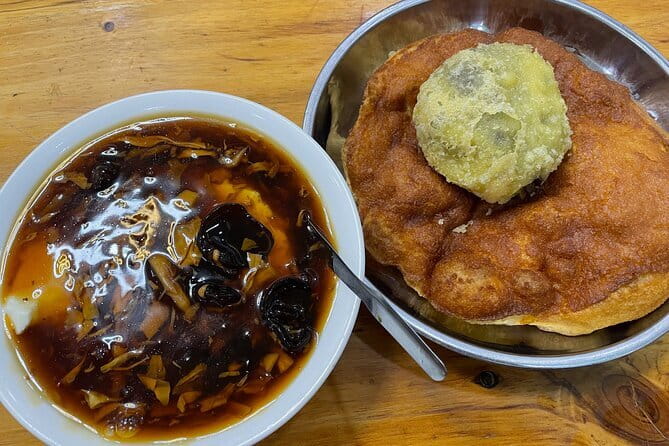
The first food stop is on Dengshikou Avenue. Breakfast includes golden sesame balls filled with sweet red bean paste and wontons with thin wrappers, meat filling, and warm broth.
This is a useful opening because the food carries a clear connection to local breakfast habits. The sesame ball gives you crispness outside and sweetness inside. The wonton offers a softer, savory contrast. You are not beginning with a long explanation of Beijing cuisine. You are tasting two dishes first, then learning how they fit into the city’s food culture.
The stop lasts about 30 minutes. That should give the group time to eat without rushing, although exact serving details can vary. Breakfast is included, as are bottled water and unlimited food and drinks according to the tour information. The wording is generous, but I would still think of this as a series of tasting stops rather than a single large meal.
This is also a good moment to tell the guide about food restrictions. The supplied information does not specify vegetarian, allergy, or dietary options, so do not assume that every dish can be changed.
Shijia Hutong and the texture of old neighborhood life
After breakfast, the route reaches Shijia Hutong. This lane is known for traditional siheyuan, the courtyard residences that shaped old Beijing’s urban form.
The appeal here is not one grand sight. It is the pattern of the street: walls, gates, courtyards, narrow passageways, and the small signs of daily life. You might see older residents sitting near their doors, talking or taking in the morning, while children use the lane as a place to play. These details help you picture the hutong as a neighborhood rather than a preserved set piece.
The visit lasts about 25 minutes. That is enough for a walk and explanation, but not an architectural study. If you are especially interested in courtyard design, ask the guide about how the siheyuan is arranged and how the hutong has changed.
There is a practical point here. Hutongs are living residential areas. Keep your voice down, avoid blocking doorways, and ask before photographing people. The experience is better when you treat the lane as someone’s home, not as a stage.
A local market and a jianbing stop
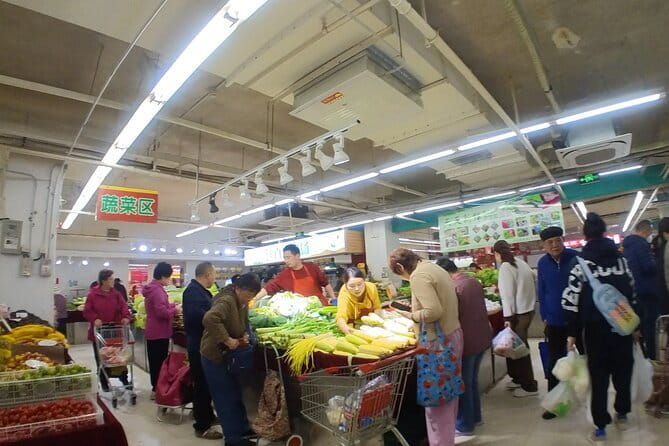
The Chaoyangmen Local Market, reached around Nanxiaojie South Road and Dafangjia Hutong, shifts the focus from old architecture to shopping and food supply.
You can expect fresh produce, daily necessities, and the ordinary movement of a neighborhood market. The stop is short, about 15 minutes, so this is more of a quick look than a long market exploration. The main food moment is jianbing, a savory crepe that is one of Beijing’s best-known casual breakfasts.
I like this part because it shows the practical side of the city. A market tells you what people buy, not just what a guidebook considers important. It also gives the food story a second form. The sesame balls and wontons introduce older breakfast flavors, while jianbing shows the quick, portable side of morning eating.
Do not expect a leisurely shopping break. Fifteen minutes passes quickly, especially if the stall is busy or the group needs to stay together. Bring patience and let the guide manage the order of the tasting.
Same town, another way to drink it:
- Hanoi Coffee Workshop: Taste Salt, Coconut and Egg Coffee
★ 5.0 · 1,286 reviews - Vienna for Food Lovers: Cafés, Markets & Austrian Cuisine
★ 5.0 · 1,063 reviews - Big Island Highlights: Coffee, Volcano, Black Sands & Waterfall
★ 5.0 · 1,054 reviews - Hanoi: Salt Coffee Workshop Awake Your Senses With 6 Brews
★ 5.0 · 792 reviews
Quiet time inside Zhihua Temple
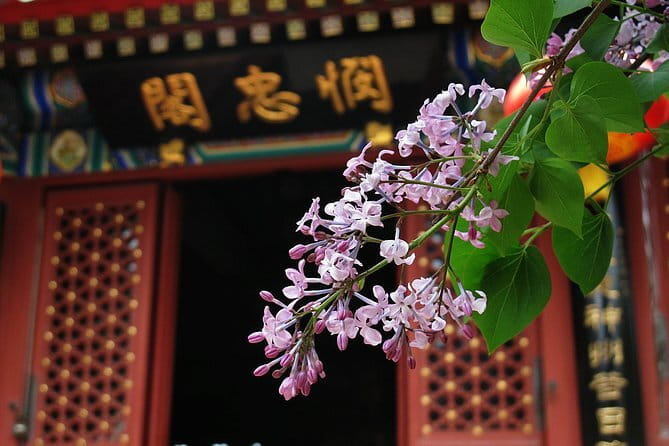
Zhihua Temple is the most peaceful stop on the route. Hidden in the Lumicang area, it offers a sharp change from the food stalls and residential lanes.
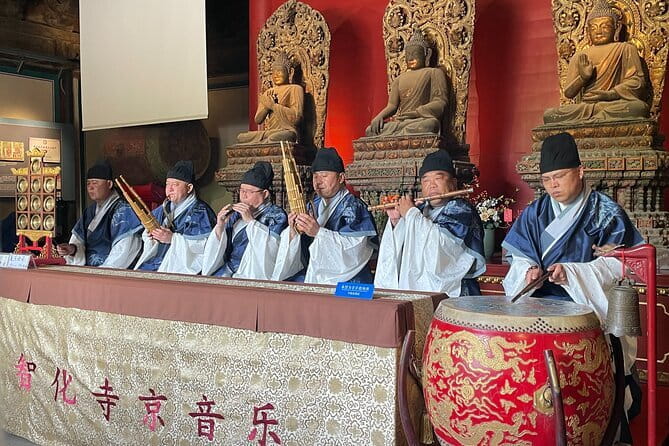
The temple includes distinctive architecture, Ming Dynasty murals, and Buddhist artifacts. The setting gives you a chance to slow down and look carefully at details that could be easy to miss during a fast city tour. Incense, chanting, and the temple buildings create a different mood from the streets outside.
The visit is planned for about 40 minutes, and admission is included. If timing permits, you may also hear Beijing temple music, described as a living survival of ancient Chinese music. Its sources include imperial court, Buddhist, and folk traditions.
The phrase if timing permits matters. Treat the music as a possible bonus, not a guaranteed performance. The temple itself is the dependable part of this stop.
Zhihua Temple also helps balance the food-focused portions of the morning. You are not simply eating your way through Beijing. You are seeing how religious sites, traditional arts, and neighborhood streets fit into the city’s older cultural life.
Dongtangzi Hutong and stories of former residents
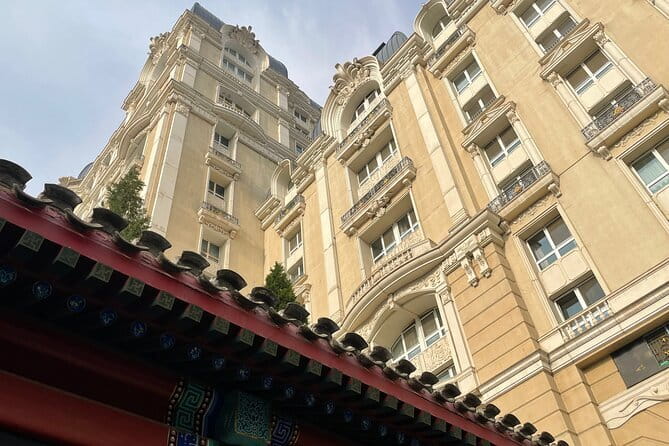
The longest walking section is Dongtangzi Hutong, with about an hour set aside for the hutong tour.
This lane is associated with notable figures including Wu Lien-teh and Cai Yuanpei. The value here comes from the connection between ordinary-looking streets and major chapters in modern Chinese history. Former residences may not look dramatic from the outside, but the guide’s stories can give the buildings a human scale.
An hour allows more room than the earlier Shijia Hutong visit. You can look at the lane itself, pause for explanations, and notice how time has altered the area. The route description suggests weathered residences and a strong cultural atmosphere, but you should not expect every historic building to be open for interior visits.
This part may appeal most to anyone who likes social history and city walking. If you prefer a fast sequence of sights, it may feel slow. I see that as a fair trade. Beijing’s hutongs are best understood through small details, not through a checklist of grand monuments.
The guide is important here. Coco and Wendy are named in connection with this experience, and the personal quality of the outing appears closely tied to the person leading it. If one of them is assigned to your departure, you can expect the route to depend heavily on storytelling and local interpretation.
Huguosi Hutong and Beijing’s classic sweets
The Huguosi Hutong snack stop is designed for tasting rather than a full meal. Here you can try wandouhuang, a mung bean cake; ludagun, a glutinous rice roll; and aiwowo, a sweet rice cake.
These snacks show how varied Beijing food can be beyond the better-known dumplings and noodles. The textures matter as much as the flavors. Mung bean cake is delicate, ludagun brings a soft, sticky quality, and aiwowo adds another rice-based sweet to the selection.
The visit lasts about 20 minutes. That is enough to sample several items, but it may not leave much time for browsing every food counter. The stop is also a useful reminder that traditional snacks are tied to craft and preparation, not only to recipes.
If you prefer savory food, this could be the least exciting section of the morning. Much of the selection here is sweet. Still, it gives the food route a proper finish before coffee and helps you understand why old Beijing snack culture has such a broad range.
Coffee in Xizongbu Hutong
The final stop is Xizongbu Hutong, where the morning ends with coffee at 10000 Cafe. Tea is also included as an option.
This is a smart finish. After several traditional food stops and hours among older lanes, coffee provides a modern pause without sending you back to a generic shopping district. Xizongbu Hutong represents the meeting of old and new Beijing, which is a fitting idea for the whole experience.
The coffee stop lasts about 20 minutes. It is not meant to be a long cafe visit. Think of it as time to sit, talk with the guide, and reflect on the contrast between courtyard homes, temples, markets, snack shops, and a contemporary cafe.
The ending point is different from the meeting point, so plan your next move from Xizongbu Hutong. The tour does not return you to Dengshikou Avenue.
Is $75 a fair price?
At $75 per person, this is not a budget breakfast crawl. You are paying for several hours of guiding, breakfast, snacks, drinks, coffee or tea, a small-group format, and a route that joins food with cultural sights.
The value is strongest if you want context. You could buy jianbing, sweets, or coffee for far less on your own. What is harder to reproduce is the connection between those tastes and the hutongs, market life, Zhihua Temple, traditional music, and former residents of Dongtangzi Hutong.
The price is less attractive if you mainly want a large meal. Food portions are presented as tastings across two or three food stops, not as a restaurant breakfast with a menu of your choice. You are also paying for a structured route and local explanation.
For a first morning in Beijing, I think the cost can make sense, especially if you value an introduction to local food and neighborhood culture. For repeat visitors who already know the hutongs, the price may feel high unless the temple and history sections are your main interests.
Who should book this experience?
I would suggest it to first-time visitors who want more than the Forbidden City and the main imperial sights. It also suits people who like walking, small food samples, traditional neighborhoods, and stories tied to specific streets.
It should work well for most participants, since the activity information says most people can take part and that it is near public transportation. Still, the route includes several hours of walking and standing. Anyone who needs frequent rest should confirm the pace before booking.
Families may appreciate the food variety and shorter stops, though very young children may not enjoy the slower history sections. Food-focused visitors should like the progression from breakfast to market snacks to traditional sweets and coffee.
The experience is less suited to someone looking for a private, flexible food tour. The group has a set start time, a planned route, and a stated maximum of 20 people. It is also weather dependent, so a rainy forecast could affect plans.
Book at least a day ahead if your schedule is tight. Free cancellation is available until 24 hours before the start time. Cancellations or changes made later are not refunded or accepted, and a departure can be rescheduled or refunded if poor weather or low participation causes cancellation.
Should you book the Beijing Hutong Breakfast and Coffee Tour?
Book it if you want Beijing explained through breakfast tables, residential lanes, a working market, a temple, traditional sweets, and a final cup of coffee. The strongest feature is the range. You get food, architecture, local routines, religion, music, and modern cafe culture in one morning.
Skip it if you want a cheap meal, a private guide, or a relaxed cafe morning. At $75, the tour earns its price through the route and the stories, not through the amount of food alone. For the right visitor, it is a practical way to get your bearings in old Beijing without spending a full day on formal sights.
FAQ
Where does the tour start?
It starts at 5 Deng Shi Kou Da Jie in Dongcheng District, Beijing.
What time does the tour begin?
The scheduled start time is 8:30 am.
How long does the experience last?
The tour lasts approximately 3 hours 30 minutes to 4 hours.
Where does the tour finish?
It ends in Xizongbu Hutong, at or near 10000 Cafe.
What food is included?
The experience includes breakfast at two or three food stops, traditional street snacks, bottled water, and unlimited food and drinks as stated in the tour details.
Is coffee included?
Yes. Coffee and/or tea is included at the final stop in Xizongbu Hutong.
What food might I taste?
The food stops may include sesame balls with red bean filling, wontons, jianbing, wandouhuang, ludagun, and aiwowo.
How large is the group?
The experience is described as a small-group tour with fewer than 12 people, while the stated maximum is 20 participants.
Can I cancel for a full refund?
Yes, if you cancel at least 24 hours before the start time. Cancellations or changes made less than 24 hours before the start time are not accepted for a refund.
Freshly brewed listings in the world
- Vietnamese Coffee 101 Workshop★ 5.0 · 11 reviews
- Vietnamese Coffee Making Class in Hoi An★ 5.0 · 4 reviews
- Vancouver: Street Art & Craft Coffee Walking Tour w/ Tasting★ 4.8 · 11 reviews
- Yerevan: Private Coffee Tour with 2 Café Stops★ 5.0 · 2 reviews
- Ubud: Waterfall, Holy Water Temple,Swing&coffee plantation★ 5.0 · 9 reviews
- Coffee pleasure walking tour★ 5.0 · 12 reviews
- Vienna: Guided Viennese Coffee-House Tour★ 5.0 · 2 reviews
- Turkish Coffee and Traditional Turkish Dessert Cooking★ 4.6 · 8 reviews