
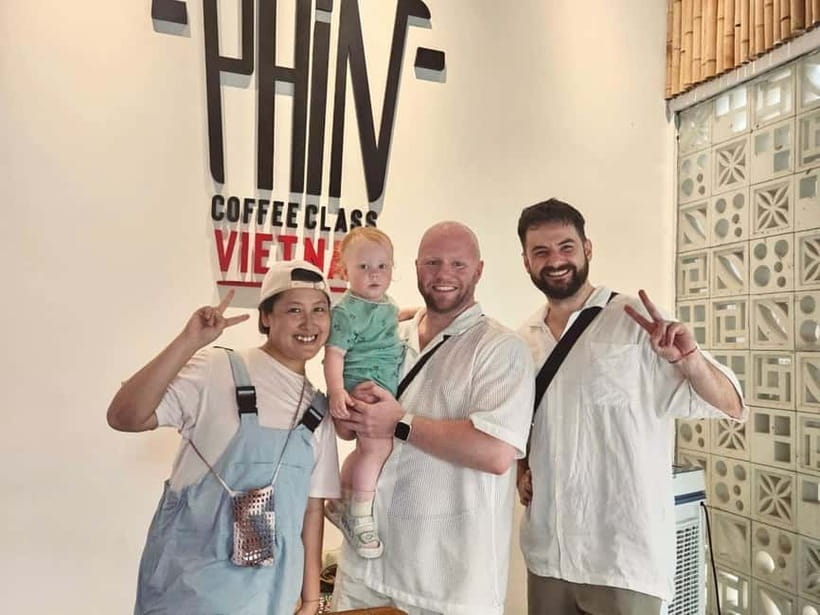
Review · VIETNAM
Hue: Brew Egg, Salt & Coconut Coffee
Vietnamese coffee is not a quick caffeine stop. It is slow-dripped, boldly roasted, sweet, salty, creamy, and sometimes chilled over ice. This 90-minute Hue workshop lets you make four versions yourself, including egg coffee, salt coffee, coconut coffee, and the classic phin brew.
I like the hands-on format and the small groups, capped at eight people. I also like that you taste every drink you prepare and receive recipes to use at home. The main consideration is the amount of coffee: one solo participant found there was more than she could finish, so this may not suit anyone sensitive to caffeine.
Key points
- Four distinct coffees in one class: Brew phin, egg, salt, and coconut coffee rather than simply watching a demonstration.
- Traditional phin filters: Learn the slow, simple method that gives Vietnamese coffee its character.
- Robusta at the center: Understand why bold Robusta beans are so important to coffee in Vietnam.
- Friendly local instruction: Duck, Uyen, Daisy, and Annie are among the hosts named by participants, with the instructor depending on the session.
- Recipes to take home: Keep making Vietnamese coffee after your time in Hue.
- Good rainy-day activity: The workshop works well when Hue’s weather turns wet, and it suits coffee drinkers and curious beginners alike.
Four coffees, four very different flavor lessons
The pleasure of this class is the contrast between the drinks. You are not simply making the same coffee four times with minor changes. Each recipe shows a different way Vietnamese coffee can be softened, sweetened, chilled, or given a salty edge.
The session includes:
- Classic phin coffee
- Egg coffee
- Salt coffee
- Coconut coffee
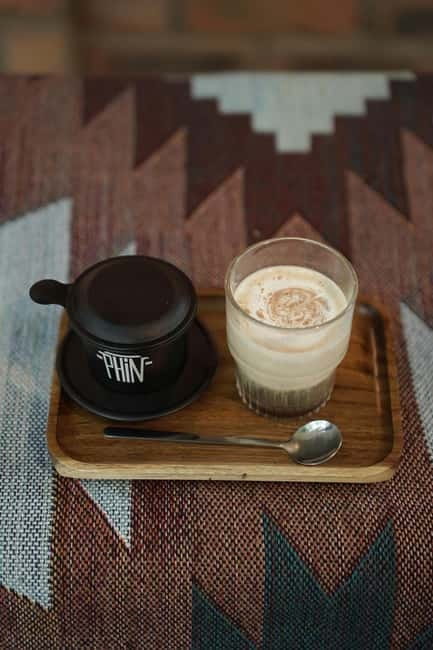
The classic phin version gives you the clearest taste of the beans. The coffee drips through a small metal filter, and the process is deliberately unhurried. Egg coffee changes the texture completely, bringing a creamy topping to the strong brew. Salt coffee adds a savory note that may sound strange at first but helps balance bitterness and sweetness.
Coconut coffee usually brings a cooler, sweeter style to the table. It is especially useful for showing how Vietnamese coffee can move from a powerful hot drink to something closer to a dessert or cold refreshment.
You prepare and taste all four. That makes the class useful for comparison. By the end, you can work out which style you would order in a cafe and which one you want to recreate at home.
More Vietnamese Coffee Experiences in Vietnam:
- Hanoi: Salt Coffee Workshop Awake Your Senses With 6 Brews
★ 5.0 · 792 reviews - Egg coffee & Course on 4 traditional types of Viet coffee
★ 4.9 · 487 reviews - Fun & Easy Vietnamese Coffee Workshop in Hồ Chí Minh City
★ 5.0 · 293 reviews
Starting with Robusta and the phin filter
The class begins with an introduction to Robusta beans, described here as the soul of Vietnamese coffee. That matters because the beans help explain the drinks that follow. Strong coffee can support condensed milk, egg cream, salt, coconut, and ice without disappearing under them.
You will use traditional phin filters rather than an electric machine. The phin is a compact metal brewer placed over a cup. Water passes slowly through the coffee, giving you a simple but very recognizable brewing method.
I like this part because it gives context to the cup in front of you. You are not only learning a recipe. You are learning why Vietnamese coffee often tastes so forceful and why the country’s cafe drinks can carry such rich additions without becoming bland.
The host walks you through the process and explains what each ingredient does. English and Vietnamese are offered, and the named instructors include Duck, also referred to as Uyen, along with Daisy and Annie in different sessions. The precise host may vary, but the format stays focused on instruction, tasting, and conversation.
What happens during the 90-minute workshop
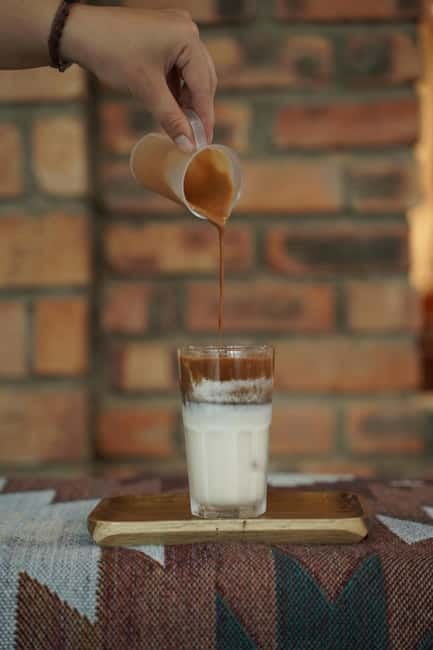
The class follows a practical sequence. You first get an introduction to Vietnamese coffee and the beans, then learn the basic phin method before moving through the three specialty drinks.
The first stage gives you the foundation. You handle the tools, see how the filter works, and learn the broad story behind coffee in Vietnam. That introduction is not just filler. It helps you understand the difference between a recipe built around strong black coffee and one built around egg, salt, or coconut.
Next comes the brewing. The host demonstrates each method, then gives you the chance to make your own drinks. You can ask questions as you go, which is one of the advantages of a small group. The listed maximum is eight participants, and some sessions may be much smaller. One couple had a private-feeling class because they were the only two people booked, while another participant attended alone.
Finally, you taste the coffee you have made. The tasting is built into the class, not treated as an optional extra. You will also receive a recipe handout, so the workshop continues after you leave Hue.
The 90-minute length feels well suited to the subject. It gives enough time to make all four drinks without turning the class into a full morning commitment. It also leaves room for conversation, which several named hosts have made part of the experience.
Duck, Uyen, Daisy, and the local teaching style
The host matters a great deal in a workshop like this. The information provided names several instructors, including Duck, Uyen, Daisy, and Annie. Duck appears often in the feedback, and the descriptions of her teaching point to a relaxed, funny, welcoming approach. Uyen is also praised for clear explanations and a warm manner.
You should expect more than a silent demonstration. The session includes conversation, questions, and cultural background. One participant who does not usually drink coffee still enjoyed the class, which suggests the experience is not aimed only at serious coffee enthusiasts.
The teaching style also seems flexible. A family of five attended together, couples took part, and solo visitors joined when a session had no other bookings. That range matters. You do not need to arrive with technical coffee skills or a detailed knowledge of Vietnamese cafe culture.
The local perspective is one of the best reasons to book this instead of simply ordering four drinks around Hue. A cafe gives you the finished product. This class explains the choices behind it and lets you ask about the drinks as you make them.
More Coffee Tours in Vietnam:
- Hanoi Coffee Experience: 6 Brews, 9 Recipes & 3 Liquor Tastings
★ 5.0 · 2,945 reviews - Hanoi Coffee Workshop: Taste Salt, Coconut and Egg Coffee
★ 5.0 · 1,286 reviews - Da Nang Coffee Making Workshop
★ 4.9 · 543 reviews - Hanoi: Master the Art of 4-6 Signature Vietnameses Coffees
★ 5.0 · 517 reviews
Why the small group size helps
The group limit is eight participants, which is a practical size for a hands-on class. You need access to the tools, space to prepare the drinks, and a chance to ask for help. A large demonstration would make the workshop less useful because you would see the process but have less control over it.
Small groups also make the social side easier. The class can include good conversation and laughs without becoming a formal lecture. If you are traveling alone, this gives you a natural way to meet people during a short activity. If you are with family or a partner, you can compare your versions of the drinks as you go.
There is one tradeoff. Because you prepare and taste four coffees, the pace may feel full for someone who wants a slow, quiet cafe experience. The class is interactive rather than passive. You should expect to handle ingredients, follow instructions, and drink quite a bit.
If caffeine affects you strongly, plan around that. A participant attending alone found the quantity difficult to finish. The class includes water, which helps, but you may still want to pace yourself rather than treating every cup as a full serving to consume quickly.
How the four recipes differ
Classic phin coffee
The phin is the essential starting point. It shows you the basic Vietnamese approach: strong coffee brewed slowly through a small metal filter. This is the recipe to focus on if you want to understand the beans without a creamy or coconut topping.
It is also the most useful method to take home. The tools are simple, and the recipe handout gives you a reference for future attempts. One participant bought a phin filter after the class, a practical sign that the brewing method is easy to carry into your own kitchen.
Egg coffee
Egg coffee is one of Vietnam’s most distinctive cafe drinks. The strong coffee is paired with a smooth egg mixture, creating a soft texture and dessert-like character. The contrast is the point: bold coffee underneath, creamy sweetness above.
The workshop lets you make the drink rather than just admire it in a glass. That makes it easier to understand the balance of the ingredients and why the strong coffee is needed.
Salt coffee
Salt coffee is closely associated with Hue in the minds of many visitors, making it particularly relevant here. The salty note may surprise you, but it can temper bitterness and sharpen the drink’s sweetness.
This is the recipe I would pay close attention to if you are curious about local food ideas. It shows how a small adjustment can change the character of a familiar drink. You may not guess the flavor from the name alone, which is part of the fun.
Coconut coffee
Coconut coffee brings a sweeter, often cooler style into the tasting. It offers a clear change from the hot, strong phin coffee and the creamy egg version.
For people who do not normally drink black coffee, this may be the easiest entry point. It still has the coffee base, but the coconut element makes the drink feel softer and more accessible.
The meeting point in central Hue
The meeting point is on Hoàng Quốc Việt Street. Enter alley number 1, walk about 50 meters, and look for the Huế Experience signboard. That sign marks the place to meet the host.
This is the sort of location detail you should save before leaving your hotel. An alley meeting point can be easy to miss if you are rushing, so allow enough time to enter the correct lane and find the sign. The directions are short and specific, but they are worth reading carefully.
The class is in Hue, so it fits neatly into a day spent around the city’s historic sights and food stops. It also works well as a weather backup. One participant specifically found it rewarding on a rainy day, and a coffee workshop gives you a comfortable indoor activity when outdoor plans are less appealing.
Wheelchair access is listed, which is useful for visitors who need an accessible activity. If you require detailed access arrangements, confirm the current setup when booking, since the meeting point includes an alley.
Is $18 a fair price?
At $18 per person, this is not the cheapest way to drink coffee in Hue. It is also not priced like a full cooking course. The value comes from the combination of instruction, ingredients, four tastings, a small group, and recipes you can use later.
If you only want a cup of Vietnamese coffee, visit a local cafe. You will spend less and get a more ordinary slice of daily cafe life. If you want to understand how several iconic drinks are made, the workshop gives you much more for the money.
The recipe handout improves the value. So does the use of traditional phin filters and Robusta beans, since you are learning methods and ingredients rather than receiving four pre-made drinks.
I would especially consider the price fair for couples, families, and people who enjoy food-focused activities. It also gives solo visitors a short social experience without requiring a full-day commitment. Coffee lovers get the most direct value, but the class can work for non-coffee drinkers who are curious about Vietnamese flavors.
Who should book this experience?
Book it if you want to do something active in Hue rather than simply move from one sight to the next. The class is a good choice for:
- Coffee fans who want to understand Vietnamese brewing
- Visitors curious about egg, salt, and coconut coffee
- Couples looking for a relaxed shared activity
- Families wanting a short, hands-on class
- Solo visitors who enjoy small-group conversation
- Anyone needing a rainy-day plan
- People who want recipes they can repeat at home
You do not need to be an expert. You also do not need to drink coffee regularly. The variety of recipes gives you several entry points, and the host guides you through the methods.
I would be more cautious if you avoid caffeine, dislike sweet drinks, or prefer a quiet tasting with no participation. Four coffees in 90 minutes is a generous amount, and you may not want to finish every serving.
Booking and practical details
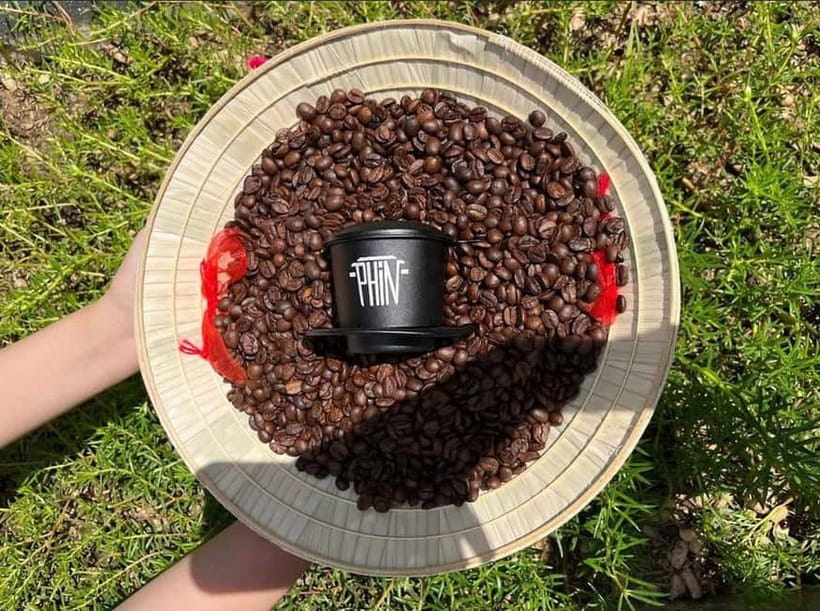
The workshop costs $18 per person and lasts 90 minutes. It is limited to eight participants, with instruction in English and Vietnamese. Water is included, along with all ingredients, tools, Robusta beans, phin filters, and the drinks you prepare.
You can cancel up to 24 hours before the activity for a full refund. The reserve-now, pay-later option also helps if your Hue plans are not fixed. Starting times vary, so check the available session when you book.
The activity is listed as wheelchair accessible. Since the meeting point is reached through alley number 1 on Hoàng Quốc Việt Street, check the route details if you need a precise assessment of access.
Should you book the Hue coffee workshop?
I would book this if you want a personal introduction to one of Vietnam’s everyday pleasures. The strongest features are the four contrasting recipes, the chance to make each drink yourself, and the local hosts who bring humor and cultural context to the session.
The only real caution is the coffee volume. Pace yourself, use the water provided, and do not feel obliged to finish every cup. For everyone else, $18 buys more than a tasting. You leave with a working knowledge of the phin method, a set of recipes, and a better sense of why Hue’s salt coffee and Vietnam’s bold coffee culture have such a strong identity.
FAQ
How long does the Hue coffee workshop last?
The workshop lasts 90 minutes.
What coffees will I make?
You will make classic phin coffee, egg coffee, salt coffee, and coconut coffee.
Is the activity suitable for people who do not usually drink coffee?
Yes. The class covers several styles, including sweeter and creamier options. The available information also indicates that a participant who was not a regular coffee drinker still enjoyed the experience.
How many people can join the class?
The small group is limited to eight participants.
What language is the workshop taught in?
The instructor can teach in English and Vietnamese.
Where is the meeting point?
Enter alley number 1 on Hoàng Quốc Việt Street and walk about 50 meters. Look for the Huế Experience signboard, which marks the meeting point.
Freshly brewed listings in Vietnam
- Vietnamese Coffee 101 Workshop★ 5.0 · 11 reviews
- Vietnamese Coffee Making Class in Hoi An★ 5.0 · 4 reviews
- Authentic Vietnamese Coffee Making Experience in Hoi An★ 5.0 · 13 reviews
- Hoi An Vietnamese Coffee Workshop: Hands-On Brewing Class★ 5.0 · 3 reviews
- Hoi An Coffee Tasting And Old Town Discovering Tour★ 5.0 · 4 reviews
- Hoi An Coffee Making Workshop★ 5.0 · 7 reviews
- Vietnamese Egg Coffee Making Course in Hoi An★ 3.5 · 2 reviews
- Coffee Making and Banh Mi Class Hoi An★ 5.0 · 5 reviews
Vietnam Coffee Tours, compared.
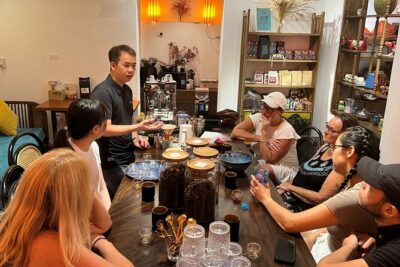
Hanoi Coffee Experience: 6 Brews, 9 Recipes & 3 Liquor Tastings
Read our review →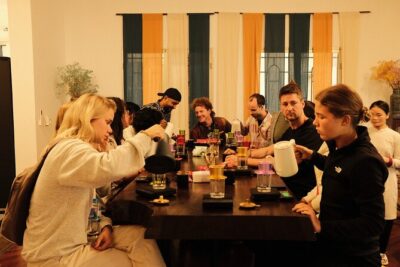
Hanoi Coffee Workshop: Taste Salt, Coconut and Egg Coffee
Read our review →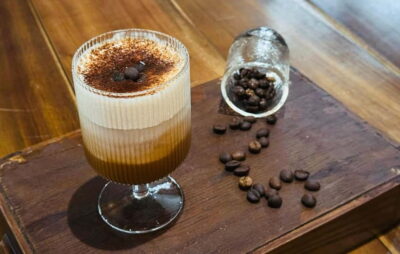
Hanoi: Salt Coffee Workshop Awake Your Senses With 6 Brews
Read our review →
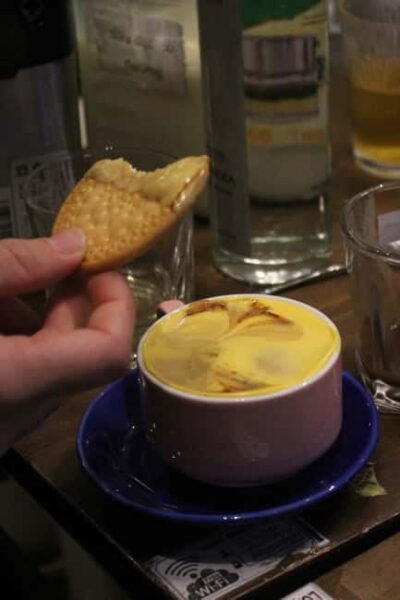
Hanoi: Master the Art of 4-6 Signature Vietnameses Coffees
Read our review →
Egg coffee & Course on 4 traditional types of Viet coffee
Read our review →
Hanoi: Vietnamese Street Food Tour with Egg Coffee
Read our review →
Da Nang Cooking Class with Coffee Tasting and Market Visit
Read our review →Browse the lists this tour appears in