
Review · ITALY
Milan Coffee & History Crawl with a Licensed Tour Guide
Milan’s coffee culture makes a fine key to the city, and this walk uses it well. You move from Piazza Cordusio through medieval lanes, grand royal buildings, the Duomo, La Scala, the Galleria, and Brera, stopping at historic coffee spots along the way. The city’s monuments become part of daily life rather than a string of photo stops.
I like the mix of coffee and history, especially the way the tour connects cafés with places such as the Duomo and Galleria Vittorio Emanuele II. I also like that Maria, the licensed guide, brings a clear personal interest in coffee, gives you the first coffee, and sends further city suggestions afterward.
The main consideration is the pace. Seven stops are packed into roughly two to three hours, and extra tastings cost more. You should book this as a lively orientation walk, not as a slow café morning or a full visit inside Milan’s major attractions.
Key points at a glance
- Maria leads the walk: You get a licensed English-speaking guide with a strong interest in both Milanese history and coffee.
- The first coffee is included: Your first cup is covered, along with a free tasting at one coffee stop.
- Seven central Milan locations: The route links Piazza Cordusio, Piazza Mercanti, the Royal Palace, the Duomo, La Scala, the Galleria, and Brera.
- Outdoor sightseeing comes first: The Royal Palace, Duomo, and La Scala are explored from the outside.
- Small-group format: A maximum of 15 people keeps the walk more manageable than a large city tour.
- Coffee savings continue after the walk: You receive a discount at one coffee shop and a list of additional suggestions for Milan.
Coffee gives this Milan walk its purpose
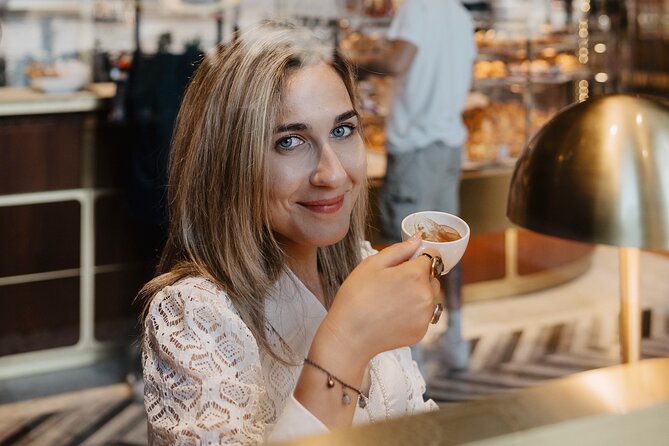
Many city walks move from monument to monument without explaining how residents actually use the streets between them. This experience takes a more local route. Coffee shops provide the thread, while the landmarks supply the setting and the historical context.
You meet in Piazza Cordusio, in front of Palazzo Broggi. From there, Maria introduces the history of the meeting place before leading you toward coffee stops in the center. The opening is useful because it gives you a sense of how central Milan fits together before the largest sights appear.
I like this approach for a first morning or early afternoon in the city. You see important places, but you also learn where Milan’s coffee tradition fits into public life. The result is less formal than a museum visit and more focused than simply ordering an espresso on your own.
The tour is offered in English and lasts about two to three hours. That is enough time for an introduction to central Milan, though not enough for long interior visits, extended meals, or several leisurely coffee breaks. Plan to keep moving.
More coffee-house history in Italy:
- Kona Shore Excursion: Sea Turtles, Historic Kona & Coffee
★ 4.5 · 324 reviews - Kona Tour: Bee Farm, Kona Coffee, and National Historical Parks
★ 4.5 · 78 reviews - Coffee, History, and Architecture of the French Quarter
★ 4.9 · 71 reviews
Piazza Cordusio starts the story
Piazza Cordusio is a practical starting point because it places you close to several major sights. The group meets in front of Palazzo Broggi, where Maria begins with the history of the square and its meeting-point role.
The first coffee-related stops begin from here. Your first coffee is included, which takes some guesswork out of the opening part of the walk. You can focus on the city around you instead of immediately deciding where to stop and what to order.
This part lasts about 10 minutes according to the planned schedule. That tells you something important: the tour offers short introductions rather than long lectures. If you enjoy getting a clear explanation and then moving on, the rhythm should suit you. If you prefer detailed architectural study, you may want separate time for that later.
Medieval Milan in Piazza Mercanti
The short walk to Piazza Mercanti changes the mood. This square offers a look at Milan during the Middle Ages, and Maria points out a feature that many locals pass without noticing.
The value here is the shift in scale. Milan is often presented through its cathedral, shopping arcades, and opera house. Piazza Mercanti gives you an older, more compact picture of the city. It helps you imagine central Milan before the grand modern avenues and polished commercial spaces became the main draw.
You spend about 10 minutes here. That is enough for a focused explanation and a look around, but you should not expect a full medieval history lesson. The appeal is in seeing a less obvious part of the center and learning why it matters.
The Royal Palace and an historic coffee stop
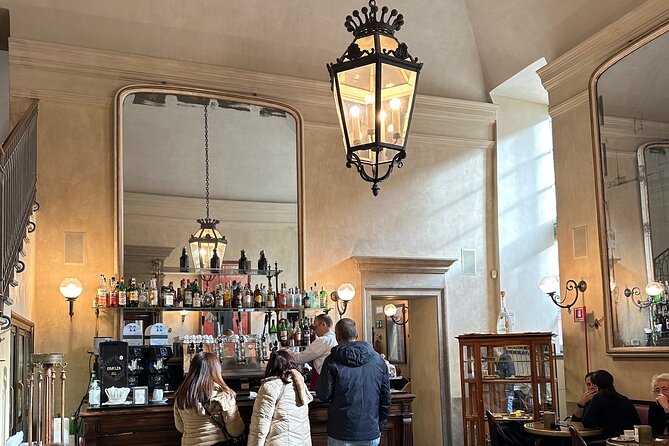
At the Royal Palace, Maria explains the building’s history from outside before taking the group to an historic coffee spot. This is a useful pairing. The palace represents Milan’s formal public face, while the café offers a more everyday setting for the city’s social habits.
The Royal Palace is not included as an interior visit. You will be viewing the exterior and hearing about its past, so anyone hoping to tour the palace rooms should arrange that separately. The same point applies to several other major landmarks on this route.
The coffee stop adds a practical reward to the historical explanation. You are not simply told that coffee matters in Milan. You get a chance to pause and taste something as part of the walk. Extra drinks or tastings are available at your own cost, but only the specified coffee experiences are included.
More guided coffee mornings in Italy:
- Istanbul Highlights: Guided Tour with Turkish Tea or Coffee
★ 5.0 · 278 reviews - Guided Tour to the only coffee farm in Europe
★ 5.0 · 174 reviews - Vienna: Guided Viennese Coffee-House Tour
★ 4.8 · 48 reviews - Vilnius: Morning Coffee Tour with Local Guide
★ 4.9 · 41 reviews
The Duomo, seen through coffee culture
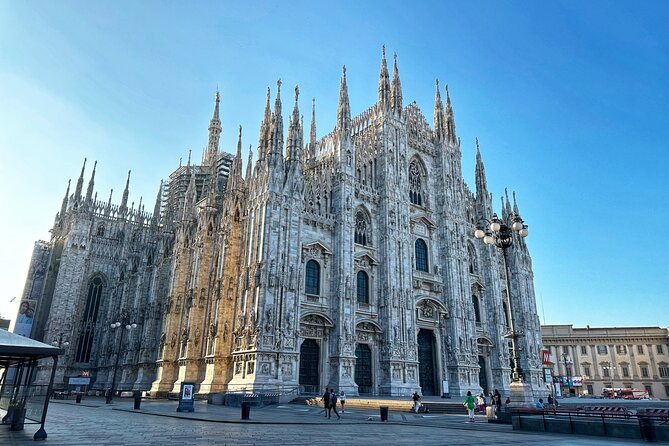
The Duomo is the route’s most famous sight, and Maria explains the cathedral’s history from the outside. She also connects coffee with events and habits associated with the large square in front of the church.
That connection is one of the more distinctive parts of the experience. You are not just standing in front of one of Europe’s best-known cathedrals while hearing a standard description of its construction. The stop asks how the square functioned as a place where people met, watched city life, and enjoyed coffee.
The planned stop is again about 10 minutes. That is short for a building as complicated as the Duomo, so keep your expectations in check. You will get useful orientation and historical facts, but not a full architectural tour. The cathedral admission is not included, and the experience does not promise an interior visit.
If you want to go inside, plan that for another time and check the cathedral’s own entry arrangements. The walk works best when you treat the Duomo stop as an introduction rather than the main event.
La Scala and Leonardo da Vinci
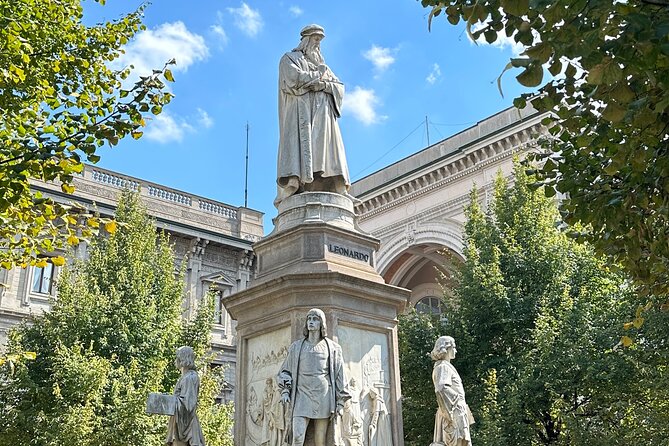
The next major landmark is Teatro alla Scala, viewed from outside. Maria explains why this theater matters to Milan and also brings you near the statue of Leonardo da Vinci.
This stop gives the tour a cultural turn. The route is not limited to religious buildings and shopping areas. La Scala represents opera and performance, while Leonardo’s statue points to Milan’s connection with art, science, and Renaissance culture.
A coffee stop follows nearby. That rhythm is central to the whole experience: a landmark, a short explanation, then a chance to consider Milan through its café life. The planned time is about 10 minutes, so the theater’s role is introduced rather than studied in depth.
I find this helpful if you are seeing Milan for the first time and want a framework for the center. You get enough information to recognize the importance of La Scala when you return, perhaps for a longer look or a performance.
The Galleria is Milan’s meeting room
The Galleria Vittorio Emanuele II is one of the most satisfying stops because it brings the city’s past and present together. Maria explains why this grand covered arcade has been important to Milanese life, both historically and today.
The Galleria is presented as a place where people meet for coffee and spritz. That gives the architecture a human purpose. You are not only looking up at the glass roof and decorative details. You are seeing the arcade as a social space where people gather, pause, and watch the city move around them.
Two historic coffee locations are included in the discussion here. You can have coffee at these places, although the first coffee and the specified free tasting are the included portions. Extra tastings are not part of the price.
This is also a spot where the tour’s value depends on your interests. If you already know Milan well, the historical café context may add something new. If you have never been to the city, the Galleria becomes an easy place to return to on your own after the walk.
Brera ends the route on a quieter note
The final neighborhood is Brera, and the walk passes the Brera museum and botanical garden before ending at the last coffee shop on Via Solferino. This gives the route a different feel from the grand spaces near the Duomo.
Brera is a useful ending because it is associated with art, narrow streets, and a more neighborhood-focused atmosphere. The tour does not include admission to the museum or botanical garden, and the information provided describes passing by them rather than entering. If you want to visit either one, set aside separate time.
The final coffee shop is also where the walk ends. You receive a discount for buying coffee at one of the coffee spots after the tour, which can make this a good place to stay for a little longer. Maria also sends a list of additional suggestions for enjoying Milan, so you leave with ideas beyond the route itself.
What the $84.29 price gives you
At $84.29 per person, this is not the cheapest way to see central Milan. The price makes more sense if you value a licensed guide, the English commentary, the included first coffee, the free tasting, and the connection between coffee culture and the city’s landmarks.
You are paying for interpretation and structure more than admission tickets. The Duomo, Royal Palace, and La Scala are viewed from outside, and no major attraction entry is included. That keeps the walk moving, but it means you should not compare this directly with a ticketed cathedral or palace tour.
The small maximum of 15 people also matters. A group of that size is easier to hear and easier for a guide to manage than a large crowd. It is still a group experience, not a private tour, but it should feel more personal than a mass sightseeing walk.
I would consider the price reasonable for someone who wants a guided first look at central Milan and genuinely enjoys coffee. If you mainly want to enter the Duomo, Royal Palace, or La Scala, your money may be better spent on separate admission and a focused interior visit.
Timing, meeting point, and practical details
The walk begins at Piazza Cordusio, in front of Palazzo Broggi, and ends at Via Solferino, 20121 Milan, at the final coffee shop. Both the start and finish are in central areas near public transportation.
The schedule lists about 10 minutes at each of the seven stops. In real use, walking between locations and coffee service will shape the timing, so allow the full two to three hours rather than planning another appointment immediately afterward.
The experience is offered in English and uses a mobile ticket. Confirmation arrives at booking. Most people can participate, and the group limit is 15.
Good weather is required. If poor weather causes cancellation, you are offered another date or a full refund. The same choice applies if the minimum number of participants is not reached. You can cancel for a full refund up to 24 hours before the start time, but late cancellations and late changes are not accepted.
Who will get the most from this coffee crawl
I would recommend this walk to a first-time Milan visitor who wants a useful introduction without spending half a day inside museums. It also suits anyone who wants help finding historic coffee places instead of relying only on the cafés nearest the hotel.
You should enjoy it if you like short historical explanations, central city walks, and tasting local coffee as part of the sightseeing. Maria’s passion for coffee and her professional manner are important strengths, especially for someone who wants more than a basic list of monuments.
The tour is less suitable if you want a slow, sit-down coffee crawl with several full drinks. The first coffee and one free tasting are included, but extra tastings cost more. It is also not the right choice if your main goal is detailed access to the interiors of Milan’s headline attractions.
The schedule may feel brisk to anyone who needs frequent pauses. The group size is limited, but you still need to keep pace with the route and stay with the guide.
Should you book this Milan coffee walk?
Book it if you want to understand how coffee fits into Milanese public life while seeing the city center’s major landmarks. The strongest feature is the combination of Maria’s historical guidance, practical coffee stops, and a route that moves from medieval Milan to the Duomo, La Scala, the Galleria, and Brera.
Skip it if you want a dedicated food tour, a private experience, or interior visits at the Duomo, Royal Palace, and La Scala. For the right visitor, the $84.29 cost buys a well-organized introduction, two included coffee benefits, and useful ideas for the rest of your stay.
FAQ
Where does the Milan coffee and history walk begin?
The experience begins in Piazza Cordusio, in front of Palazzo Broggi, in Milan.
Where does the tour end?
The tour ends at the last coffee shop on Via Solferino, 20121 Milan.
How long does the experience last?
It lasts approximately two to three hours.
Is the tour offered in English?
Yes. The experience is offered in English.
How many people can join the group?
The maximum group size is 15 participants.
Is the first coffee included?
Yes. The first coffee is included in the tour price.
Is a coffee tasting included?
Yes. A free coffee tasting is included at one of the coffee spots. Extra tastings are not included.
Are attraction admission tickets included?
No. The Royal Palace, Duomo, and La Scala are explored from the outside, and admission tickets are not included.
Do I receive any coffee discount after the tour?
Yes. You receive a discount when buying coffee at one of the coffee spots after the tour.
What happens if I need to cancel?
You can cancel up to 24 hours before the start time for a full refund. Cancellations or changes made less than 24 hours before the start time are not refunded or accepted.
Freshly brewed listings in Italy
- Rome: Private Espresso, Gelato and Tiramisu Food Tour★ 5.0 · 3 reviews
- NAPLES Highlights Walking Tour + Veiled Christ Chapel and Original Espresso★ 5.0 · 2 reviews
- The Best of Polignano a Mare Walking Tour and Special Coffee Tasting★ 5.0 · 6 reviews
- The Specialty Coffee Roastery Tasting Experience in Turin★ 5.0 · 2 reviews
- Sunrise Kayak Tour / Snorkeling and Italian Coffee Included★ 5.0 · 3 reviews
- Specialty Coffee Workshop & Tasting Experience in Rome★ 5.0 · 4 reviews
- Orvieto: Classic Wine Tasting at Madonna del Latte★ 5.0 · 3 reviews
- Chill coffee or meal break at illy Caffè in St.Mark’s Square★ 4.7 · 9 reviews
Italy Coffee Tours, compared.
Rome Pantheon: Award Winning Gelato Tiramisu & Espresso Food Tour
Read our review →
Rome: Espresso, Gelato and Tiramisù Tasting Tour
Read our review →
Private Coffee and Sweets Tour Caffé, Chocolate, Gelato & More
Read our review →
Private Gelato, Pastry and Espresso Walking tour
Read our review →
Trastevere Breakfast to Lunch Food Tour: Coffee, Maritozzi & Wine
Read our review →
Chill coffee or meal break at illy Caffè in St.Mark’s Square
Read our review →Browse the lists this tour appears in