
Review · PEREIRA
Explore the Coffee Process_From Tree to Cup & Fun by Jeep
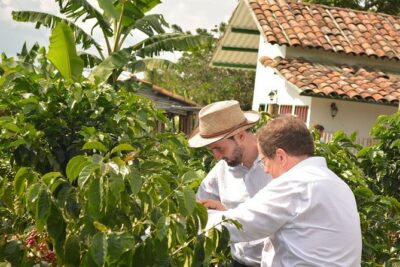
The most memorable part of this Pereira outing is not simply seeing coffee plants. It is watching Arvey and Elizabeth connect coffee growing with daily farm life, composting, fruit trees, birds, animals, and clean agriculture. You follow the crop from flower and cherry to processing, roasting, and your own cup, with a ride through the Andean mountains in a traditional Jeep to begin.
I like the small group limit of 10, which gives you room to ask questions and work directly with your hosts. I also like the hands-on brewing at the end. You do not just hear about Colombian coffee, you prepare it using different methods and compare the results.
The main consideration is that this is a working farm, not a polished museum. Expect insects, uneven rural ground in parts, and changing crops depending on the season. Much of the visit is accessible, but not every part of the property is fully wheelchair or blind accessible.
Key Points at a Glance
- Ride in a traditional coffee-country Jeep: Hotel pickup and drop-off make the trip easy, while the classic vehicle fits the setting.
- Follow coffee from cherry to cup: See planting, harvesting, fermenting, washing, drying, roasting, and brewing.
- Meet the people behind the farm: Arvey and Elizabeth share their work, family life, and approach to sustainable agriculture.
- Explore more than coffee: The property includes bananas, cocoa, avocados, citrus, guava, papaya, mango, guanabana, and other plants.
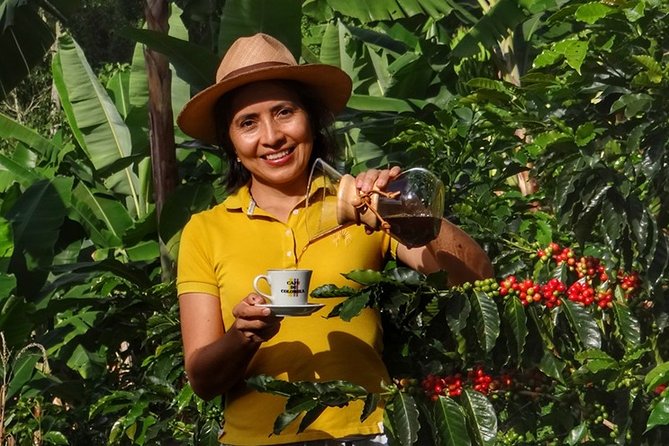
- Make coffee yourself: You prepare coffee with guidance from Elizabeth and try more than one brewing method.
- Support a small ecological project: Composting, vermiculture, a plant nursery, and wildlife-friendly farming are part of the visit.
Why This Farm Visit Feels Different
Many coffee tours focus on the bean and rush through the rest. This one gives you a wider view of rural life in Colombia’s coffee region. Arvey and Elizabeth describe themselves as neo-peasants, a useful term for people who have chosen farm life while bringing experience from other careers. Arvey previously worked as an accountant, and Elizabeth as an engineer.
That background helps explain the farm’s mix of practical systems and personal care. You see coffee production, but you also see composting, vermiculture, organic waste management, and a nursery for new plants. The goal is not only to produce coffee. It is to make the whole farm work with fewer wasted resources.
I especially like that the hosts treat the property as a living system. Cotton helps attract birds for nesting. Trees offer shelter to iguanas. Chickens, ducks, dogs, and other animals are part of the setting rather than decorative props. The farm has recorded a large increase in bird species since its early years, from about 30 to roughly 120 kinds. That gives the nature side of the visit real weight.
The experience has also received major recognition, including the 2022 National Tourism Awards and the WTM Latin American Responsible Tourism Awards in Brazil in 2023. Awards do not replace a good visit, but here they point to a project with serious environmental and community aims.
More Coffee Tours in Colombia:
- Medellin: Coffee Tour with Transport, Snacks and Tastings
★ 4.7 · 1,357 reviews - Medellín Coffee Farm Tour with Trolley and Cable Car Ride
★ 4.9 · 277 reviews - Coffee Tour at the Finca del Café
★ 5.0 · 213 reviews
From Pereira to the Mountains in a Classic Jeep
Your outing begins with pickup in Pereira. You are driven in a traditional Jeep, an icon of Colombia’s coffee region and a sensible vehicle for the mountain roads. One account of the visit describes the ride to the farm as taking about 40 minutes, though the exact time can vary with traffic and your pickup point.
This transfer is part of the appeal. You do not need to arrange a taxi, find a rural meeting point, or concentrate on mountain driving. You can watch Pereira give way to the hills while Arvey introduces the region, coffee growing, and the story of the farm.
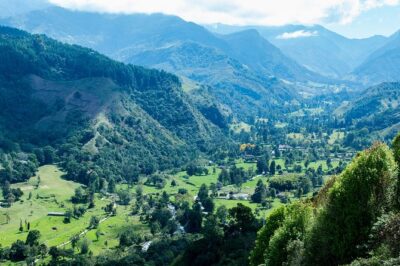
The itinerary lists both Pereira and the Andes. In practical terms, think of Pereira as your base and the Andean countryside as the setting for the farm visit. The ride adds context before you even reach the coffee plants.
The Jeep is charming, but do not expect luxury transport. This is a cultural touch that fits the coffee zone, not a private car service designed for maximum comfort. If you prefer a quiet, air-conditioned ride, that is worth keeping in mind.
The First Cup Sets the Tone
Once you arrive, coffee is not saved for the final toast. Elizabeth guides you through an early preparation, giving you a taste of the hands-on approach that shapes the entire visit.
You learn that brewing is not a single fixed ritual. Different methods can bring out different flavors from the same basic product, and the final cup depends on preparation as well as the bean. Later, you prepare two more coffees and learn about the roasting curve, so the first cup becomes the start of a practical lesson rather than a quick sample.
This is a strong feature for anyone who likes coffee but has never understood what happens before it reaches a café. It also works for people who are less interested in coffee itself. The farm, fruit trees, animals, and mountain setting give the visit enough variety to carry the day.
Elizabeth’s role is especially important here. She does not simply hand you a finished drink. She explains the method and lets you take part, making the final tasting more memorable and giving you something you can repeat at home.
Walking the Coffee Cycle, Step by Step
The farm walk explains coffee as a chain of decisions. You see the plants, learn about harvesting, and follow the crop through the stages that shape the final flavor.
The process includes:
- Growing and caring for the coffee plant
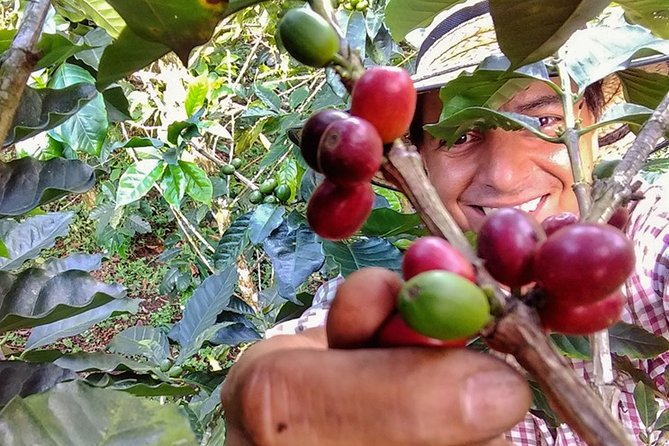
- Picking the ripe coffee cherries
- Separating and handling the beans
- Fermenting and washing the coffee
- Drying the beans
- Roasting
- Preparing the finished drink
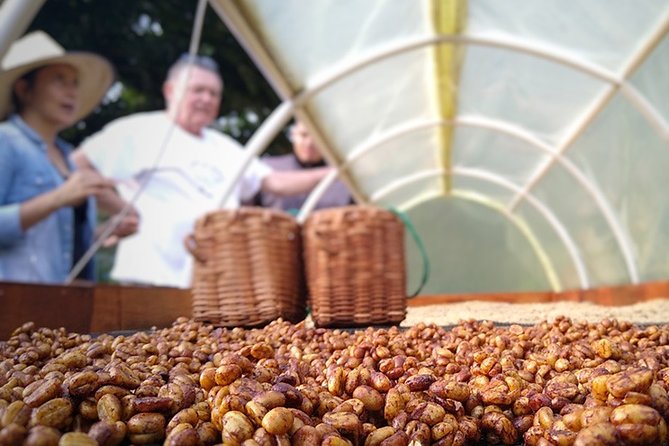
The farm produces washed, honey, and natural coffees. These names refer to different ways of processing the coffee after harvest, and comparing them helps explain why Colombian coffee can taste so varied. You will not simply be told that one method is best. You get a chance to understand how processing affects the character of the cup.
The roasting lesson adds another useful layer. Coffee can change sharply during roasting, and the roasting curve helps show how heat and timing influence the result. This is the kind of detail that makes a coffee tour worthwhile even for someone who already knows the basics.
You should not expect an industrial tour with large machines and a fixed production line. This is a small farm, so the emphasis is on seeing the work close up and understanding why each stage matters. The trade-off is that what you see can depend on the season and current farm activity.
Same town, another way to drink it:
- Medellin: Coffee Tour and Wellness Spa
★ 4.8 · 209 reviews - Salento: Private Cocora Valley, Salento & Coffee Farm Tour
★ 4.9 · 202 reviews - Medellin: Coffee Tour with Hotel Transfers and Meals
★ 4.9 · 186 reviews - From Bogotá: Coffee Farm and Tequendama Falls Tour
★ 4.5 · 130 reviews
A Farm Full of Fruit, Birds, and Animals
Coffee is only one part of the property. As you walk, you may see bananas and plantains, cocoa, avocado, oranges, lemons, tangerines, guava, papaya, mango, guanabana, pineapples, citronella, cotton, and other plants. Some are grown for food, some for practical uses, and some support the farm’s wider ecological balance.
The variety changes the rhythm of the tour. One minute you are discussing coffee fermentation, and the next you may be looking at fruit growing nearby or learning about a plant with medicinal use. Crops do not all fruit at the same time, so the exact experience can change during the year.
Fresh food is part of the welcome. Depending on the day, you might have lemonade made with lemons from the property, empanadas, patacones, or other snacks. The included food is modest, but it suits the farm better than a formal meal would. You are tasting the place in a direct, unpretentious way.
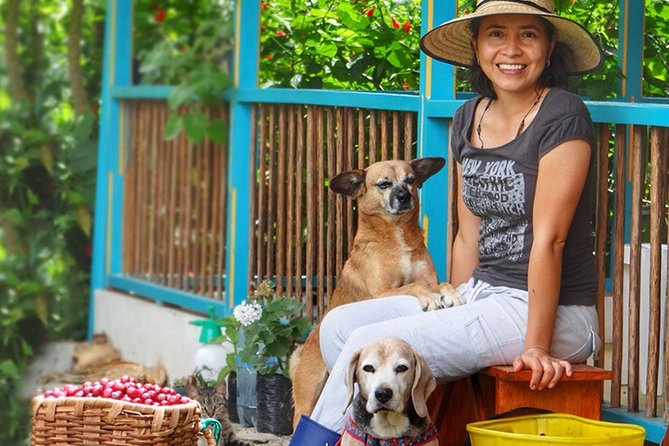
You also meet farm animals and household companions, including chickens, ducks, cats, and dogs such as Toby and Lola. Birdlife is a major bonus. Bring your attention as well as your appetite, since the visit gives you a chance to notice how a small farm can provide shelter and food for many species.
Sustainability You Can Actually See
Sustainability can become a vague label on a tour page. Here, the useful part is that you see several working examples.
The compost area shows how organic waste can return to the soil. Vermiculture uses worms to help process organic material, and the nursery supports future planting. These are simple systems, but that is what makes them valuable. You can understand them, ask questions, and perhaps adapt some ideas at home.
The hosts also discuss clean agriculture and the daily realities of running the farm. This moves the conversation beyond coffee as a luxury product. You learn about the labor, land, plants, and choices behind the drink.
The project’s responsible-tourism awards fit this focus, but the strongest proof is the way the subjects connect. Coffee is grown alongside food crops, animals, shade, compost, and habitat. You are not being shown sustainability as a separate display. You are seeing it as part of farm management.
Brewing, Snacks, and the Final Tasting
Toward the end, you return to the coffee preparation area for more brewing. Elizabeth helps you make two cups using different coffee makers, and you compare the results. This is the most practical part of the visit because you leave with a method you can repeat at home.
The lesson is intentionally approachable. You do not need specialist equipment or a professional palate to take part. The point is to notice the differences and learn a simple way to prepare Colombian coffee well.
Drinks and snacks round out the visit. Fresh lemonade and fried plantain are among the foods described, while another account highlights empanadas. The exact offering may vary, which is normal for a working farm using what is available.
At around four hours, the experience is long enough to cover the coffee process without taking up a full day. You get the drive, farm walk, environmental discussion, demonstrations, and tastings in one compact outing. The schedule may feel full if you prefer a slow, unstructured rural visit, but most people will appreciate the amount included.
What $115 Buys You
At $115 per person, this is not the cheapest way to drink coffee in Pereira. The price makes more sense when you count what is included: hotel pickup and drop-off, private transportation, entrance, guiding, coffee or tea, snacks, and the farm activities.
You are also paying for a small-scale, personal experience rather than a large group presentation. With a maximum of 10 people, you should have a better chance to ask questions, see demonstrations clearly, and participate in brewing.
The value is strongest if you want several experiences in one: coffee education, a mountain drive, rural Colombian culture, sustainable farming, fruit tasting, and a nature walk. If you only want to see coffee plants and buy a bag of beans, a shorter plantation visit may suit you better.
The tour is especially good for couples, families with an interest in food or nature, and anyone who wants an authentic introduction to the coffee region without managing transport. It is also a fine choice for people who do not usually drink coffee, since the farm and farming practices are as important as the final cup.
Practical Details Before You Go
Wear shoes that can handle a farm setting and bring mosquito repellent. Insects are part of the bargain, especially around vegetation, so a little preparation will improve your comfort.
The property is described as largely accessible, with much of the farm, trails, and demonstrations suitable for wheelchair and blind access. Still, a good portion is not the same as every part. If you have specific mobility or sensory needs, contact the provider before booking and describe what you require.
The tour is offered through Mountain Bike Tours Colombia, also known as RetroCiclas MTB Bike Tours, but you do not need to be a cyclist. This experience is built around the Jeep transfer and farm visit.
Confirmation is provided at booking, and service animals are allowed. You can cancel for a full refund up to 24 hours before the start time. Changes or cancellations inside that window are not accepted, and the experience requires a minimum number of participants. If the minimum is not reached, you are offered another date or experience, or a full refund.
Should You Book This Coffee Tour?
Book it if you want to understand Colombian coffee as a farm product and a way of life, not just as a drink. Arvey and Elizabeth bring warmth to the visit, but the real strength is the amount you get to see and do: coffee processing, brewing, fruit trees, composting, animals, birds, and a mountain farm reached by classic Jeep.
I would choose this tour over a larger plantation stop if personal attention matters to you. I would also recommend it to anyone interested in responsible tourism, since the environmental work is visible rather than just described.
Skip it if you want a polished, climate-controlled attraction or a fast tasting with little walking. For everyone else, $115 is a fair price for a four-hour visit that combines transport, instruction, food, and a close look at sustainable coffee farming near Pereira.
FAQ
Where does the coffee farm experience take place?
The experience is based in Pereira, Colombia, with the farm located in the Andean mountains above the city.
How long does the tour last?
The experience lasts approximately four hours.
How do I get to the farm?
Hotel pickup and drop-off are included. Transportation is provided in a traditional Jeep, a vehicle closely linked with Colombia’s coffee culture.
How many people can join the tour?
The experience has a maximum of 10 participants.
What is included in the price?
The price includes coffee or tea, snacks, private transportation, entrance, and a guide.
Is transportation from another city included?
No. Transportation from other cities costs an additional $25.
Can I cancel for a full refund?
Yes. You can cancel at least 24 hours before the start time for a full refund. Cancellations or changes made less than 24 hours before the start time are not accepted for a refund.
Freshly brewed listings in Colombia
- Salento: Coffee Master Roasting, Brewing and Tasting Tour★ 4.8 · 6 reviews
- Private Tour to Coffee Farm (farm of your choice)★ 5.0 · 2 reviews
- Medellin: Coffee Farm Tour & Spa with Overnight Glamping★ 4.5 · 3 reviews
- Minca: Hidden Waterfall + Coffee and Cocoa Workshop★ 4.9 · 6 reviews
- Most complete COFFEE TOUR at local family farm★ 5.0 · 2 reviews
- Medellin: The Best Coffee Tasting Experience★ 5.0 · 5 reviews
- Medellin: Avoeden Café Coffee Brewing Workshop★ 5.0 · 12 reviews
- Medellin: Coffee and fruit tour★ 4.9 · 12 reviews
Pereira Coffee Tours, compared.
Full-Day Private Coffee Tour in Cocora Valley and Salento
Read our review →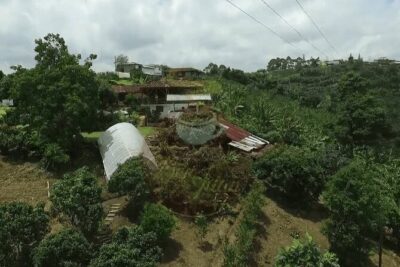
Salento and Cócora Tour plus Coffee Farm from Pereira or Armenia
Read our review →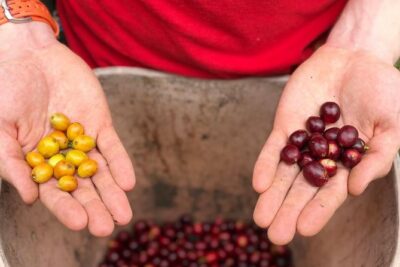
Browse the lists this tour appears in