
Review · JAPAN
Discover Japanese Coffee Brewing Experience at Tokyo
Japanese coffee brewing is part kitchen craft, part visual theater. In this Tokyo workshop, you move beyond simply drinking a cup and learn how beans, water, heat, and pouring shape the result. The most unusual lessons are the siphon method, with its glass-and-flame show, and coffee brewed in a traditional Kyūsu teapot.
I like two things right away: you get real hands-on practice instead of a lecture, and you compare several methods side by side. The cupping session also gives you useful language for coffee, from aroma and acidity to body and aftertaste. The main consideration is the price, $116 per person for two hours, which makes this a better choice for serious coffee fans than for anyone seeking a quick café stop.
Key points at a glance
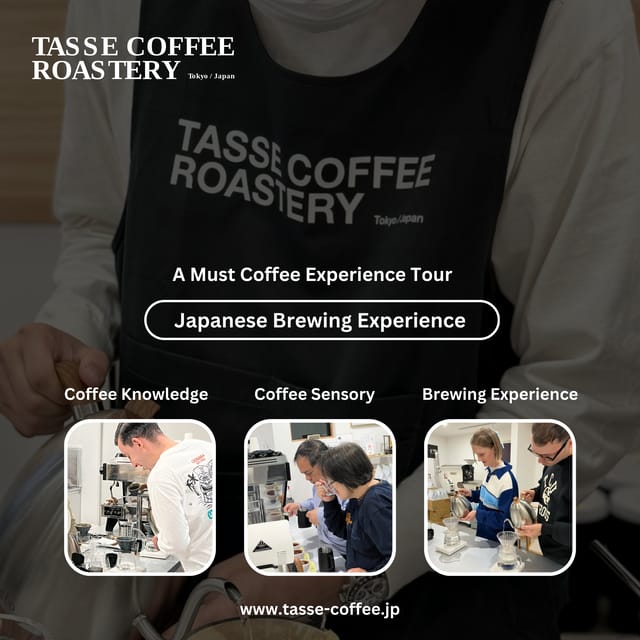
- Three brewing methods: Practice siphon, Kyūsu teapot brewing, and hand-drip coffee in one session.
- Cupping before brewing: Learn to identify aroma, acidity, body, and aftertaste before making your own cup.
- English or Japanese instruction: The workshop works well for international visitors and Japanese residents who want coffee instruction in English.
- Private group format: Limited participation gives you room to ask questions and handle the equipment.
- A calm roastery setting: Natural wooden tones create a quiet place for careful tasting and practice.
- Adults only: The workshop is not suitable for children under 16.
Why Japanese coffee deserves two hours of your time
Japan’s coffee culture rewards patience. The pleasure is not only in the finished drink, but also in the care taken to select beans, heat water, control timing, and pour with purpose. This class gives you a useful introduction to that approach without asking you to commit half a day.
You begin with coffee history and culture in Japan, then move into the basic building blocks of a cup. That order matters. If you start with equipment alone, the tools can seem like novelties. Once you understand roast levels, bean differences, and the route from farm to cup, each brewing choice makes more sense.
I would especially recommend this workshop if you already enjoy coffee but cannot explain why one cup tastes brighter, heavier, cleaner, or more fragrant than another. The class gives you a framework for noticing those differences. It is also a good fit if you want an activity that feels connected to Tokyo’s food and drink culture without being a standard restaurant meal.
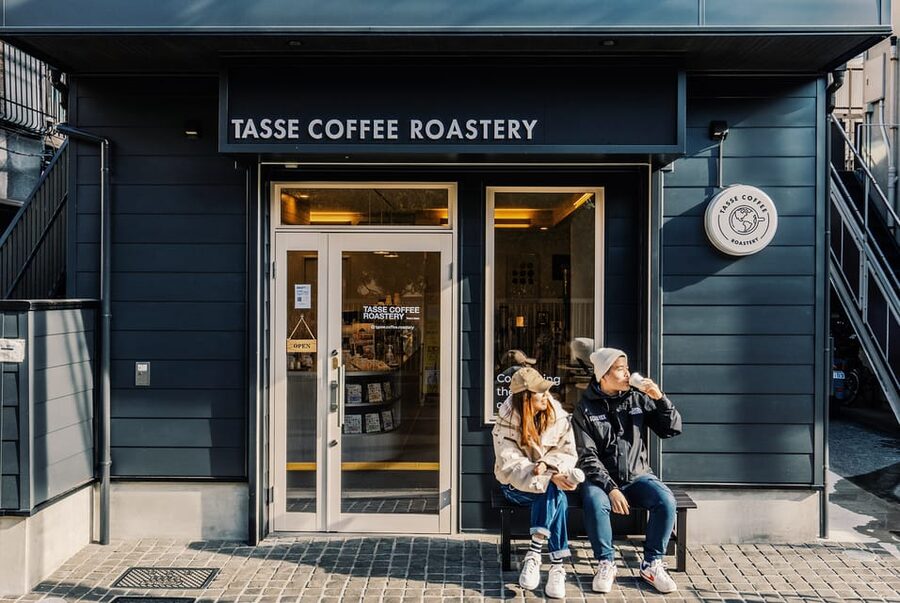
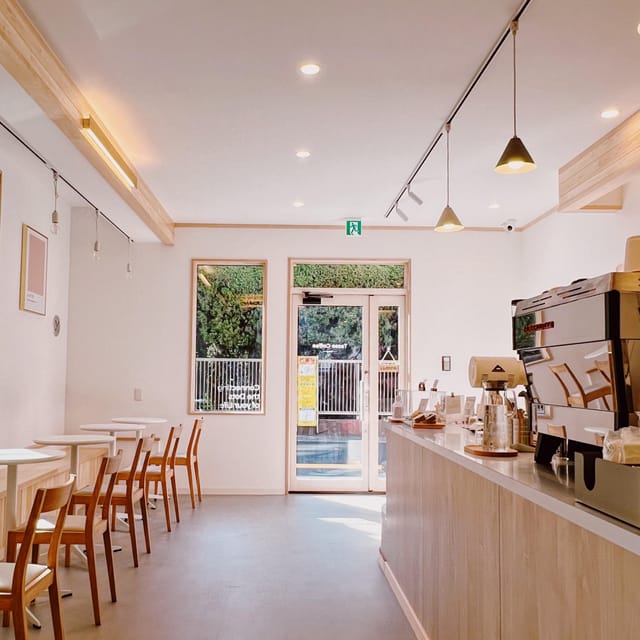
The setting helps. Tasse Coffee Roastery uses natural wooden tones and is designed as a calm learning space. That does not make the coffee better by itself, of course, but it should make it easier to focus on small changes in flavor and technique.
More Specialty Coffee Tours in the world:
- Cartagena: Colombian Specialty Coffee Tasting
★ 4.4 · 130 reviews - Coffee Farm Tour with Roasting & Tasting Workshop – Da Lat
★ 5.0 · 126 reviews - Private Coffee Roasting Class
★ 5.0 · 101 reviews
Starting with beans, roasting, and the journey to your cup
The opening lesson covers coffee’s place in Japan, types of beans, roast levels, and the path coffee takes from farm to cup. This is the foundation for everything that follows.
You will learn that beans are not interchangeable. A coffee’s character changes with the bean itself and with how it is roasted. At this stage, the useful question is not which coffee is best, but what kind of flavor you prefer. You might find one sample more aromatic, another sharper in acidity, and another fuller in body.
The farm-to-cup discussion also keeps the workshop from becoming a set of tricks. Brewing is only the final step. Bean selection, roasting, grinding, water temperature, and pouring all contribute to the result.
The opening section is likely to appeal most to beginners, but it should still have value for regular coffee drinkers. One verified participant who lives in Japan appreciated receiving this instruction in English, which points to a useful feature of the class: language is part of the experience. You can study a familiar subject in a different setting and pick up the vocabulary needed to discuss coffee more precisely.
Do not expect a full professional barista certification in two hours. Instead, think of this as a focused introduction with enough practical work to help you brew more thoughtfully at home.
The cupping session teaches you how to taste
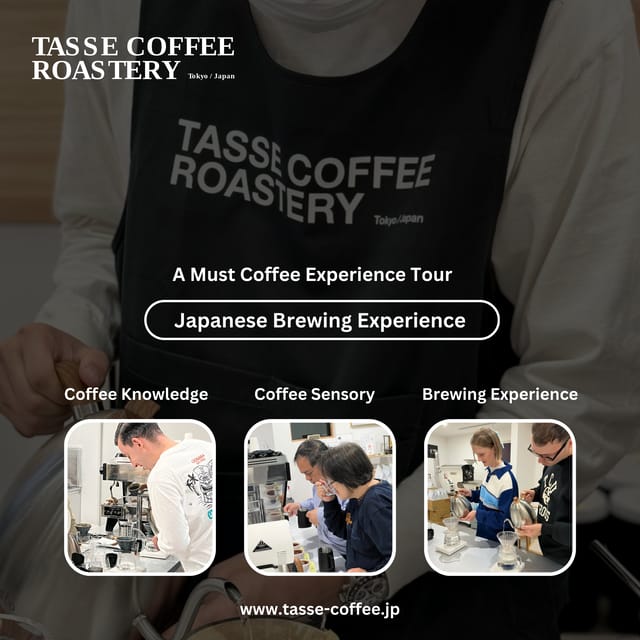
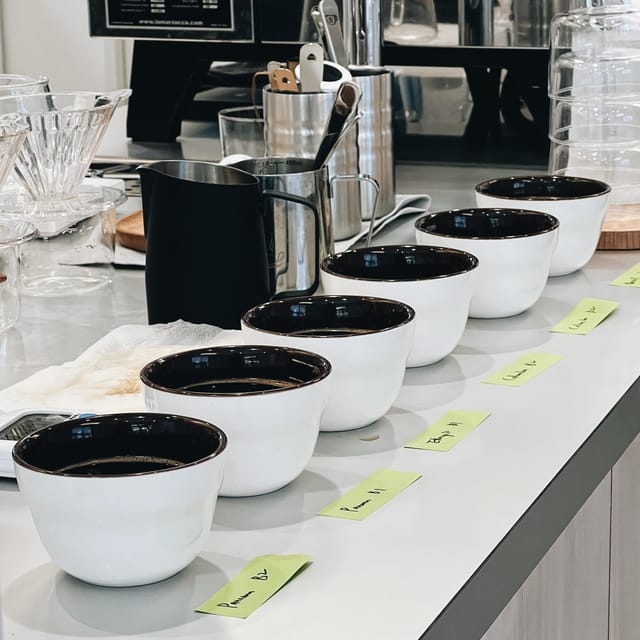
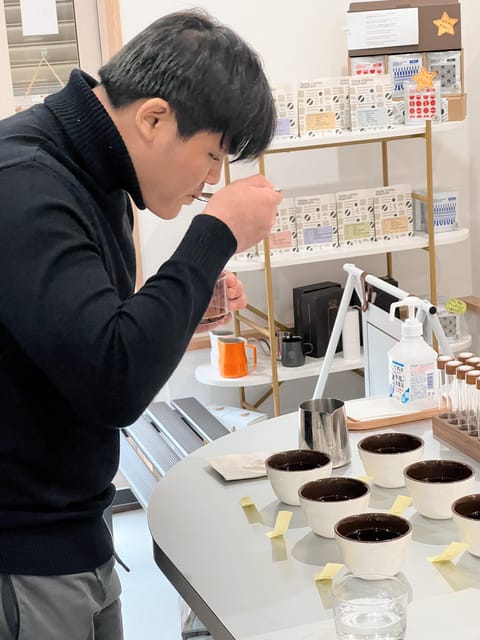
Cupping is the workshop’s tasting exercise. You are guided through several coffees and asked to pay attention to aroma, acidity, body, and aftertaste.
This can be the most useful part for someone who normally drinks coffee quickly. Cupping slows you down. Rather than deciding only if you like or dislike a cup, you begin to ask what you are actually sensing.
Aroma is what you notice in the fragrance. Acidity can give a coffee a bright, lively edge. Body describes the weight or texture in your mouth. Aftertaste is what remains once you have swallowed. These terms can sound technical, but the session connects them to actual samples.
The tasting also prepares you for the brewing section. When you later compare siphon, Kyūsu, and hand-drip coffee, you have a way to describe the differences. That makes the workshop more than three equipment demonstrations placed one after another.
The coffee used is described as a selection of premium beans and Tokyo coffee blends. The exact origins and blend names are not provided, so you should not book expecting a particular farm or rare bean. The value is in tasting several examples together and learning how to compare them.
The siphon method brings Japanese tradition to the table
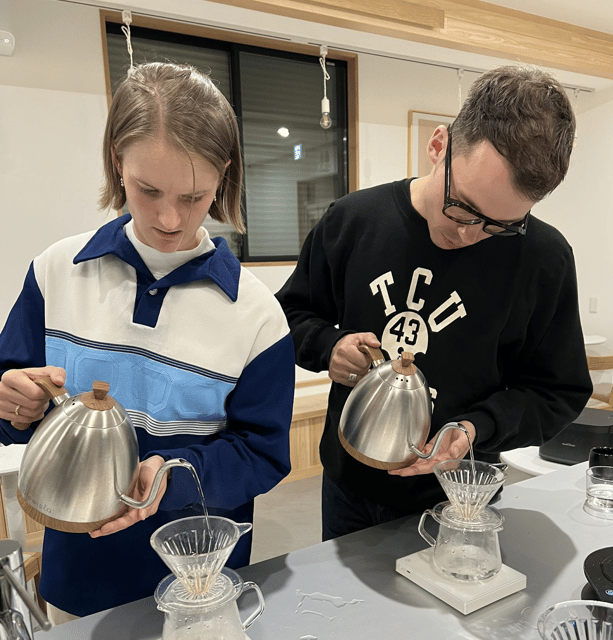
The siphon is the most visually engaging method in the workshop. It uses two chambers and controlled heat to move water through coffee, producing a brewing process you can watch as it happens.
You will first see a demonstration, then practice the technique with guidance. The lesson covers the history and character of siphon brewing, as well as how the method affects flavor.
This is a good place to pay attention to cause and effect. The equipment looks dramatic, but the point is not simply the spectacle. Heat, movement, timing, and filtration all influence the cup. The instructor can show you how those choices change the final result.
For many people, siphon brewing is less familiar than a filter cone or coffee machine. That makes it a memorable part of the class. It also means you may need more guidance here than with hand drip. The equipment requires care, and a two-hour workshop can only cover the basics.
I like that the siphon lesson is paired with tasting. You do not just watch coffee being made. You can compare the flavor with coffee prepared by another method and decide what the siphon contributes.
More Brewery Stops in the world:
- Istanbul: Turkish Coffee Brewing on Sand + Gift Set
★ 4.9 · 49 reviews - Coffee Brewing Workshop
★ 5.0 · 28 reviews - Medellin: Avoeden Café Coffee Brewing Workshop
★ 5.0 · 12 reviews - Antalya: Turkish Coffee Brewing on Sand & Fortune Telling
★ 4.9 · 7 reviews
Kyūsu brewing gives a Japanese teapot a new job
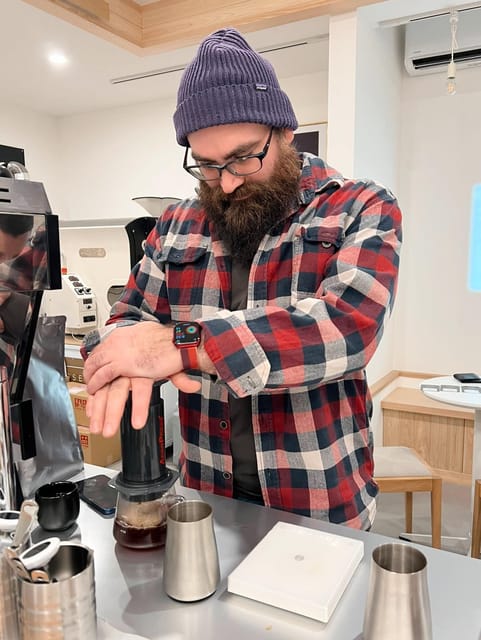
The Kyūsu is a traditional Japanese teapot, adapted here for coffee. That is one of the workshop’s most distinctive details. You learn how to brew coffee in the pot and then compare its taste with the other methods.
This lesson connects coffee with a familiar piece of Japanese tea equipment. It also shows that brewing traditions do not always stay in separate boxes. A teapot designed for one beverage can be used to explore another, provided you understand how to handle it.
The Kyūsu method may appeal to you if you want a practical technique that feels less equipment-heavy than siphon brewing. You will focus on how to use the pot, how the coffee behaves in it, and how the resulting flavor differs from hand drip or siphon coffee.
The workshop does not provide enough information to promise that you will leave with a Kyūsu or receive one as part of the price. The equipment is supplied during the class, and an optional coffee tasting kit is available for purchase. If you are hoping to recreate this method at home, ask about the kit and any recommended equipment before buying.
Hand drip is the most useful skill to take home
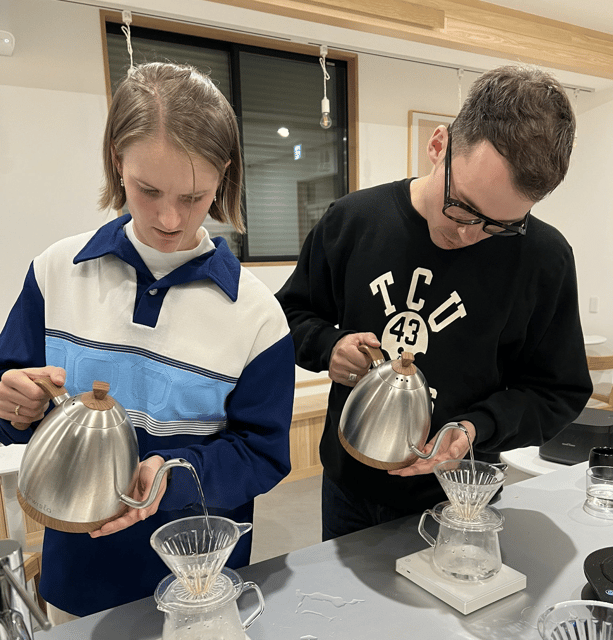
Hand-drip brewing is probably the most practical method in the session. You learn how to control water temperature and pouring, then make coffee yourself.
This is where small movements matter. The pace of the pour, the amount of water, and the heat can change extraction and flavor. The instructor guides you through the process, so you are not left guessing at the basic technique.
The hands-on format matters here. Reading about hand drip is easy. Producing a balanced cup is harder. By practicing during the class, you can connect the instructions to what you taste.
One participant specifically highlighted learning about hand-drip coffee and preparation. Another praised the useful exercises and kind instruction. Those details suggest that the class gives you more than a tasting flight, with practical work built into the schedule.
Still, keep your expectations reasonable. You will not master every variable in one session. The benefit is that you leave with a clearer starting point and a better sense of what to adjust the next time you brew.
Comparing three methods makes the lesson stick
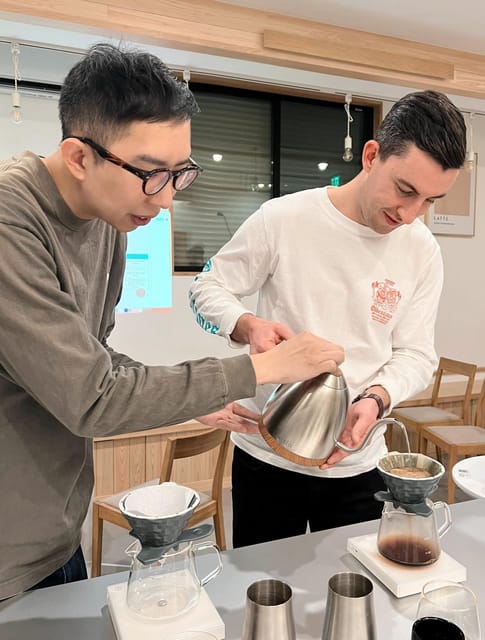
The workshop’s strongest design choice is the side-by-side comparison. Siphon, Kyūsu, and hand drip are not taught as isolated tricks. You taste what each approach produces and use the cupping vocabulary to describe the differences.
That comparison is useful because coffee equipment often gets sold as if the tool alone creates quality. It does not. Technique, beans, water, and timing work together. Seeing several methods in one place helps you understand that a different brewer can change the cup, but it cannot replace care.
You may prefer the clean character of hand drip, the visual appeal of siphon, or the unusual style of the Kyūsu. There is no required winner. The point is to notice what suits your taste and habits.
The private group format should make these comparisons easier. You can ask why one brew seems brighter or heavier, and you have a better chance to handle the equipment directly. The exact number of participants is not specified, but the activity is described as a private group with limited participation.
What the $116 price includes
At $116 per person, this is not a casual coffee tasting. The price needs to make sense through instruction, equipment, and the range of methods.
You receive expert guidance, coffee education, a cupping session, premium beans, beverage samples, and hands-on practice with all necessary brewing equipment. All fees and taxes are included. You also get several Tokyo coffee blends to taste, though the exact quantity is not stated.
I see the value most clearly if you already care about coffee or want a serious introduction to Japanese brewing. Three methods, guided tasting, and practical work would be difficult to reproduce during ordinary café visits. You are paying for access to instruction and equipment, not just for drinks.
For a casual visitor who simply wants a good cup, the price is high. Tokyo offers many less expensive ways to drink coffee. This workshop earns its cost by giving you skills and a structured tasting session, so book it for the learning rather than the caffeine.
The optional tasting kit may add value if you want to continue at home. It is not included in the stated price, and there are no details about its contents, so treat it as an extra purchase rather than part of the package.
Who should book this Tokyo coffee workshop
This activity suits adults aged 16 and older who enjoy coffee, food culture, or practical classes. Beginners can learn the basic vocabulary and methods, while more experienced coffee drinkers can use the comparisons to refine their preferences.
It is also a good choice for someone who wants a quieter activity. The natural wood interior and private format suggest a setting built for concentration rather than a loud group outing.
The English and Japanese instruction is helpful for international visitors and Japanese participants alike. One Japanese participant found the chance to study coffee in English especially unusual, so the language option is more than a minor booking detail.
I would be less likely to recommend it to families with younger children, people who dislike tasting exercises, or anyone looking for a fast, low-cost stop between major Tokyo sights. The two-hour length is manageable, but the class asks you to pay attention and participate.
You can cancel up to 24 hours in advance for a full refund, and the reserve-now, pay-later option keeps your schedule flexible. Starting times depend on availability, so check the session time before you build it into a busy day.
My call on the Tasse Coffee Roastery experience
Book this workshop if you want to understand how Japanese coffee is made, not simply sample it. The combination of cupping, siphon, Kyūsu, and hand drip gives you a clear reason to spend two hours here.
The best value is in the practical comparison. You taste, practice, and learn the words needed to explain what has changed. The main weakness is the price, especially if coffee is only a small part of your Tokyo interests.
For serious coffee drinkers, curious beginners, and adults seeking a focused cultural activity, I would book it. If you want only a quick drink or a budget-friendly stop, spend the $116 elsewhere and visit a café instead.
FAQ
How long does the Japanese coffee brewing workshop last?
The workshop lasts two hours. Starting times depend on availability.
Where does the experience take place?
It takes place at Tasse Coffee Roastery in Tokyo, on Honshu, Japan.
How much does the workshop cost?
The listed price is $116 per person. All fees and taxes are included.
Which languages are available?
Instruction is available in English and Japanese.
Which brewing methods will I practice?
You will learn siphon brewing, coffee preparation with a Kyūsu Japanese teapot, and hand-drip brewing.
Is the workshop suitable for children?
No. The activity is not suitable for children under 16.
Can I cancel or postpone my booking?
You can cancel up to 24 hours in advance for a full refund. A reserve-now, pay-later option is also available.
Freshly brewed listings in the world
- Vietnamese Coffee 101 Workshop★ 5.0 · 11 reviews
- Vietnamese Coffee Making Class in Hoi An★ 5.0 · 4 reviews
- Vancouver: Street Art & Craft Coffee Walking Tour w/ Tasting★ 4.8 · 11 reviews
- Yerevan: Private Coffee Tour with 2 Café Stops★ 5.0 · 2 reviews
- Ubud: Waterfall, Holy Water Temple,Swing&coffee plantation★ 5.0 · 9 reviews
- Coffee pleasure walking tour★ 5.0 · 12 reviews
- Vienna: Guided Viennese Coffee-House Tour★ 5.0 · 2 reviews
- Turkish Coffee and Traditional Turkish Dessert Cooking★ 4.6 · 8 reviews
Japan Coffee Tours, compared.

Tokyo Akihabara, Anime, Manga, Video Games & Maid Cafe Tour
Read our review →
100% PRIVATE Anime, Manga, Game & Pop Culture Tour in Akihabara
Read our review →
Discover Japanese Politics Over a Coffee in Tokyo
Read our review →
Private Akihabara Retro Tokyo Anime Game Maid Cafe Tour w/ pickup
Read our review →
Private Akihabara Anime Game Maid Cafe Tour w/ free pickup
Read our review →
Tokyo’s Neighborhood Digs: Coffee, Records & Vintage Vibes
Read our review →
Best of Downtown Tokyo: Nature, Coffee, & Japanese Sweets Tasting
Read our review →
Discover Coffee Experience Latte Art Workshop at Tokyo
Read our review →Browse the lists this tour appears in