
Review · BUCHAREST-ILFOV, ROMANIA
Bucharest: Museum of Communism Ticket with Communist Coffee
Bucharest’s Museum of Communism turns a difficult political past into a hands-on visit. You can type on an old machine, handle magazines, try on period clothes, listen to music, and sit on a communist-era couch with a cup of nechezol. I like the touchable exhibits and the chance to ask an English-speaking guide questions. The main drawback is its size: you may finish in 45 minutes if you read quickly.
I also like the coffee ritual, which gives the visit a small taste of everyday life rather than just a wall of dates. Still, some displays simplify ordinary life in the 1950s through 1990s and present too much of it as uniquely communist. If you want a scholarly museum with extensive interpretation, this may feel light.
Key points to know before you go

- Try the exhibits: Type on an old typewriter, handle original magazines, and try on old clothes.
- Taste 1980s coffee: Your ticket includes one cup of nechezol, a coffee substitute made during shortages.
- Plan a short visit: Many people finish in about 45 minutes to one hour, depending on how much they read.
- Ask questions in English: Staff are available in the museum and can add context beyond the written displays.
- Expect a small museum: The setting is intimate, with a living room, small bar area, and clean toilet facilities.
- Check access needs: The museum is not suitable for wheelchair users.
Why this small museum works best as an experience
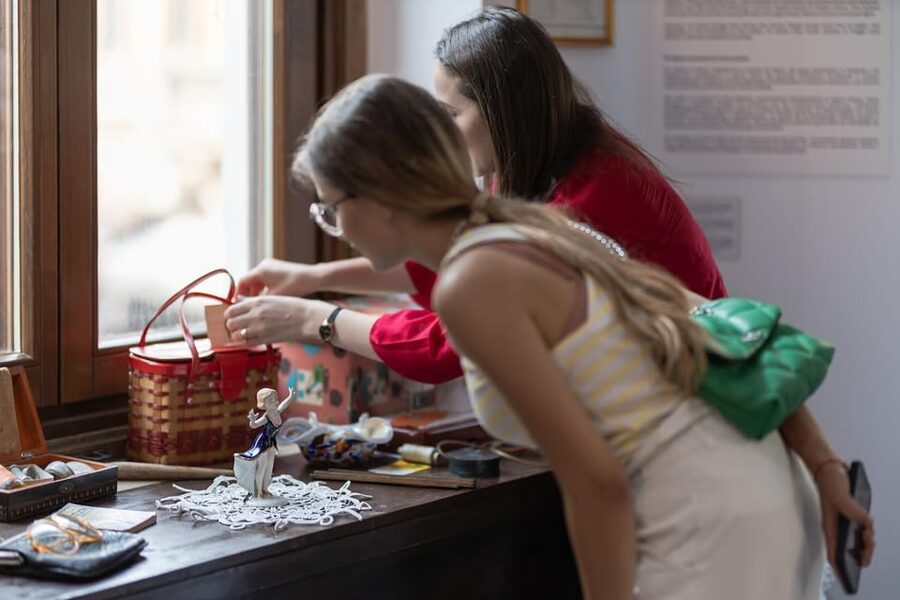
The Museum of Communism is not trying to be a grand national institution. It is a compact, personal place where recent Romanian history is presented through objects you can see and touch.
That choice matters. Communism can feel abstract when you only encounter political slogans, portraits, and dates. Here, an old typewriter, a stack of magazines, clothing, music, and household objects help you think about daily routines. You are not only reading about a system. You are seeing the kind of things people used, wore, and encountered at home.
I find the interactive approach useful for first-time visitors to Romania. You can ask questions as you go, which is especially helpful when a display refers to shortages, state control, or the final years of communist rule. The English-speaking host or greeter can help explain what an object meant in ordinary life.
The format also suits a quick stop in Bucharest’s old town area. It does not demand half a day, and you can fit it around a walk, meal, or other sightseeing. At the same time, the short format means the museum cannot give every subject the space it deserves.
More Museum Visits in the world:
- Dublin: Irish Coffee Masterclass at the Irish Whiskey Museum
★ 4.6 · 279 reviews - 7-Hour Shared Group Santos Tour : Mont Serrat, Coffee Museum and Sightseeing
★ 5.0 · 68 reviews - Strauss Exhibition incl. LED Concert Show / Coffee + Strauss Cake
★ 5.0 · 30 reviews
Starting with objects from everyday Romania
The visit begins with exhibits that bring the period down to household scale. Instead of treating communism only as a story of leaders and institutions, the museum shows pieces of daily life.
You can type on an old typewriter, which is a simple but effective way to connect with the period. You can also read original magazines rather than only modern summaries. That kind of material gives you a sense of the language, design, and public messages people encountered at the time.
Trying on old clothes adds a playful side. It works well for families, friends, and anyone who likes photographs, but it can feel less meaningful if you are visiting alone. The museum includes photo opportunities, dressing up, and music, so the experience has a social quality that a traditional display does not.
I would take time with the objects before moving quickly to the written material. The objects are the museum’s strongest feature. They give you a physical point of reference, even when the surrounding explanation is brief.
Reading the story of communism in Bucharest

The written displays cover Romania’s recent history and the effect of communism on Bucharest and its people. You will encounter posters and information panels that ask you to think about how the system shaped public and private life.
This part requires a little judgment. Some of the text can feel simple, especially if you already know the broad story of postwar Eastern Europe. Ordinary features of life from the 1950s to the 1990s may sometimes be presented as specifically communist problems, even when similar things existed elsewhere.
That does not make the displays useless. It means I would treat the museum as an introduction rather than a final authority. Use it to identify questions, then continue learning through a book, a city tour, or a more academic museum if the subject grabs you.
The staff help balance the lighter interpretation. The museum’s young guides have been praised for their passion and ability to answer questions. No guide names are provided with the experience, so I would not expect a guaranteed named host. Instead, look for the English-speaking staff in the rooms and ask about any object or claim that interests you.
The story behind nechezol, Romania’s communist coffee
The coffee is the most distinctive part of the ticket. During the final years of communism, Romania imported very little coffee. A substitute called nechezol became associated with that shortage period.
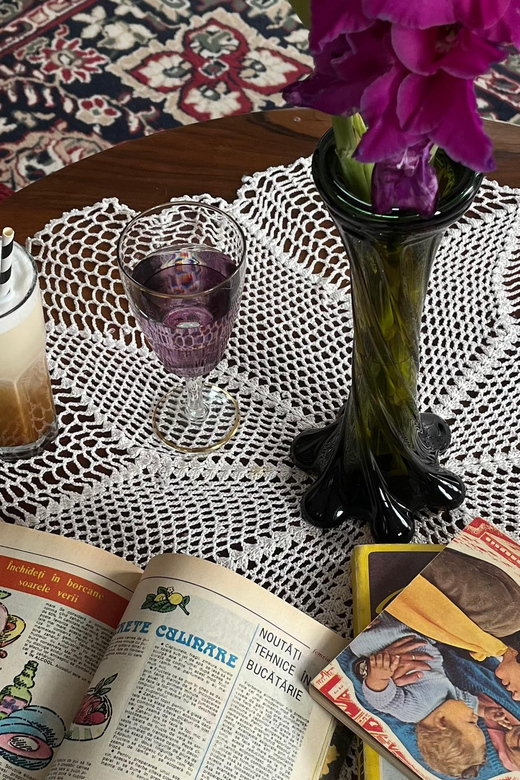
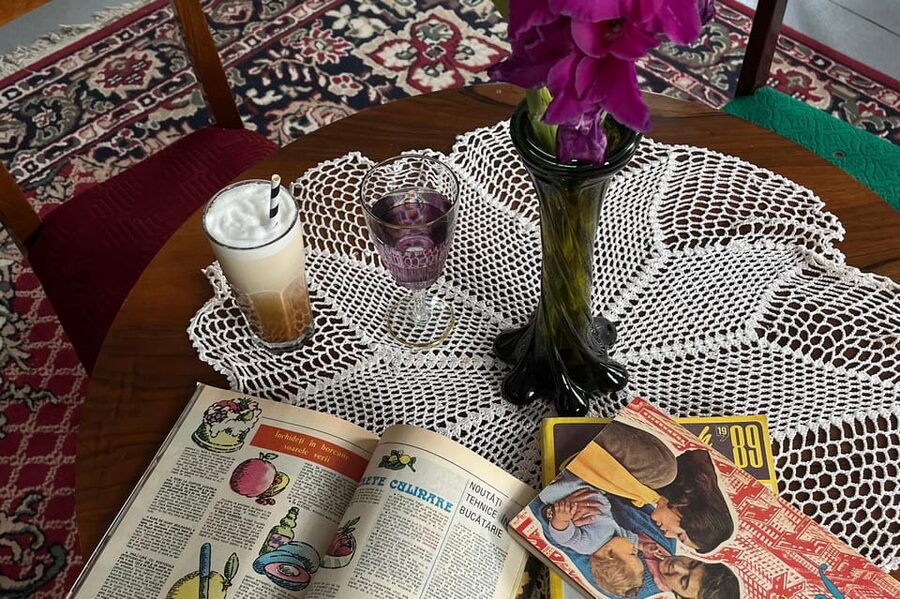
The exact appeal is not luxury. This is a taste of scarcity and adaptation. You receive a cup and drink it in the museum’s living room, using an original old cup while sitting on a communist-era couch.
That setting gives the drink its meaning. A cup of coffee on its own could feel like a novelty. In the living room, surrounded by period items, it becomes a small domestic scene. You can picture coffee as part of a household routine shaped by limited supplies and improvised substitutes.
The flavor may surprise you. One visitor found it quite pleasant and could not distinguish it from instant coffee. I would not book this activity solely for a gourmet drink, but the coffee is a fun addition and helps make the historical idea memorable.
The cup is included in the entry price, so you do not need to pay extra for this part. It also gives you a natural pause after reading the displays.
More Entry Tickets in the world:
- Castle District tour with Matthias Church Ticket & Cake & Coffee
★ 5.0 · 31 reviews - Castle District tour with Matthias Church Ticket & Cake & Coffee
★ 5.0 · 22 reviews - Castle District tour with Matthias Church Ticket & Cake & Coffee
★ 5.0 · 4 reviews - Castle District tour with Matthias Church Ticket & Cake & Coffee
★ 5.0 · 3 reviews
How long the visit takes
The official ticket is valid for one day, but the museum itself is not a full-day attraction. Plan on about 45 minutes to one hour if you read a good portion of the text and spend time with the objects.
You could move through the rooms much faster. Someone who skips most of the posters may finish in around five minutes, while a careful reader will need longer. Your ideal pace depends on how much background you already have.
I would allow one hour rather than rushing. The museum is small enough that you will not need a complex plan, but the coffee and questions for staff are worth giving time.
The short duration improves the value for many city visitors. You can add it to an old town afternoon without giving up a major sight. On the other hand, the $10 price can feel less attractive if you only want a quick look at a few objects and do not care about the coffee.
Is the $10 ticket good value?
At $10 per person, the ticket is reasonably priced for a compact museum visit with a drink included. The value depends on what you want from a museum.
I think the price works well if you are curious about Romania’s communist period, enjoy interactive displays, or want an unusual stop in Bucharest. The coffee adds something that a standard admission ticket would not include, and the ability to ask questions can make the visit feel more personal.
The calculation is weaker for serious history readers. You may find the displays too brief or too broad, especially if you expect detailed political analysis, a large collection, or extensive historical documentation. In that case, the $10 may be better spent on a longer museum or guided history activity.
The best value comes when you treat the museum as a focused introduction. You get context, objects, a taste of a period coffee substitute, and a chance to ask questions without committing much time or money.
Who will enjoy the hands-on format
I would recommend this museum most strongly to:
- First-time visitors who want basic context about Romania’s recent past
- Families and friends who enjoy trying objects and taking photographs
- Visitors with only an hour available in Bucharest
- Anyone interested in food and daily life, not only political events
- People who prefer a personal, informal museum over a formal collection
The dressing-up element and music make it more enjoyable with company. If you visit alone, the experience can still work, but there are fewer people to share the photo moments with.
I would be more cautious if you want a deeply researched history lesson. The museum’s interpretation can feel simplistic in places, and its small scale limits the amount of material it can show.
Practical details that affect your visit

The activity is offered in English, and an English-speaking host or greeter is available. The staff can answer questions in the museum, which is useful because some of the written material may leave you wanting more explanation.
You can cancel up to 24 hours before the activity for a full refund. You can also reserve now and pay later, which is useful if your Bucharest plans are still changing.
The experience is not suitable for wheelchair users. If access is important to you, check carefully before booking rather than assuming the hands-on format means the whole museum is accessible.
The museum has clean toilet facilities and a small bar area. There is no gift shop, so do not count on buying a souvenir or book at the end. Those details are minor, but they help you know what kind of place this is: a brief, informal museum visit rather than a large cultural complex.
The main strengths and the fair criticisms
The strongest part is the combination of physical objects and human help. You can handle exhibits, then ask a staff member what they mean. That makes the museum easier to enter than a room full of dense political text.
The nechezol is another smart feature. It gives the visit a clear ending and connects an economic shortage with an everyday habit. Sitting in the old living room makes the idea more concrete than reading a paragraph about coffee imports.
The main weakness is the level of historical detail. Some displays may blur the line between problems caused by communism and ordinary features of life that appeared across many countries during the same decades. If you need careful comparison and expert debate, you may want to supplement this visit.
The other limitation is time. The museum’s compact size is convenient, but it also means the experience can feel thin if you expected a major institution. I would come with the right expectation: this is an interactive introduction with a memorable drink, not a full survey of Romanian history.
Should you book the Museum of Communism?
Book it if you want a short, accessible look at Romania’s communist period, especially if you enjoy objects, photographs, dressing up, and a little conversation with staff. The included nechezol coffee makes the $10 ticket more distinctive, and the visit fits neatly into a day in Bucharest.
Skip it if you want a large collection, serious academic interpretation, or several hours of detailed history. You may find the text too simple and the rooms too easy to finish.
For most curious visitors, I think it is worth adding when you are nearby and have an hour to spare. Go slowly, ask questions, and treat the coffee as part of the historical setting rather than a stand-alone drink. That is when this small museum makes the strongest impression.
FAQ
What is included in the Bucharest Museum of Communism ticket?
The ticket includes entry to the Museum of Communism and one cup of nechezol coffee.
What is nechezol?
Nechezol is a coffee substitute associated with Romania’s final communist years, when the country imported coffee in very small amounts.
How long should I allow for the museum?
A visit commonly takes about 45 minutes to one hour, depending on how much of the written material you read and how long you spend with the interactive exhibits.
Is the experience available in English?
Yes. The activity is offered in English, and an English-speaking host or greeter is available in the museum.
Can I ask questions during the visit?
Yes. Staff are available in the museum and you can ask questions about the exhibits and the period.
Is the museum wheelchair accessible?
No. The activity is not suitable for wheelchair users.
Can I cancel the booking?
Yes. You can cancel up to 24 hours in advance for a full refund. You can also reserve now and pay later.
Freshly brewed listings in the world
- Vietnamese Coffee 101 Workshop★ 5.0 · 11 reviews
- Vietnamese Coffee Making Class in Hoi An★ 5.0 · 4 reviews
- Vancouver: Street Art & Craft Coffee Walking Tour w/ Tasting★ 4.8 · 11 reviews
- Yerevan: Private Coffee Tour with 2 Café Stops★ 5.0 · 2 reviews
- Ubud: Waterfall, Holy Water Temple,Swing&coffee plantation★ 5.0 · 9 reviews
- Coffee pleasure walking tour★ 5.0 · 12 reviews
- Vienna: Guided Viennese Coffee-House Tour★ 5.0 · 2 reviews
- Turkish Coffee and Traditional Turkish Dessert Cooking★ 4.6 · 8 reviews
Museums, compared.
Dublin: Irish Coffee Masterclass at the Irish Whiskey Museum
Read our review →
7-Hour Shared Group Santos Tour : Mont Serrat, Coffee Museum and Sightseeing
Read our review →
Montmartre & Sacré Coeur : Museum & Coffee In A Tiny Group Tour
Read our review →
Coorg: Mercara Gold Estate Coffee/Spice Farm and Museum Tour
Read our review →Browse the lists this tour appears in