
Review · BIG ISLAND
Hala Tree Coffee Farm Tour
The best part of Hala Tree Coffee is seeing how much work hides inside your morning cup. You walk among coffee trees, learn why the fruit is picked by hand, and follow the beans through processing and roasting before settling in with a three-coffee tasting and an ocean view. I like the personal, small-farm feel and the excellent price. The main drawback is that the walk into the grove is short, and the farm can be hard to spot from the highway.
I also like the relaxed pace. Guides including Sabrina, Margaret, Danelle, and Kat explain the crop in plain language, and the tasting lets you choose your own three coffees instead of simply accepting a preset lineup. If you are coming from Kona without a car, plan your ride home carefully, since rideshares can be less available in Captain Cook.
Key points to know before you go
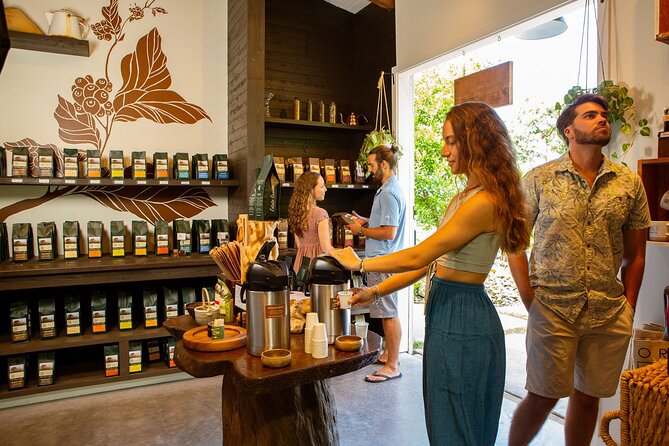
- A real working farm: Hala Tree handles coffee growing, harvesting, processing, and roasting in one place.
- Three coffees to choose: The tasting flight is a highlight, with several varieties and flavors to compare.
- Only about one hour: This is a compact stop that fits neatly between other South Kona plans.
- Small groups: The maximum is 12 people, which leaves room for questions and a more personal feel.
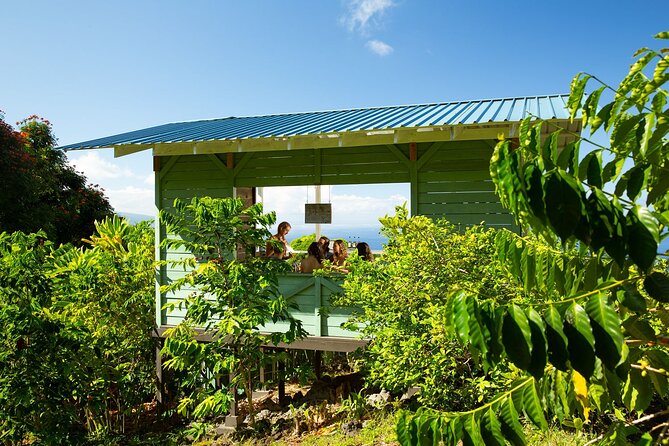
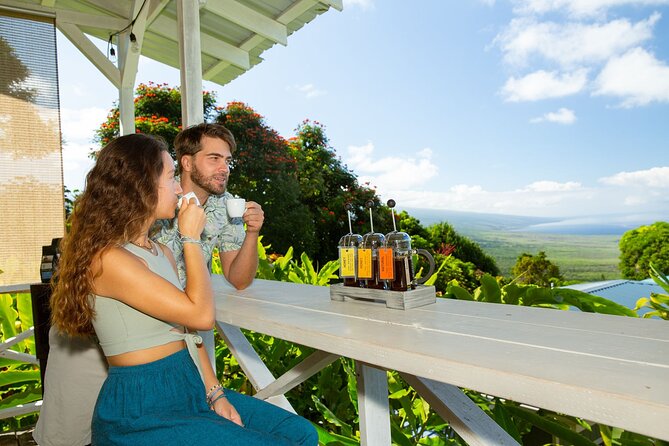
- Scenic tasting spot: You sip coffee from a shaded wood deck or sofa area with ocean views.
- Good value: At $10 per person, the farm visit and tasting cost less than many Big Island attractions.
Following a Kona coffee cherry from tree to cup
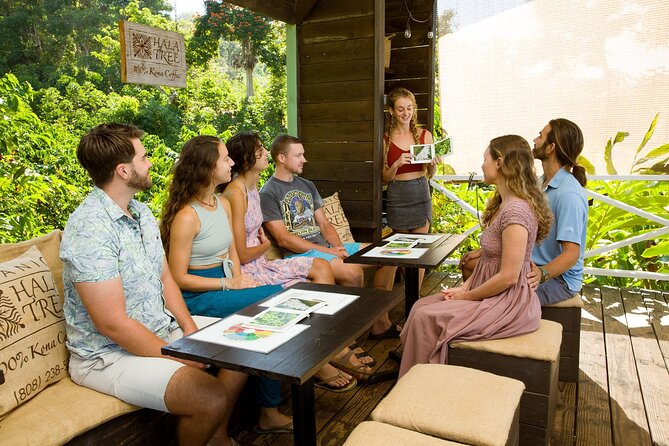
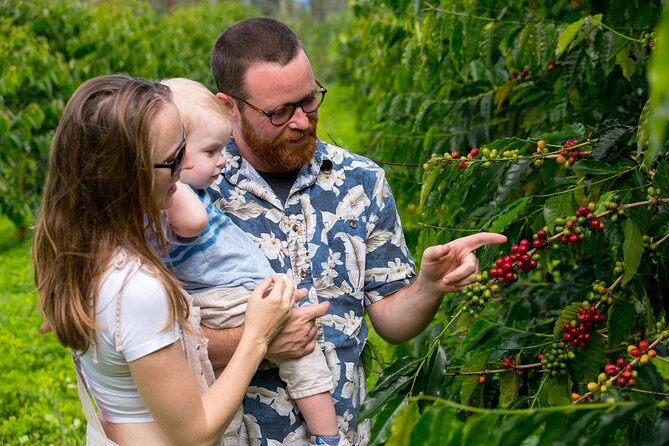
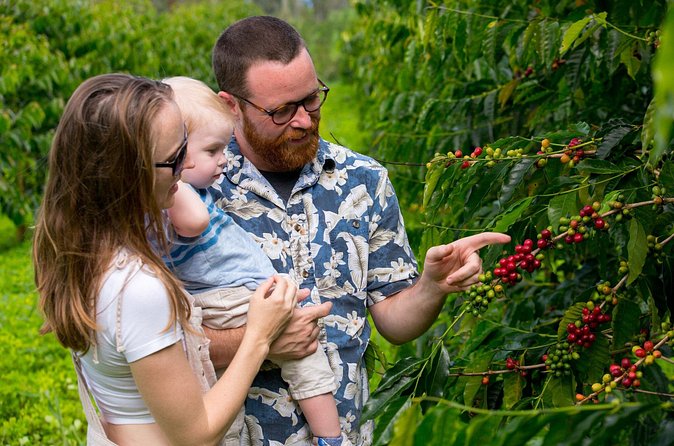
Hala Tree Coffee gives you a look at the full coffee cycle rather than a quick stop at a shop with a few plants out front. The tour begins among the coffee trees, where you see the fruit in its natural form. At harvest, coffee does not look like a brown bean. It looks like a small red cherry.
That simple detail helps make the rest of the tour click. The red fruit must be picked, processed, dried, prepared, and roasted before it becomes the coffee you recognize. You learn how the farm moves through these stages and how different choices can shape the final taste.
The farm works with 100% Kona Coffee, a product closely tied to the west side of Hawaii Island. Guides explain the work behind the label, including hand picking and the long growing cycle. One guide described the period from bloom to harvest as about 267 days, with seven or eight harvests during the year.
That number gives you a useful sense of the job. Coffee farming is not simply a matter of planting a tree and waiting for beans. The trees bloom, fruit develops, ripe cherries are selected, and the process repeats across the growing season.
The experience also covers Hala Tree’s role in processing and roasting. You get a clear look at how the farm handles more than one part of production, which makes this feel like a visit to an active small operation rather than a sales pitch built around a souvenir counter.
More Coffee Farm Tours in Big Island:
- Award Winning Farm Tour: Coffee, Chocolate and Unique Gifts
★ 5.0 · 484 reviews - Big Island: Volcanoes, Waterfalls, & Coffee Farm Day-Trip
★ 4.9 · 414 reviews - Small-Group Big Island Tour: Hawaii Volcanoes National Park and Kona Coffee Farm
★ 5.0 · 343 reviews
The short walk into the coffee grove
The walking portion is easy to fit into a busy day, but you should set your expectations correctly. This is not a long plantation hike. One person estimated walking only about 50 steps into the coffee plants and back.
For me, that is both a strength and a limitation. You do not need hiking shoes or a large block of time. Families, couples, and anyone building a full South Kona itinerary can take part without giving up half a day. On the other hand, if you want acres of trees, a long farm walk, or a detailed look at every corner of the property, this tour may feel brief.
The path includes a rocky hill, so mobility can matter. The farm has accommodated someone who could not walk down to the grove by giving the explanation from beneath a guava tree. Most people can participate, but you should contact the operator ahead of time if uneven ground is a concern.
The guides make good use of the short walk. They explain the plants, the fruit, the growing cycle, and the work involved in picking. You are not left wandering around trying to guess what you are seeing.
A large Hala tree is another memorable feature of the property. It gives the farm its name and helps create the sense that you are visiting a particular place, not just checking off a generic coffee stop.
Learning from Sabrina, Margaret, Danelle, and Kat
The guide can shape a one-hour tour, and Hala Tree has earned especially strong praise for its staff. Sabrina is described as friendly, engaging, and clear when explaining how coffee is grown, processed, and roasted. Margaret has explained how the farm differs from other coffee operations, while Danelle has covered the growing season and the repeated harvests. Kat has also led an informative tour focused on the manual work behind the coffee.
You should expect a conversational experience. The guides encourage questions and explain how a single bean can produce different flavors without adding flavoring. That is one of the most useful lessons here. Roast level, processing, and the character of the coffee itself can change what you taste in the cup.
The staff may not have an answer to every highly technical coffee question. One guide was praised for being upfront when a question went beyond her own work at Hala Tree. I consider that a plus. You get a straightforward explanation rather than a polished answer that pretends to cover everything.
The small group size helps. With a maximum of 12 people, you have a better chance to ask about the trees, roasting, or the farm’s methods. The mood is laid back and friendly, with the occasional dog greeting adding to the informal feel.
This is a good match for coffee fans who want detail, but you do not need to be a coffee expert. People who rarely drink coffee can still understand the basic process and enjoy the setting. One person who does not favor coffee still found the visit fun.
The three-coffee flight is the payoff
The tasting is where the information becomes practical. After learning about coffee production, you choose three coffees to sample. This choice matters. You can compare different roasts or varieties according to your own taste rather than being handed one standard cup.
The samples help you notice differences that are easy to miss when you simply add cream or sugar to a morning drink. You may find that one coffee tastes lighter, another fuller, and another more suited to your preferences. The point is not to turn you into a professional cupper in 10 minutes. It is to give you a useful introduction to how coffee can vary.
The tasting setting is part of the pleasure. You might sit on a sofa or shaded wood deck with a view toward the ocean. That is a far nicer way to sample coffee than standing at a counter while a line waits behind you.
The visit may also include a closer look at the coffee fruit itself. You can touch and peel the sweet coffee cherry, which makes the difference between fruit and bean easier to understand. This small hands-on detail is especially helpful for children and for anyone who has never seen coffee before roasting.
The coffee is available to buy, and many people choose to take some home. That is sensible if you find a roast you like, since the flight gives you a better basis for choosing than a labeled bag alone.
More Coffee Tours in Big Island:
- Big Island Highlights: Coffee, Volcano, Black Sands & Waterfall
★ 5.0 · 1,054 reviews - Kona Shore Excursion: Sea Turtles, Historic Kona & Coffee
★ 4.5 · 324 reviews - Private Coffee Roasting Class
★ 5.0 · 101 reviews - Kona Tour: Bee Farm, Kona Coffee, and National Historical Parks
★ 4.5 · 78 reviews
Why the $10 price works so well
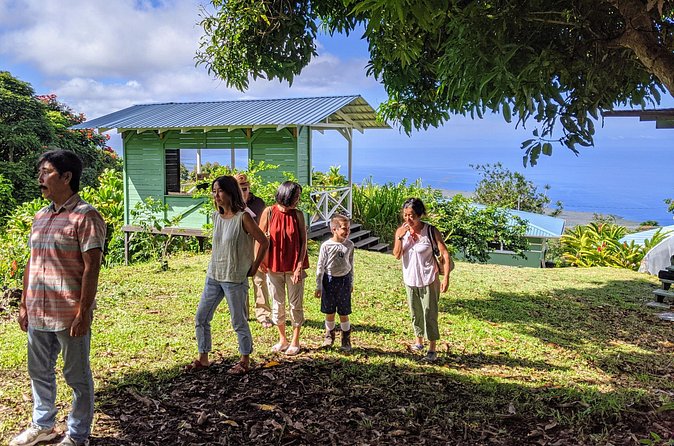
At $10 per person, Hala Tree Coffee offers unusually good value for a Big Island activity. You receive about an hour of instruction, a look at a working farm, access to the coffee-growing area, and a three-coffee tasting.
The value is not just about the low price. The tour answers a question you cannot easily answer by visiting a cafe: how does Kona coffee get from a flowering tree to a finished roast? You see the stages in order, then taste the result.
The compact length also saves money in another way. You can add it to a South Kona day without arranging a separate full-day excursion. It works before or after other stops in the Captain Cook area, as long as you allow time to find the entrance.
Do not book this expecting an elaborate visitor center or a large commercial attraction. The appeal is the small operation, direct explanations, and working-farm setting. If you prefer polished displays, a long guided walk, or extensive facilities, spend your money elsewhere. If you value an informal and affordable look at local agriculture, the price is hard to argue with.
Finding the farm near Captain Cook
The meeting point is 82-5966 Mamalahoa Highway in Captain Cook. The entrance is down a church driveway and is not well marked from the highway, so use Google Maps and slow down as you approach.
That small detail can prevent a frustrating start. Give yourself extra time to locate the driveway rather than assuming the farm will be obvious from the road. The tour returns to the same meeting point.
If you are staying in Kona, the drive or rideshare trip can take about 25 minutes south, depending on conditions. One important practical issue is the return trip. Rideshares may be easier to find going south from Kona than returning from Captain Cook, where there are fewer available drivers.
If you are visiting from a cruise ship, plan this carefully. A one-hour farm tour may fit your schedule, but only if you allow enough time for the ride in both directions. The low tour price loses its appeal if your return transport becomes a scramble.
The mobile ticket is convenient, and confirmation arrives when you book. You can cancel for a full refund up to 24 hours before the start time. Changes or cancellations made within 24 hours are not accepted for a refund.
Who will enjoy this one-hour farm visit
I would recommend Hala Tree Coffee most strongly to:
- Coffee drinkers who want to understand production from tree to roast
- Couples looking for a calm, inexpensive South Kona activity
- Families who need a short educational stop
- Solo visitors who enjoy small groups and conversation
- Cruise passengers with enough time to arrange transport
- Visitors who prefer a working farm to a large commercial attraction
It is also a good choice if your Big Island schedule is crowded. One hour is long enough to learn something real, but short enough to combine with other plans.
You should think twice if you want a major walking tour. The grove visit is brief, and the ground can be rocky. The tasting is a central part of the experience, so a person who dislikes coffee may get more from the farming lesson and scenery than from the final samples.
The tour works well for couples because the tasting area encourages a leisurely pause. It also works for families, though very young children may have limited patience for explanations about processing and roasting. Since the maximum group size is 12, the atmosphere should feel more personal than a large coach excursion.
What makes the experience feel local
South Kona has many coffee farms, but Hala Tree’s appeal comes from showing several steps in one place. You are not only looking at trees, and you are not only tasting a finished product. You connect the crop, the labor, the processing, the roast, and the cup.
I also appreciate the absence of pressure in the format. The visit is described as laid back, and the staff’s role is mainly to explain what they do. The small setting, shaded tasting area, ocean view, and friendly dogs give it a farm-visit character.
The farm’s staff also offers a useful local connection through conversation. A guide who has lived on the island for years may share more about the area beyond coffee, and the relaxed tasting time can lead to casual exchanges about other Big Island activities. That is not a guaranteed part of every tour, but it is one reason the small-group format feels more human.
Should you book Hala Tree Coffee?
Book it if you want an affordable, authentic look at Kona coffee without giving up an entire morning. The strongest reasons are the $10 price, the full bean-to-cup explanation, the three-coffee flight, and the scenic tasting area.
Go in knowing that the farm walk is short, the entrance is easy to miss, and rideshare service back to Kona may be limited. Those are manageable issues if you use a map, allow extra time, and arrange transportation with care.
For coffee fans, this is an easy yes. For families, couples, and curious food lovers, it is also a smart short stop. I would skip it only if you need a large attraction, a long hike, or a highly polished visitor experience. Hala Tree is at its best as a friendly, low-cost introduction to the work behind one of Hawaii’s best-known products.
FAQ
How long does the Hala Tree Coffee tour last?
The tour lasts about one hour and ends back at the meeting point.
How much does the tour cost?
The price is $10 per person, with admission included.
Where does the tour meet?
The meeting point is 82-5966 Mamalahoa Highway, Captain Cook, Hawaii 96704.
How many people can join the tour?
The activity has a maximum group size of 12 people.
Does the tour include coffee tasting?
Yes. You can choose three coffees for a tasting flight, and the tour includes an explanation of growing, processing, and roasting.
Can I cancel for a refund?
Yes. You can cancel at least 24 hours before the start time for a full refund. Cancellations or changes made within 24 hours are not accepted for a refund.
Freshly brewed listings in Big Island
- Kona Shore Excursion: Sea Turtles, Historic Kona & Coffee★ 4.5 · 324 reviews
- Private Big Island Tour:Coffee, Beaches,Volcanos & Waterfall★ 5.0 · 7 reviews
- Coffee Brewing Workshop★ 5.0 · 28 reviews
- Kona Coffee Farm Tour from Tree to Tasting Room★ 5.0 · 36 reviews
- Private Big Island Tour: Coffee, Beaches, Volcanos, Waterfalls★ 5.0 · 54 reviews
- Big Island: Coffee, Black Sand, Volcano and Waterfall Tour★ 4.9 · 57 reviews
- Kona Tour: Bee Farm, Kona Coffee, and National Historical Parks★ 4.5 · 78 reviews
- Private Coffee Roasting Class★ 5.0 · 101 reviews
Big Island Coffee Tours, compared.
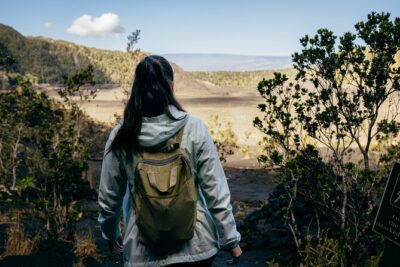
Big Island Highlights: Coffee, Volcano, Black Sands & Waterfall
Read our review →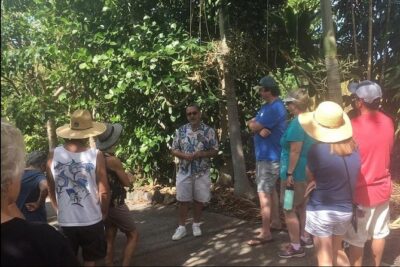
Award Winning Farm Tour: Coffee, Chocolate and Unique Gifts
Read our review →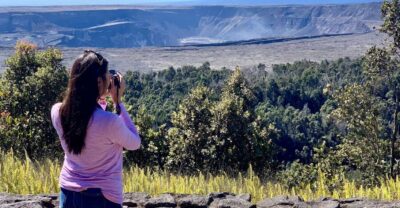
Big Island: Volcanoes, Waterfalls, & Coffee Farm Day-Trip
Read our review →
Small-Group Big Island Tour: Hawaii Volcanoes National Park and Kona Coffee Farm
Read our review →
Kona Shore Excursion: Sea Turtles, Historic Kona & Coffee
Read our review →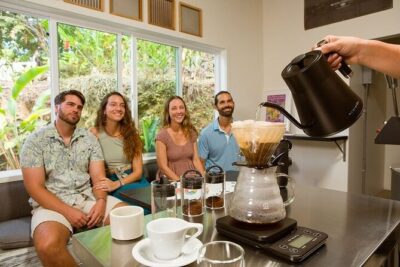
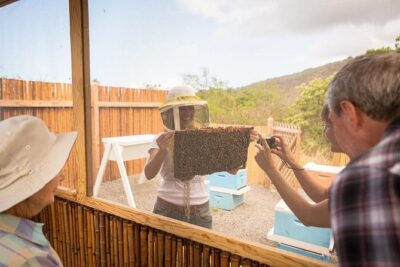
Kona Tour: Bee Farm, Kona Coffee, and National Historical Parks
Read our review →
Big Island: Coffee, Black Sand, Volcano and Waterfall Tour
Read our review →Browse the lists this tour appears in