
Review · INDONESIA
Lombok: Coffee Plantation Tour With Tasting
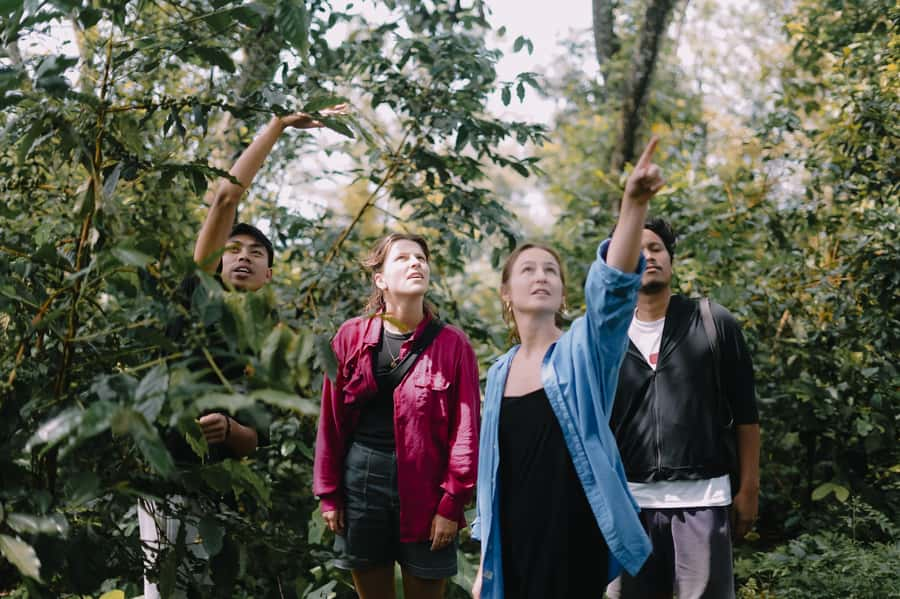
The most interesting part of this five-hour Lombok coffee tour is that it follows the bean from a hillside garden to a finished drink. At about 700 meters above sea level, owner Hadi and barista Dasan can show you Arabica and Robusta trees, ripe coffee cherries, and other crops growing beside them.
I like the hands-on farming focus, and I like that the tour continues through the warehouse, greenhouse, and roasting room instead of stopping at a quick plantation walk. The main point to consider is transport: hotel pickup costs extra, and groups of more than two must rent motorbikes from the parking area to reach the plantation.
Key points to know
- Start at 8 a.m.: The schedule follows the farmers’ working day, so an early start is part of the experience.
- See two coffee types: You can learn about Arabica and Robusta and taste fresh coffee cherries when available.
- Follow several production stages: The route covers harvesting, natural and honey processing, greenhouse drying, moisture checks, and machine roasting.
- Meet local hosts: Hadi, the plantation owner, and Dasan, the coffee shop barista, have led visitors through both the farm and café side of the business.
- Finish with coffee: The package includes Konbayan espresso and a farm signature drink, plus a menu and coffee bean souvenir.
- Plan your own transport: Hotel pickup is not included, and larger groups need motorbikes for the plantation transfer.
From coffee cherry to coffee cup
This is a farm-to-café experience, not simply a tasting with a few plants placed beside the shop. You begin at Konbayan Espresso and Farm, then head toward the plantation for about an hour of walking and explanation.
The tour covers the care and maintenance of coffee trees, the harvesting of cherries, and the basic work needed before beans can be roasted. That order matters. You see that coffee is an agricultural product first, not just a drink prepared behind a café counter.
The plantation sits on a mountain slope at roughly 700 meters. That gives you a more useful setting for learning about coffee than a polished tasting room alone. The garden is described as highly varied, with coffee growing beside crops such as cloves, vanilla, pepper, cacao, Indian walnut, and ginger.
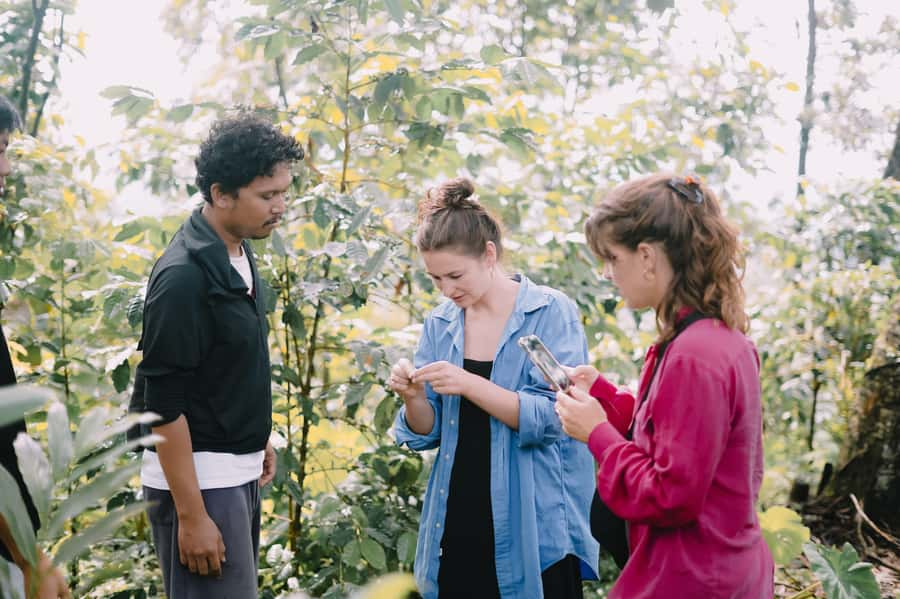
You may be able to taste ripe coffee cherries during the walk. They are sweet, which makes a good contrast with the roasted bean you know from your morning cup. The exact harvest activity will depend on the farmers’ schedule and the condition of the crop on the day you visit.
More Coffee Farm Tours in the world:
- Award Winning Farm Tour: Coffee, Chocolate and Unique Gifts
★ 5.0 · 484 reviews - La Herradura Coffee Farm: tour in Europe’s only plantation
★ 4.8 · 430 reviews - Big Island: Volcanoes, Waterfalls, & Coffee Farm Day-Trip
★ 4.9 · 414 reviews
The plantation walk at 8 a.m.
The early start is practical rather than decorative. The tour begins at 8 a.m. because that fits the farmers’ schedule, so you should not treat the start time as flexible unless the operator confirms a change.
Expect about an hour on the plantation. The walk is designed to explain planting, harvesting, and day-to-day care rather than to provide a long trek. Still, the farm is on a hillside, and the activity is not suited to babies under one year old. Baby strollers and baby carriages are also not allowed.
Hadi, the owner, may lead this section with Dasan. Their roles give you two useful angles: Hadi can explain the farm itself, while Dasan can connect the raw product to the drink prepared at the coffee shop.
A particularly appealing detail is the range of plants around the coffee trees. If conditions allow, you might see cloves, vanilla, pepper, cacao, Indian walnut, and ginger. One outing included fresh ginger being dug from the soil, which shows how the garden works as a mixed farm rather than a single-crop plantation.
Do not expect every agricultural activity to happen on demand. Harvesting depends on the season, and the tour description promises observation and explanation, not a guaranteed chance to pick a full basket of cherries.
Arabica, Robusta, and the taste of a fresh cherry
The tour introduces both Arabica and Robusta. That is useful because the two are often treated as a simple menu choice, while here you can connect each type to the trees and fruit in front of you.
The supplied information does not give a formal tasting comparison between the two varieties, so I would not book this expecting a technical cupping class. Instead, the value is in seeing where the beans begin and understanding the difference between a coffee cherry on the tree and a roasted bean in your cup.
Tasting the fruit itself is one of the more memorable parts of the farm visit. Coffee cherries are not bitter like brewed coffee. Their sweetness helps explain why the fruit must be handled carefully before processing, even though the final drink tastes completely different.
This part also makes the experience suitable for people who do not know much about coffee. You do not need to understand roast charts or brewing terms before arriving. The tour builds from the plant upward.
Natural and honey processing in the warehouse
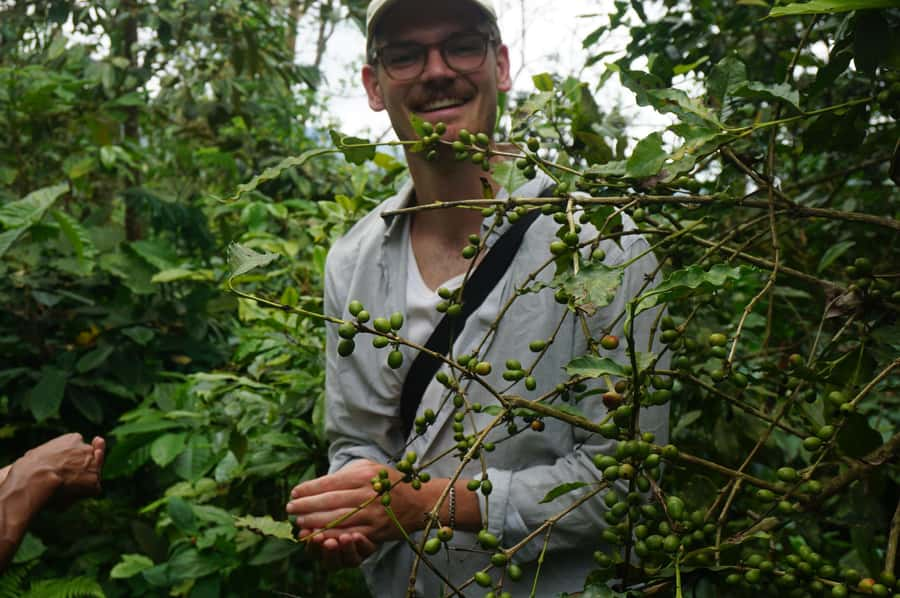
After the plantation, you move to the warehouse to observe the natural and honey processes. This is where the tour moves from farming into production.
The activity description says you will see the usual production method, but it does not promise a hands-on processing workshop. Expect to watch and ask questions rather than operate the equipment yourself.
The natural and honey labels refer to different ways of handling coffee after the cherries are picked. The tour gives you a chance to see those methods as part of the farm’s actual workflow, not as abstract terms on a café menu. That is especially useful if you normally choose coffee by roast or milk option without knowing how the beans were prepared.
The warehouse stop adds real value to the price because it fills the gap between picking and drying. Many short plantation visits show trees, then jump straight to a cup. Here, you get a clearer picture of the less glamorous work that shapes the final flavor.
More Coffee Tastings in the world:
- Hanoi Coffee Experience: 6 Brews, 9 Recipes & 3 Liquor Tastings
★ 5.0 · 2,945 reviews - Medellin: Coffee Tour with Transport, Snacks and Tastings
★ 4.7 · 1,357 reviews - Seattle Coffee Tour: Capitol Hill Cafes, Tastings & Local Stories
★ 5.0 · 489 reviews - Buggy Ride Into the jungle with cave coffee & chocolate tasting
★ 5.0 · 465 reviews
The greenhouse and the moisture check
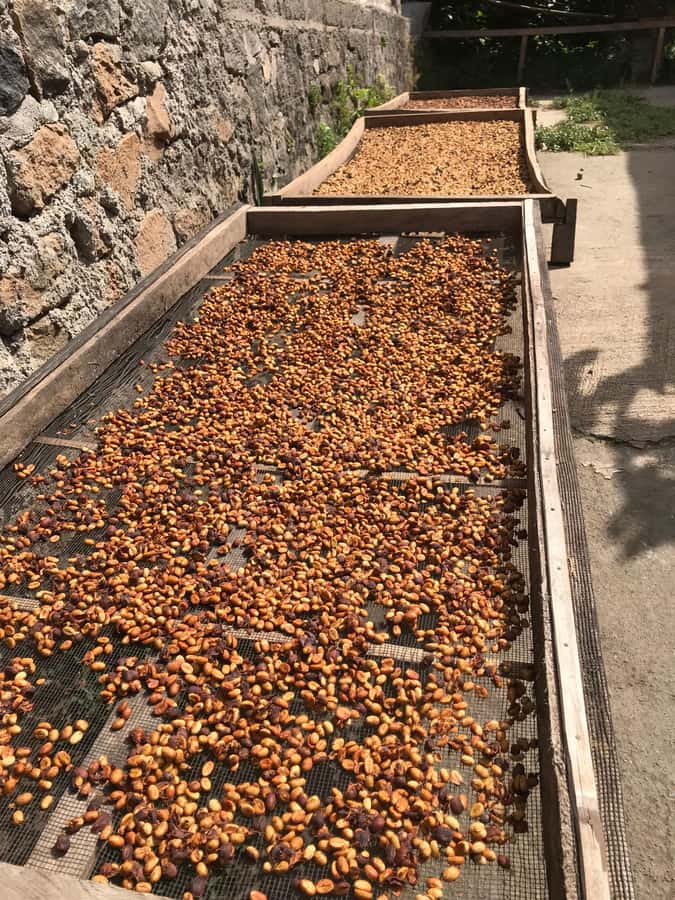
Next comes about an hour in the greenhouse, according to the practical information for the activity. You will observe coffee beans being dried in the sun and see how the moisture content of the dried coffee is determined.
That moisture check is an important detail. Drying is not simply a matter of leaving beans outside until they look ready. The beans must reach the right condition before the next stages of production. The tour does not list a specific moisture target or explain the testing equipment in detail, so the guide will be your best source for the exact method used that day.
The greenhouse is also a good place to understand the effect of weather and timing on coffee production. Sun drying sounds simple, but it requires attention. The beans must be monitored, and the process fits into the wider rhythm of the farm.
Because the greenhouse visit can last around an hour, this is not a passing glance. If you are mainly interested in drinking coffee and have little patience for production details, this may feel long. If you enjoy seeing how food is made, it is one of the stronger parts of the itinerary.
Roasting profiles in the machine room
The next stop is the roasting room. Here you can watch green coffee beans being roasted in machines to reach the desired roast profile.
The wording is important: this is an observation of the roasting process, not a promise that you will roast your own batch. You should expect an explanation of how the machine is used and how the chosen profile affects the beans.
This stop ties the earlier sections together. You have seen the tree, the cherry, the processing methods, and the drying stage. Now you see the point where green beans become the brown, aromatic coffee familiar from a café.
A technical roast class is not included in the advertised five-hour plan, but you can still ask about the beans being roasted, the timing, and the reason for using a particular profile. The presence of a working coffee shop makes the lesson more practical than a purely agricultural tour.
Back at Konbayan for the tasting
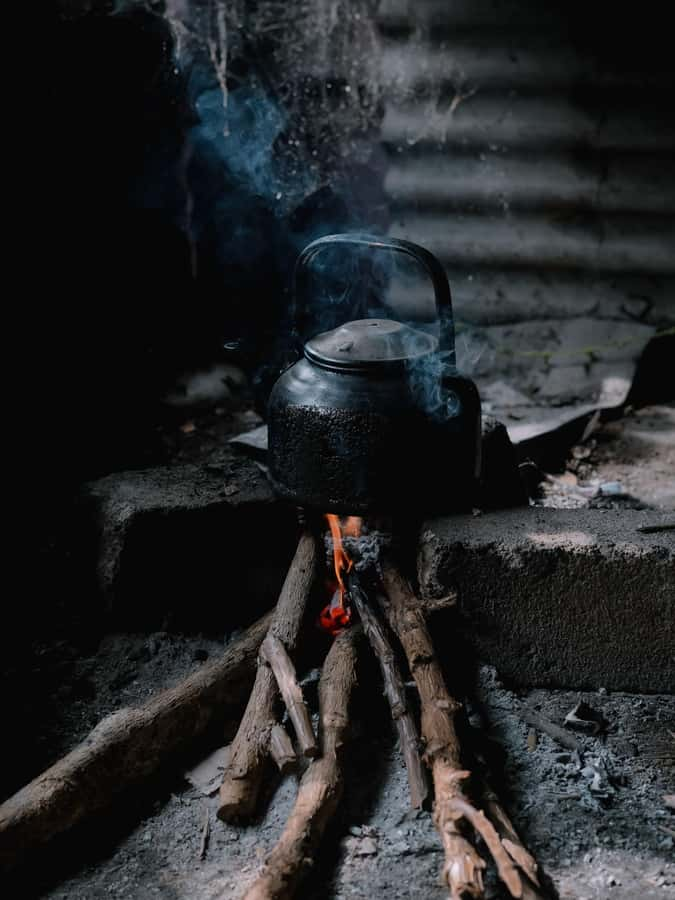
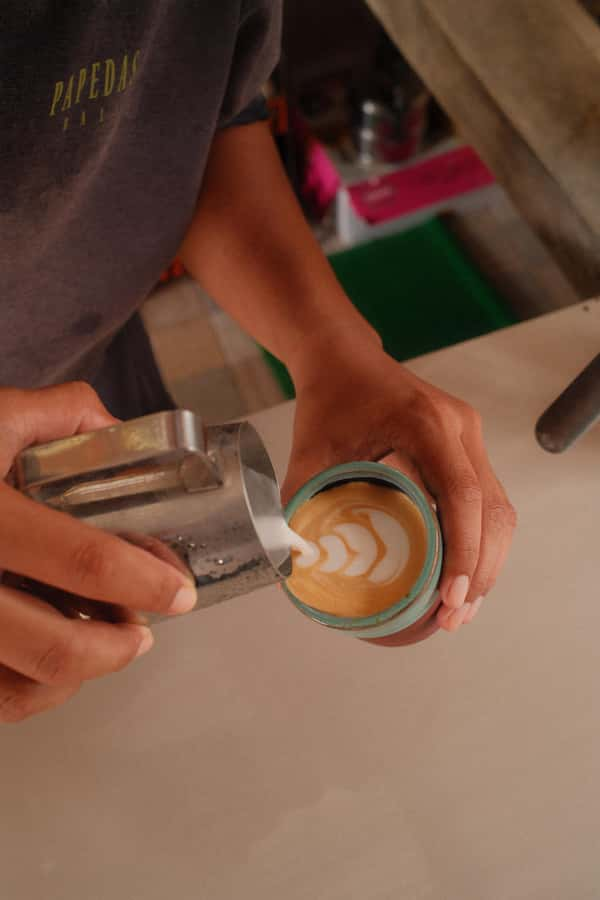
The final stop returns you to Konbayan Espresso and Farm. The included coffee choices are Konbayan espresso and the farm signature drink. You can also choose your preferred coffee at the end, with espresso and latte macchiato specifically experienced on one outing, including oat milk.
One visit also included coffee art and fresh passion fruit picked near the café. These extras came through the hosting style of Hadi and Dasan, but they should not be treated as guaranteed parts of every booking. The listed package confirms the coffee tasting, espresso, and farm signature drink.
The tasting is more meaningful after the farm walk. You have already seen the raw cherries and the roasting room, so the cup gives you a chance to connect the process with flavor. That is the central payoff of the tour.
Meals need careful clarification. Food is not listed as included in the standard package, and the practical notes say drinks and meals are self-paid. One outing included a homemade meal, but you should confirm this directly rather than count on it. Bring money for anything beyond the included coffee items.
What the $70 price really covers
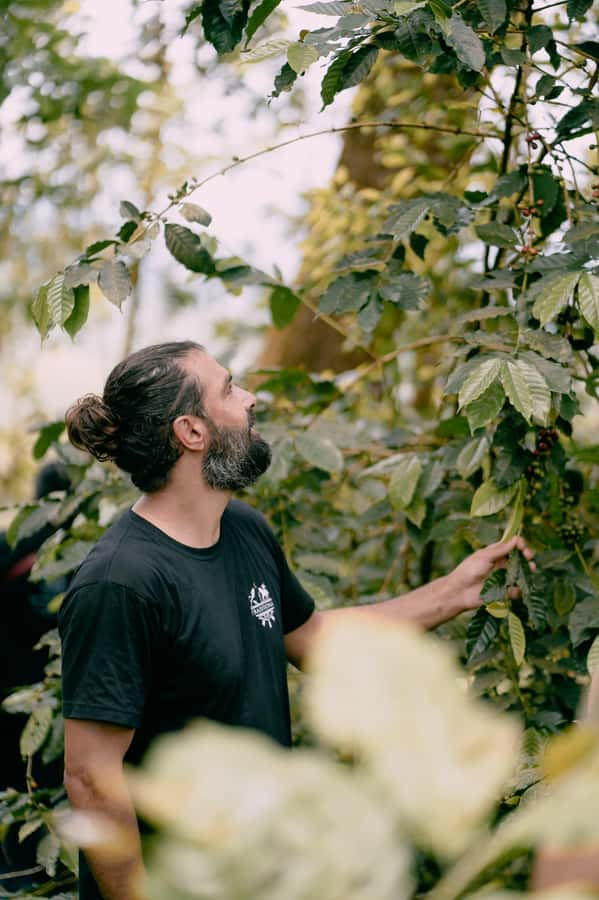
At $70 per person, this is not the cheapest way to drink coffee in Lombok. The value comes from the length and range of the visit: plantation access, production observation, greenhouse drying, roasting, tasting, and a souvenir.
The private-group format also matters. You are not being placed into a large coach group with a rushed explanation. A private booking gives you more room to ask about the plants, the beans, and the café drinks. The available information does not state the maximum private-group size, so ask how your party will be handled if you are booking for more than two people.
The package includes a Konbayan coffee menu and a coffee bean souvenir. Those are modest items, but they help the tour continue after you leave. The beans let you remember the farm at home, while the menu may help you identify the drinks or coffee style you tried.
The price is easier to justify if coffee production is a real interest, or if you want a structured half-day outside the usual sightseeing route. It is harder to justify if you only want a scenic café stop. In that case, the plantation and processing sections may be more time than you want.
Getting there and planning the morning
The meeting point is Konbayan Espresso and Farm, identified by the shop sign. Hotel pickup is not included and must be added separately.
For groups of more than two people, the instructions say you must rent a motorbike from the parking area to reach the plantation. This is the most important practical detail to settle before booking. Ask about the parking point, motorbike arrangement, cost, and who will ride, because the $70 price does not cover those transport needs.
One French-speaking visitor received hotel pickup and drop-off, but that was an added arrangement, not part of the standard inclusion list. Do not assume the same service is included in your booking.
The stated tour language is Indonesian and English. The format is a private group with a live guide. If you need a language other than those two, the provided information does not confirm availability.
Free cancellation is available up to 24 hours before the activity for a full refund. You can also reserve and pay later, which helps if your Lombok plans are still changing. Those policies are useful, but they do not remove the need to confirm transport and meal arrangements.
Who will enjoy this coffee tour most
I would choose this experience if you like seeing how local food is grown and processed. It suits coffee drinkers, curious cooks, photographers interested in farm work, and anyone who prefers meeting the people behind a product.
It also works well for a private pair or small group that wants a slower, more personal morning. The combination of farm, warehouse, greenhouse, roasting room, and café gives you a clear story from beginning to end.
I would be more cautious if you are traveling with a baby, need stroller access, or dislike uneven farm settings. Babies under one year are not considered suitable, and baby strollers and carriages are not allowed.
You should also think about the amount of coffee detail you want. The tour is not just a tasting. About an hour is planned at the plantation and about an hour in the greenhouse, with additional time for processing and roasting. That is a strength for an enthusiast, but a drawback for someone seeking a quick stop.
Should you book the Konbayan coffee experience?
Book it if you want to understand Lombok coffee beyond the finished cup. The strongest reasons are the working plantation, the chance to see Arabica and Robusta, the natural and honey processing, and the direct connection between the farm and Konbayan’s coffee shop.
I especially like the mix of crops and the chance to meet Hadi and Dasan. Their involvement gives the visit a personal scale, while the production stops keep it grounded in real farm work.
Before paying, confirm three points: your transport from the hotel or meeting point, the motorbike plan if your group has more than two people, and whether any meal or extra drink will cost more. If those details suit you, $70 buys a substantial half-day rather than a quick plantation photo stop.
FAQ
Where does the coffee tour begin?
You meet at Konbayan Espresso and Farm. Look for the shop sign at the meeting point.
What time does the tour start?
The tour starts at 8 a.m. The time follows the farmers’ schedule.
How long is the activity?
The full activity lasts about five hours. The plantation visit is estimated at one hour, and the greenhouse visit is also estimated at one hour.
Which languages are available?
The live tour guide is available in Indonesian and English.
Is hotel pickup included?
No. Hotel pickup is not included in the standard activity and must be added separately.
What happens if my group has more than two people?
Groups of more than two people must rent a motorbike from the parking area to reach the plantation.
What coffee and souvenirs are included?
The package includes coffee tasting, Konbayan espresso, the farm signature drink, a Konbayan coffee menu, and a Konbayan coffee bean souvenir.
More coffee with something to eat in the world
- Vienna for Food Lovers: Cafés, Markets & Austrian Cuisine
★ 5.0 · 1,063 reviews - Hanoi: Vietnamese Street Food Tour with Egg Coffee
★ 4.9 · 315 reviews - Da Nang Cooking Class with Coffee Tasting and Market Visit
★ 5.0 · 310 reviews - Hungry in Vienna? A Food Lover’s Coffee & Market Walk
★ 4.9 · 276 reviews
Freshly brewed listings in the world
- Vietnamese Coffee 101 Workshop★ 5.0 · 11 reviews
- Vietnamese Coffee Making Class in Hoi An★ 5.0 · 4 reviews
- Yerevan: Private Coffee Tour with 2 Café Stops★ 5.0 · 2 reviews
- Vancouver: Street Art & Craft Coffee Walking Tour w/ Tasting★ 4.8 · 11 reviews
- Ubud: Waterfall, Holy Water Temple,Swing&coffee plantation★ 5.0 · 9 reviews
- Coffee pleasure walking tour★ 5.0 · 12 reviews
- Vienna: Guided Viennese Coffee-House Tour★ 5.0 · 2 reviews
- Turkish Coffee and Traditional Turkish Dessert Cooking★ 4.6 · 8 reviews
Indonesia Coffee Tours, compared.
Mount Batur Sunrise Trekking (Private, Breakfast and Visiting coffee plantation)
Read our review →
Volcano, Hot Spring, Tea Factory, rice fields and Coffee Tour
Read our review →
Batur 4WD Jeep Sunrise and Kintamani Cafe Hopping
Read our review →
Jakarta :Volcano, HotSpring, Tea Factory, RiceField, &Coffee
Read our review →
Bali: Jatiluwih Rice Terraces, Sangeh Forest & Coffee Tour
Read our review →
Ubud: Waterfall, Holy Water Temple,Swing&coffee plantation
Read our review →
Bali: Ubud Monkey Forest, Coffee Plantation, and Market Tour
Read our review →
Private Ubud Tour: Sacred Monkeys, Coffee, Temple, Waterfall
Read our review →Browse the lists this tour appears in